vol. 9, no. 2
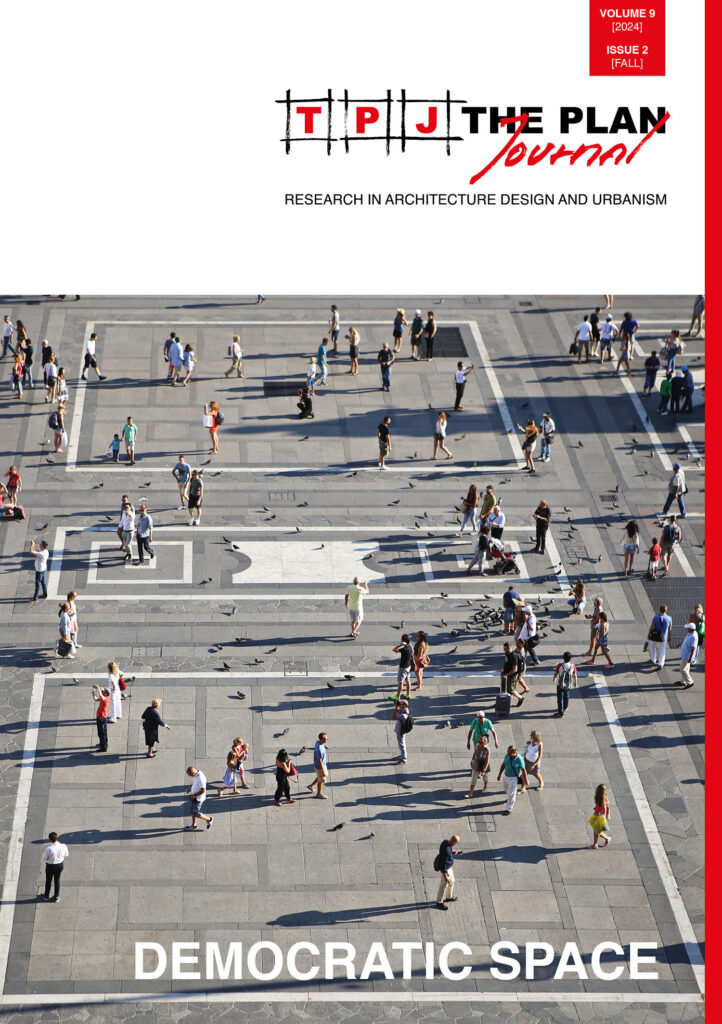
Democratic Space
Abstract
What are the characteristics of a democratic space? How can we design spaces, forms and places that evoke and promote the idea of democracy?
At a time when democracies around the world are challenged, weakened, deceivingly or blatantly eroded, if not flat out attacked, thus showing their innate fragilities, which call for our support, advocacy and defense, it is fitting to interrogate ourselves on how architecture can contribute to uphold and reinvigorate the very idea of democracy. Aside from activism and political engagement, how can architects, designers and urbanists help envision and construct the public realm, the public sphere, in essence, at all scales, examples of “democratic space”?
If democracy is to be seen as constitutive of the very spirit of modernity, how can modern architecture contribute to reifying (with Jürgen Habermas) “authentic modernity as opposed to mere modernism,” 1 and re-frame its strategies and tools in order to shape more democratic environments?
Lina Bo Bardi has once famously observed, while placing these concerns at the center of her design research and reflections, that “architecture and architectural freedom are above all a social issue that must be seen from inside a political structure, not from outside it.”
More recently, Michael Murphy maintained that: “all architectural decisions have social and political implications, whether we acknowledge them or not. The spatial world affects us every day, affects our ability to live healthy lives, affects our environment, affects our communities… There’s no neutrality in design decisions.” 2
Be it a public space, an urban landscape, a public or commercial building, or a housing complex, what are the characteristics of a democratic space? What are the determinants that architecture design and urbanism can analyze, control and affect in order to suggest and foster a liberating, democratic (inclusive and equitable) environment? How can we design spaces, forms and places that evoke and promote the idea of democracy?
The TPJ seeks proposals to explore and disseminate relevant research, innovative pedagogy and experimental practice to explore forms, constructs and meanings around these and other questions that can help us understand what can possibly constitute a “democratic space.”
Submission Options
Priority for peer-review evaluation and publication will be given to complete manuscripts, but proposals in the form of long abstracts [300/500 words] are also encouraged as a first step in the editorial review process. Authors of accepted proposals will then be invited to develop complete manuscripts, which will then go through the peer-review process.
Submitting proposals as a first step is only an option, and full manuscripts are encouraged also as first submissions.
Timeline
- Proposals due by
- Preliminary feedback sent by
- All complete manuscripts due by
- Accepted and edited manuscripts expected to be published on-line by
- Printed version of the issue expected to be available by
To Submit
Please log in and register on the TPJ manuscript management system “Editorial Manager”: https://www.editorialmanager.com/tpj/default.aspx
Once registered, from the “Author Main Menu” go to “New Submissions,” then select “Submit New Manuscript,” then, from the scroll down menu, select the article type “Article/Essay/Research” for a full manuscript submission or “Abstract (only)” for a proposal submission. Then, either way, follow the prompts.
Notes
- 1. Jürgen Habermas, “Modernity: An Unfinished Project,” in Habermas and the Unfinished Project of Modernity, eds. M. Passerin d’Entrèves and s. Benhabib (Cambridge MA, USA: The MIT Press), 38-55 (38).
- 2. Michael Murphy, interviewed by Paola Antonelli, “Architect Michael Murphy on designing healthcare systems,” Wallpaper (Oct 18, 2022) - https://www.wallpaper.com/design/michael-murphy-designing-healthcare-systems
This call is for
Articles
Towards a Spatialized Model of Democracy
At Scale: Democracy in the Balance
The Experience of Space. The City as a Pedagogical Place: A Landscape of Spatial Learning
Exploring Expressed Democratic Attempts in Space: Architecture and Landscape in Pier Paolo Pasolini
Play for Democracy: Facilitating a Space for Children’s Involvement in Urban Development
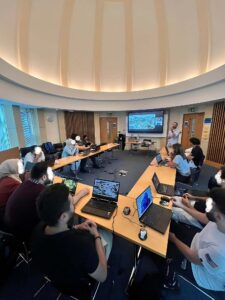
Digital Participatory Design as a Tool for Inclusive and Democratic Post-conflict Reconstruction in Damascus, Syria
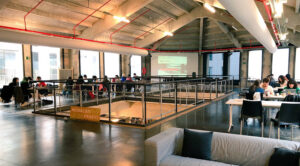
Medialab Prado: Images, Discourses and the Silent Erosion of Citizen Participation
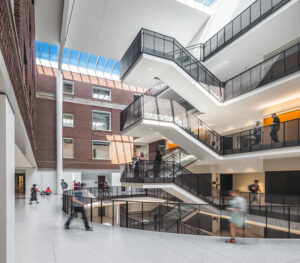
Democratic Light: Daylighting Design and the Tate Hall Building Restoration
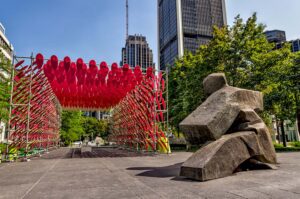
Tracing Democratic Space of a Public Square: The Case of Square Victoria in Montreal
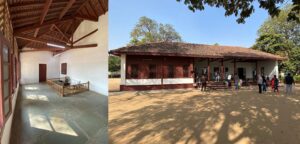
Architectures of Dissent: Building Memorials to Gandhi through Everyday Praxis
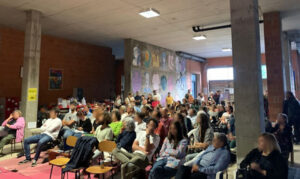
Facing the Backside of Garibaldi: Democracy, Socio-Spatial Justice and Regeneration in Brescia, Italy
Richard Sennett’s Take on Democracy and Urban Form
Assembly by Design: The United Nations and Its Global Interior