
Exhibition Review
Criticism
Open Access
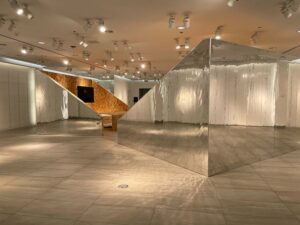
Abstractive Reuse. A Review of SHIFT: Ecologies at the 2025 Chicago Architecture Biennial
by Alex Serbanescu
pp. 241–248
Exhibition Review
Urbanism
Open Access
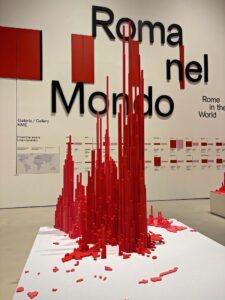
Urbs and Orbis: A Display of Actual Rome. An Exhibition at the MAXXI
by Caterina Padoa Schioppa
pp. 249–260
Book Review
Theory
Open Access
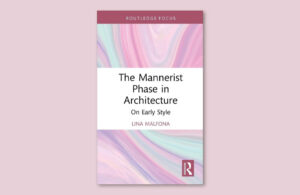
Outgrowing Mannerism. On Lina Malfona’s The Mannerist Phase in Architecture
by Laura Mucciolo
pp. 231–240
The Mannerist Phase in Architecture. On Early StyleBy Lina MalfonaRoutledge, 20255.74 × 0.54 x 8.74 in. [17 x 1.4 x 22 cm]15 b&w illustrations154 pages (hardcover)US$55.49 (hardback)US$25.59 (eBook)ISBN 9781041014911 (hardback)ISBN 9781003615071 (eBook)
Book Review
Criticism
Open Access
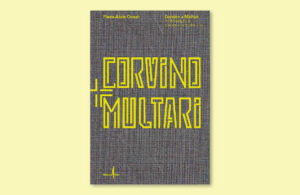
Our First Thirty Years: On Corvino + Multari
by Andrea Canclini
pp. 225–230
Corvino + Multari: Architecture in Dialogue with the CityBy Pierre-Alain CrosetMarsilio Arte, 20256.69 x 0.98 x 9.45 in. [17 x 3.3 x 24.3 cm]336 pages, 86 b/w and 280 color ill.€35 / £28 / $35 (paperback)ISBN: 9791254632932 (ENG)ISBN: 9791254632765 (IT)
Essay
Theory
Open Access
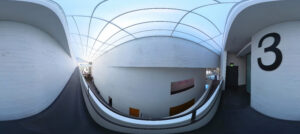
Aesthetics and Epistemological Decentralization: Toward an Embodied Framework for Museum Space
by Majed Awadh Alghaemdi, Abdulrahman Bin Burayk
pp. 189–209
Museum architecture shapes how knowledge is encountered. This article develops the concept of epistemological decentralization to describe spatial configurations that resist privileging a single interpretive route, enabling multiple encounters with content through movement and perception. Two questions drive the argument: first, under what conditions can museum space redistribute epistemic agency without reducing that shift to apparent freedom within a scripted order; second, what spatial conditions support distributed meaning-making rather than staging participation while preserving institutional authority. Drawing on Merleau-Ponty’s phenomenology, the study develops an interpretive reading of Steven Holl’s Kiasma Museum of Contemporary Art in Helsinki (1998), structured around four registers: The Solicited Body, The Lived Body, Bodily Attunement, and The Chiasm. The reading shows that route optionality, navigational oscillation, proprioceptive orientation, and sectional layering can shift interpretive positions from an institutional center toward a more distributed field. The argument connects spatial configuration to the embodied dynamics through which meaning is assembled in museum experience.
Essay
Typology
Open Access
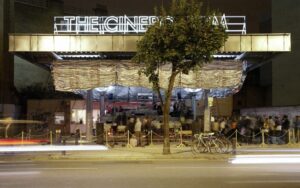
Microcinemas Rising in Europe: New Spatial Trends in Movie Theaters
by Diego Terna, Luca Maria Francesco Fabris
pp. 165–188
The research paper proposes a critical survey of recently emerged, new architectural spatial forms for hosting movie theaters in the European context. A trend showing a renewed focus on the quality of movies and programming, reverberating in the architectural space of cinema halls, which tend to adapt their features toward small numbers, focusing on privacy and fellowship among a few viewers, and searching for a kind of coziness, transforming cinema halls into spaces with an almost domestic feeling. This new kind of movie theater, called microcinema, is a fluid space within broader functions, where watching the projection on a screen offers an opportunity for intellectual speculation, no longer tied to personal concentration alone, but to public dialogue, where sharing empathy is the more critical experience, providing elements for a new systematic approach to the movie theater design.

Position Paper
Open Access
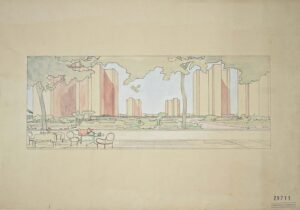
Urban Natures: A Technological and Political History
by Antoine Picon
pp. 217–228
Article
Open Access
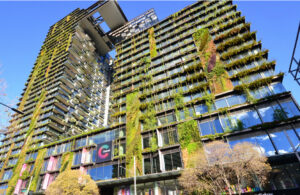
Biofacades: A Framework for Vertical Building–Nature Integration in Urban Ecosystems
by Mary Ben Bonham, Kyoung Hee Kim, Christiane M. Herr
pp. 383–404
Urban landscapes are characterized by adaptable urban ecosystems that integrate natural and human-made aspects. This paper argues that building-scale biofacades can make key contributions to these ecosystems beyond conventional green facades. The paper introduces the concept of biofacades as a means of integrating biological processes into facade design, supporting diverse organisms across scales and fostering interconnected urban ecosystems. The Biofacade Classification system is introduced as a framework for vertical building–nature integration. The framework organizes biofacades according to wall layer position, biotic distribution, and operational mode, while also describing associated ecosystem services. Case studies illustrate its capacity to clarify the complexity of building–nature interactions and to encompass engineered solutions ranging from microalgae facades to microbial growth-promoting materials. By positioning facade design as a part of urban biomes, the framework supports architects, planners, and other stakeholders in establishing goals and communicating integrated performance benefits in the effort to create more resilient and ecologically integrated cities.
Article
Open Access
Cultivating Resources and Inviting Heterogeneous Interests: The Limits of the Design Brief for a Resource Plant
by Fredrik Torisson, Moshe Habagil, Margareta Björksund-Tuominen, Karin Jönsson
pp. 287–308
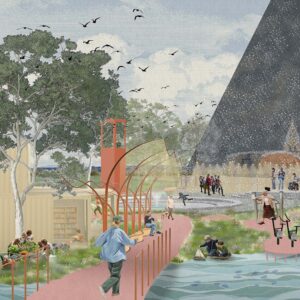
As we become increasingly conscious of the entangled nature of human existence, we need to become more attuned to the needs of other species, and things on this planet we are bound to. This presents us with an opportunity to rethink in whose interest we approach architectural design, and to bring vital voices into the process that have – until now – been unable to make themselves heard. We conducted an experiment in a site in Varberg, Sweden, as part of a project to transform a wastewater treatment plant into a resource plant that includes the land itself as a resource. The focus of the experiment has been on testing methods to expand the notion of what a public space is and whom it is for. The experiment involved devising and testing two different methods for reading the site in terms of what it is and what it could become. The outcomes include both experiences and partial perspectives on both opportunities and the blind spots we still have.
Exhibition Review
Criticism
Open Access
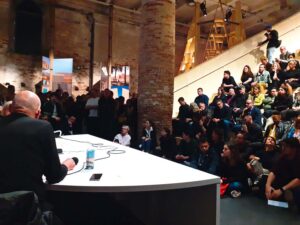
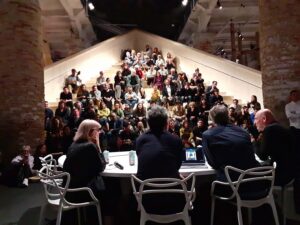
Beyond Exhibiting. Discourse at the 2025 Venice Architecture Biennale
by Maurizio Sabini
pp. 199–204
Book Review
Theory
Open Access
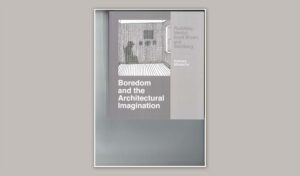
Boredom and the Architectural Imagination. Rudofsky, Venturi, Scott Brown, and Steinberg in Andreea Mihalache’s Research
pp. 189–197
Boredom and the Architectural Imagination.
Rudofsky, Venturi, Scott Brown, and Steinberg
By Andreea Mihalache
University of Virginia Press, 2024
7 x 1.25 x 8 in. [17.8 cm x 3.2 x 20.3 cm]
45 illustrations (35 b/w, 10 color)
238 pages (hardback & paperback)
288 pages (eBook)
US$115.00 (hardback)
US$34.50 (paperback)
US$34.50 (eBook)
August 5, 2024
ISBN: 978-0-813-95156-0 (hbk)
ISBN: 978-0-813-95157-7 (pbk)
ISBN: 978-0-813-95158-4 (ebk)
Book Review
Theory
Open Access
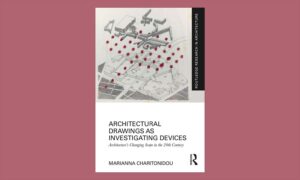
Representation Restricted Reality (RRR). Marianna Charitonidou on Architectural Drawings
by Pablo Lorenzo-Eiroa
pp. 183–188
Architectural Drawings as Investigating Devices.
Architecture’s Changing Scope in the 20th Century
By Marianna Charitonidou
Foreword by Gevork Hartoonian
Routledge, 2023
6 x 0.75 x 9.25 in. [15.2 x 2 x 23.5 cm]
39 B/W illustrations
298 pages
US$133.00 (hardback)
US$54.99 (paperback)
US$49.49 (eBook)
November 28, 2023
ISBN: 978-1-032-43110-9 (hbk)
ISBN: 978-1-032-44418-5 (pbk)
ISBN: 978-1-003-37208-0 (ebk)
Essay
Cross-Disciplinary Studies
Open Access
Rain, Rain, Go Away: Geoengineering and the Illusion of Control
by Hannibal Newsom
pp. 109–130
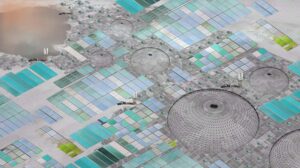
“Geoengineering” is increasingly seen as the best, perhaps even last, hope in the fight against global warming. Calls for such practices as Solar Radiation Management are becoming urgent as the effects of the climate crisis make themselves visible. This essay uses California’s Salton Sea, a geo-engineered palimpsest of once natural terrain turned toxic and inhospitable through human intervention, as a case study against the illusion of control. Through the critical lens of Magical Realism and the visual language of the architecture studio, this essay calls into question the desire to exert human control over natural systems, illustrating that the unintended consequences of such efforts will only serve to compound the problems they were initially meant to resolve.
Article
Tectonics
Open Access
Opus Luteum: Incorporating a Third Dimension to Tilt-up Concrete Wall Panels
by Pablo Moyano Fernandez
pp. 89–107
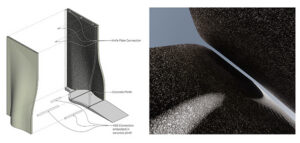
Tilt-up concrete wall construction is a casting alternative to cast-in-place and precast systems. The panels are cast horizontally on site and tilted up to a vertical position, forming strong building envelopes. Some remarkable features of the tilt-up system are the durability, speed, efficiency, and cost-effectiveness of the process compared to other conventional construction systems. Tilt-up construction is characterized by the simplicity of the casting method; using a flat floor slab as formwork on site, the outcome is typically flat panels. This article showcases the design and construction of tilt-up concrete panels that incorporate a third dimension to the typical flat panel using soil as formwork. Earth, the most primitive and basic construction material, can support an efficient mold-making system that is environmentally sensitive. This innovative approach utilizes an accessible, economical, and reusable local material that allows the configuration of molds with double-curvature surfaces that can provide additional structural rigidity and stability to the concrete panels. The production of concrete building envelopes with complex geometries opens a range of design possibilities for load-bearing building envelopes with simple and affordable means.
Polemic
Criticism
Open Access
The Monstrous Hybrids in Our Midst. Jane Jacobs and the Dark Age Ahead
by Thomas Fisher
pp. 9–19
We are honored to receive, and proudly publish, Tom Fisher’s acceptance speech for his 2025 AIA/ACSA Topaz Medallion award. [MS]
ABSTRACT - The political and social disruptions that often follow pandemics have accelerated many countries, including the United States, toward what Jane Jacobs described in her last book, entitled Dark Age Ahead (2004). This essay looks at Jacobs’ description of the characteristics of cultures that fall into a dark age and how we can see signs of them arising around the world today. Following that analysis, this essay explores what Jacobs calls the “five pillars” that stand against such cultural collapse and how the architecture and design community can help reinforce those pillars.