volume 1, issue 2
Design for Social Impact
Abstract
How do we leverage the power of design to actually, as designers, make a difference? What does it mean “designing for social impact” beyond socio-economical analysis and reporting, or before it becomes political activism and advocacy? How do we grow our design intelligence and sharpen our design tools to make our projects more relevant for society? And how do we assess social impact for design interventions?
In recent years, the discourse in our field has progressively put an emphasis on the social role and impact of design. From the 2010-11 MoMA exhibition “Small Scale, Big Change: New Architectures of Social Engagement,” to the current Venice Biennale “Reporting from the Front,” the works of architects, urbanists and designers (particularly of the younger generations) concerned with improving people’s quality of life seem to have caught the attention of increasingly wider audiences. There is a clear demand for understanding how architecture and urbanism, beyond their typical mandate for compelling spaces and places, can also define strategies, plans, systems, typologies, products, infrastructures that can impact people’s daily life with unexpected quality, while overcoming constraints, stereotypes and bureaucracies with design intelligence and inventiveness.
Often through new models of professional engagement, designing for social impact can remain a way to practice, and research in, architecture centered on the fundamental principles of the art: simply, by also addressing the needs, aspirations and resources of many, vis-à-vis ever more complex socio-economic, political and cultural issues. It can also mean to bring the “cultural beauty” of architecture (that is its power of offering synthetic solutions to highly complex problems) to those who would not normally afford to enjoy it. As Alejandro Aravena pointed out, “these difficult complex issues require professional quality, not professional charity…socially minded architecture is a choice, not a responsibility…the more complex the issue, the more the need for synthesis.” 1
The TPJ seeks contributions that can address the above questions and can illustrate how “design for social impact” is being envisioned, developed, realized, experienced and evaluated around the world. We welcome proposals that can illustrate innovative research on this topic from a variety of angles: from historical/theoretical critiques on the state of the discussion, to typological or technological investigations, to cross-disciplinary studies, to projects of reflective practice for specific sites and contexts, to evaluation of, and/or proposals for, new forms of urbanism, to experimental pedagogies.
Our intention is to delineate another meaningful frame, from a journal perspective, on the current landscape of research about this important contemporary challenge.
Submission Options
Priority for peer-review evaluation and publication will be given to complete manuscripts, but proposals in the form of long abstracts [300/500 words] will also be considered. Authors of accepted proposals will then be encouraged to develop complete manuscripts, which will then go through the peer-review process.
Timeline
- Complete manuscripts and proposals due by
- Complete manuscripts expected to be published on-line by
- Invitation to develop accepted proposals into complete manuscripts by
- Accepted proposals to be developed into complete manuscripts by
- Complete manuscripts from proposals expected to be published on-line by
To Submit
Please log in and register on the TPJ manuscript management system “Editorial Manager”: https://www.editorialmanager.com/tpj/default.aspx Once registered, from the “Author Main Menu” go to “New Submissions,” then select “Submit New Manuscript,” then, from the scroll down menu, select the article type “Article/Essay/Research” for a full manuscript submission or “Abstract (only)” for a proposal submission. Then, either way, follow the prompts.
Notes
- “Architects have no moral obligation to society says Alejandro Aravena,” Dezeen, February 23, 2016. http://www.dezeen.com/2016/02/23/architects-have-no-moral-obligation-to-society-says-alejandro-aravena-venice-architecture-biennale/(link is external) - accessed July 1, 2016.
This call is for
Every article in this issue is free to read. No subscription required.
Articles
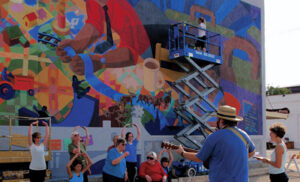
Stretching Design Intelligence to Make a Difference
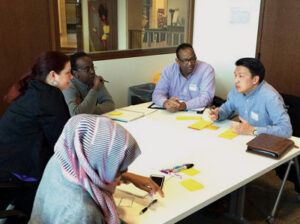
Challenging the White-Savior Industrial Complex
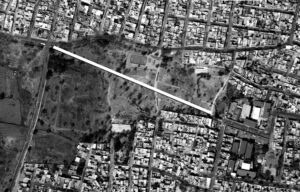
Walk the Line. Architecture as a Catalyst for Socio-Spatial Connectivity
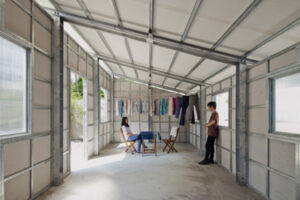
S House n. 3
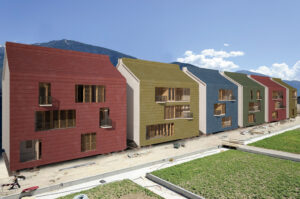
Temporary Houses for Post-Disaster and Social Emergency
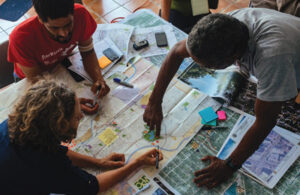
Dotte Agency: A Participatory Design Model for Community Health
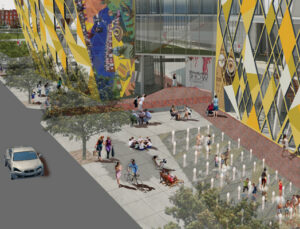
Gentrification and the Heterogeneous City: Finding a Role for Design
Unconventional Engagement: Reviving the Urban Marketplace
Social Impact through Design: Experiments in Urban Agriculture
Designing with Dignity: Health and Design Research for Underserved Communities
How Does Work Shape Informal Cities? The Critical Design of Cities and Housing in Brazilian Slums
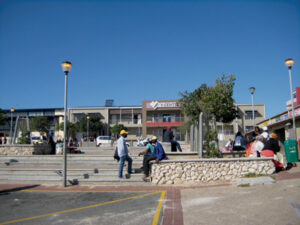
The Pursuit of Inclusion in Unequal Contemporary Cities. Learning from Cape Town Desegregation