vol. 4 , no. 2

Gender Matters

Proposals due: June 17, 2019 Manuscripts due: September 2, 2019

Abstract

New perspectives on gender issues and the impact of gender mainstreaming to re-assess the past, change the present and envision the future of the design fields

Guest Editor

Dörte Kuhlmann, TU Wien, Vienna

In his inaugural address to the students at the Bauhaus, held in April 1919, Walter Gropius declared: “We shall make no distinction between the fair sex and the strong sex; there shall be absolute equality.” Nevertheless, he believed that men, with their experience as soldiers coming face to face with death, made for better artists than female students, to the extent that sometimes he limited the female students’ access to the workshops.
Looking back at the history of the architectural profession, we find that architecture has a fairly long and well-documented history as a profession, and we feel that we have a certain understanding of what “good” architects should be like – including their dispositions or habitus. Despite attributes that used to be considered “feminine” – for instance, a consideration of the “domestic” realm – an architect was traditionally considered a male figure and until modern times their initiation into the profession came via apprenticeship. Women joined the field around 100 years ago when they were first admitted into architectural schools. Henry Atherton Frost, who founded in 1915 the first architecture school for women (the Harvard Cambridge School of Architecture and Landscape Architecture), pointed out that female architects did indeed add significant issues to the architectural discourse, when he stated in 1941 that a typical student of his:

“… thinks clearly, reasons well, and is interested in housing rather than houses; in community centers for the masses rather than in neighborhood clubs for the elect; in regional planning more than in estate planning; in social aspects of her profession more than in private commissions … her interest in the profession embraces social and human implications.” 1

Today more or less fifty percent of the architecture students are female, yet women represent just about one in five licensed practitioners. Even though architecture seems to be of equal importance for men and women, there are quite often differences in their expectations regarding the built environment. As Aaron Betsky argued in Building Sex: Men, Women, Architecture, and the Construction of Sexuality (1995), public space is full of performative signs of power, and hence we need to keep asking ourselves whether our environment really responds to the expectations and needs of the different sexes.2

Although still relatively few women architects have received lasting international recognition, the design fields seem to have been substantially enriched from the theoretical debates on feminism and gender.

What are the most important contributions of the female pioneers in architecture, design and urbanism still to be duly investigated and recognized? Will gender mainstreaming continue to challenge contemporary design issues? And will it become a basic principle in architecture and design, as well as opening up new issues in urbanism?
The TPJ seeks contributions that can illustrate recent research on “gender issues in design”, and how this knowledge can be used to envision more sustainable cities and habitats. We welcome proposals that address innovative research on this topic from a variety of angles, including: historical/theoretical case studies in Modern architecture, typological or technological investigations, cross-disciplinary studies (across the fields of product design, interior design, landscape architecture, and urban design), projects and/or case-studies in reflective practice, critical reflections on gender and urbanism, and experimental pedagogies.

Submission Options

Priority for peer-review evaluation and publication will be given to complete manuscripts, but proposals in the form of long abstracts [300/500 words] are also encouraged as a first step in the editorial review process. Authors of accepted proposals will then be invited to develop complete manuscripts, which will then go through the peer-review process.

Submitting proposals as a first step is only an option and full manuscripts are encouraged also as first submissions.

Timeline

  • Proposals due by
  • Invitation to develop accepted proposals into complete manuscripts sent to authors by
  • All complete manuscripts due by
  • Accepted and edited manuscripts expected to be published on-line by
  • Print version of the issue expected to be available by

To Submit

Please log in and register on the TPJ manuscript management system “Editorial Manager”: https://www.editorialmanager.com/tpj/default.aspx  Once registered, from the “Author Main Menu” go to “New Submissions,” then select “Submit New Manuscript,” then, from the scroll down menu, select the article type “Article/Essay/Research” for a full manuscript submission or “Abstract (only)” for a proposal submission. Then, either way, follow the prompts.

Buy this issue
PDF available immediately after payment

Articles

Image associated with the article: Beyond What Is Right
Editorial Editorial Open Access

Beyond What Is Right

by Maurizio Sabini pp. 269–271
Image associated with the article: No Architect Is an Island:  The Agency-Communality Spectrum and the Construction  of Professional Identity  in Architecture
Article Subscribers

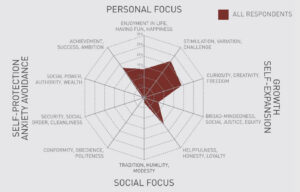
No Architect Is an Island: The Agency-Communality Spectrum and the Construction of Professional Identity in Architecture
by Annelise Pitts, Julia Mandell pp. 281–306
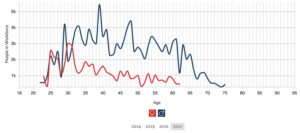
Findings from the 2018 Equity in Architecture Survey demonstrate that architectural professionals tend to describe their work in terms of personal agency rather than communality. This pattern in architectural practitioners’ work orientations is associated with two major obstacles to achieving equity within the architectural profession. First, the practitioners who are most satisfied with their work are typically more communally oriented, suggesting that architecture’s overemphasis on the professional self may limit potential pathways to positive experiences of one’s work. Secondly, women in the profession face significant bias as they embody the stereotypically agentic professional archetypes of the Creative or the Rainmaker, but are also undervalued when they adopt communally-oriented, but lower status, professional personas. We conclude by proposing two parallel strategies intended to improve professional outcomes by addressing the adverse effects of agency-orientation in architectural practice. 
Image associated with the article: Women’s Work:  Attributing Future Histories  of the Digital in Architecture
Essay Subscribers

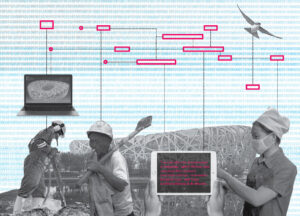
Women’s Work: Attributing Future Histories of the Digital in Architecture

by Shelby Doyle, Nick Senske pp. 307–326
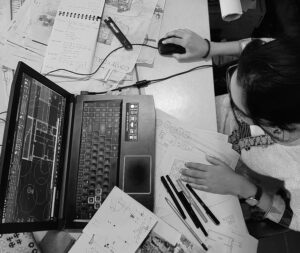
Conventions of authorship and attribution historically excluded or erased women’s contributions to the built environment. As frequent co-authors and collaborators, women’s stories often do not fit into conventional historical narratives about how architecture is created. In response, this essay proposes a technology called “attribution frameworks”: a digital method for creating a transparent record of architectural labor. The authors argue that the integration of digital tools into architectural design offers a new space for more equally attributing, documenting, and counting labor and contributions to the discipline. This space allows for a more rich and inclusive narrative of contributions to architectural production for the future.
Image associated with the article: Where Are the Lesbian Architects? Visibility and Its Challenges
Article Subscribers

Where Are the Lesbian Architects? Visibility and Its Challenges

by Olivier Vallerand pp. 327–343
Until recently, discussions of the relation of sexual orientation with the built environment have mostly focused on gay men at the expense of lesbian women and trans people. This study thus presents a review of discourses in architecture and design as well as interviews with lesbian designers to understand how and why queer women have been almost invisible. The privileged position of men allows expression of their sexual orientation with less risk than women who are already facing discrimination. Furthermore, structural inequities have forced women architects to focus on issues of equality and inclusion for all women, with the side effect of often silencing how other forces such as sexual orientation or race combine to create more complex power relations. Invisibility is a problem, however, as it limits the ability to respond adequately to diverse social needs and to sustain more inclusive design disciplines. Bringing to the foreground the intersection of identities with experience of space can encourage younger generations of architects by offering role models and diversifying the range of life experiences informing the design of spaces.
Image associated with the article: Women Leaders, the Sustainable Society Cannot Afford to Miss: A Qualitative Study on  the Paths to Women Leadership in Sustainable Architecture Education
Article Subscribers

Women Leaders, the Sustainable Society Cannot Afford to Miss: A Qualitative Study on the Paths to Women Leadership in Sustainable Architecture Education

by Liqun Bi, Barbara LaCost, Hengle Jiang pp. 345–369
 Candice Stevens has pointed out that the lack of progress on gender equality may be at the heart of the failure to advance on sustainable development. Several researchers such as Sandra Manley and Ann de Graft‐Johnson, and Rosa Sheng and Annelise Pitts have studied why women leave architecture, but no study focused on the women’s leadership in architecture education yet. This qualitative study aimed to discover insight into the leadership development journey of women focusing on sustainable architecture education. The sample was selected among 1,705 faculties of forty-one collegiate architecture programs. After email invitations, five successful women executives in sustainable architecture areas participated in the interviews. After coding analysis, three conclusions illuminated. Firstly, strong mothers influence daughters to become leaders. Secondly, the inner motivation of “working super hard” is the foundational factor that all the women leader participants claimed to sustain their leadership advancement. Thirdly, participants unveiled that there was an on-going-pattern while finishing the tasks and establishing reputations, especially in early career development. The awareness of the pattern helped to reduce the panic of the new tasks.
Image associated with the article: Making Room and Occupying Space. Women Conquering  and Designing Urban Spaces
Essay Subscribers

Making Room and Occupying Space. Women Conquering and Designing Urban Spaces

by Chiara Belingardi, Claudia Mattogno pp. 371–390
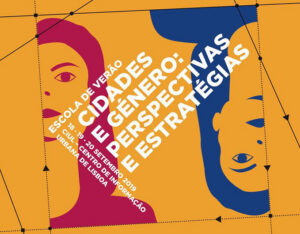
Women have always been strongly involved in creating environment and living spaces, even without initially being designers as the university became accessible to them very late. However, they were always strong involved in creating a healthy environment, and contributing to welfare state, where health and social equipment was a gender response to a modern life. Anyway, the history of architecture remains dominated by Masters and the female presence is almost invisible, even though women’s studies have made a large contribution to investigate lives, stories, and professional works. The paper highlights the contribution of women as builders of social and physical spaces from late nineteenth and focuses on Italian movements of second and third generation feminists. Nowadays feminists are pointing out invisibility of women as a structural violence, are claiming commons and creating new uses for urban space.
Image associated with the article: The W@ARCH.PT as an Ongoing Feminist Research Project in Architecture: Contextualizing Initial Reflections
Article Subscribers

The W@ARCH.PT as an Ongoing Feminist Research Project in Architecture: Contextualizing Initial Reflections

by Patrícia Santos Pedrosa pp. 391–402
In Portugal, the participation of female architects in the development of the profession – in the broad sense of the word: project, research, education, criticism, and policy – is far from having been identified, problematized, and disseminated. The research project  W@ARCH.PT (Women Architects in Portugal: Building Visibility, 1942-1986) strives to give visibility to female architects – revealing “who?”, “when?”, and “how?” – and contribute to expanding the history of Portuguese architecture, as well as developing feminist studies and ideas within the discipline. The strategies chosen to carry out this ongoing research intersect with feminist theories and epistemologies, outside and inside architecture. The issues raised require a critical understanding of the processes that sustain the silencing of female architects’ voices, imposing limitations on how we understand the profession in its many facets. The feminist historical reflection that we propose is based on the idea that combining the production of knowledge and professional practices is crucial to change gender biases and women’s oppression in both fields.
Image associated with the article: Jiyūgaoka as Women’s Realm: A Case Study on Tokyo Genderfication
Article Open Access

Jiyūgaoka as Women’s Realm: A Case Study on Tokyo Genderfication

by Noemí Gómez Lobo, Yoshiharu Tsukamoto, Diego Martín Sánchez pp. 403–427
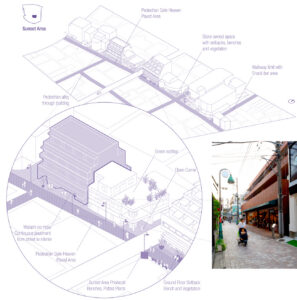
Framed within the question of how gender influences the production of urban space, this study reveals how Jiyūgaoka, a high-end suburban area in Tokyo, has developed by targeting a particular gender role: women as caretakers and consumers. Car-safe and bike-friendly, Jiyūgaoka pedestrian areas have more greenery, pavement, and urban furniture in comparison with the average Tokyo street. Jiyūgaoka spatial practices encourage the meeting of people in the public realm, creating relationships between behaviors and their supporting physical environment. By aiming at women, other non-normative bodies were rendered into the city, enhancing public life and creating an accessible milieu. Jiyūgaoka genderfication process, by which the overlaying of commercial and gender mechanisms has impacted urban phenomena, is shown through a chronological investigation of gender-charged contents and its mapping in the urban fabric. This study demonstrates how urban transformation in Jiyūgaoka has encompassed changes in the lives of women in Japanese society. Representative examples from each period illustrate the physical translation of this development, from a home cooking school to a promenade with hundreds of benches.
Image associated with the article: Women Who Design  “Master” Bedrooms:  A Study of Kerala Women in Architectural Practice
Article Subscribers

Women Who Design “Master” Bedrooms: A Study of Kerala Women in Architectural Practice

by Soumini Raja, Sumitra Nair pp. 429–447
While the practice of architecture has traditionally been a male-dominated field in India, gender discourse in architecture has been slowly shifting the gender balance towards an increased participation of women in architectural practice and academics, as both leaders and team members. This paper explores the nuances of feminist spatial practices locating itself in the state of Kerala, India, that has historically unique gender politics. The paper draws on an ethnographically informed study of twelve women architects, using “Master Bedrooms” as a discursive tool to capture their engagement in professional practice. The study revealed that the critical feminist spatial practice is not watertight nor a conscious way of practice. It does not even require conformity to any one idea of feminism. These women practitioners deploy multiple modes of engaging with and challenging the dominant norms of professional practice. These range from conscious acts of individual subversion to organizational structuring, from overt challenges to quiet resistance. This paper offers to problematise contemporary discourse on critical feminist spatial practices in the context of India and thereby, contribute to critical spatial pedagogies.
Image associated with the article: The Role of Women in the Culture of Dwelling: Urban Spaces at Play in the Projects of Jacoba Mulder and Marjory Allen, Lady Allen of Hurtwood
Article Subscribers

The Role of Women in the Culture of Dwelling: Urban Spaces at Play in the Projects of Jacoba Mulder and Marjory Allen, Lady Allen of Hurtwood

by Paola Di Biagi pp. 449–464
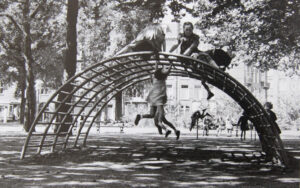
There are many female architects and urban planners who have contributed to the development of disciplines aimed at improving the daily lives and social relations of many citizens throughout the twentieth century, most notably in the design and construction of domestic and urban spaces. The Dutch urban planner Jacoba Mulder and the English landscape architect Marjory Allen, Lady of Hurtwood, did so in the second post-war period in Amsterdam and London, respectively, both engaging in the design for a new habitability of the public space, a space “of the” public that they wanted to make accessible to everyone, especially children and young people. Prominent figures in pioneering experiences, they had the opportunity to practice an interstitial planning capable of realizing safer and more liveable urban spaces. Today, their reinterpretation can inspire interesting insights into contemporary city design and wider general reflections on the culture of dwelling and the design competence of women. A competence that, be it “expert” or “common,” can make public space more habitable for all.
Image associated with the article: The Diversity of Women’s Engagement with Modern Architecture and Design: Three Case Studies
Article Subscribers

The Diversity of Women’s Engagement with Modern Architecture and Design: Three Case Studies

by Kathleen James-Chakraborty pp. 465–480
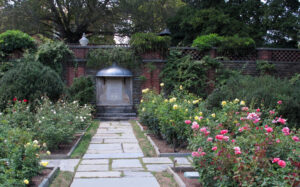
A range of often overlooked ways of engaging with architecture and design have historically offered women from around the world with the means of making a living and of advancing the careers of other women, as well as of encouraging the acceptance of artistic experimentation. These include journalism, retailing, and philanthropy. For instance, Ethel Power edited the influential American shelter magazine House Beautiful from 1923-34. Estrid Ericson founded and ran the Stockholm design shop Svensk Tenn for over half a century; she also designed many of its characteristic products. Gira Sarabhai was instrumental in the establishment of the Calico Museum and then the National Academy of Design, both located in her native Ahmedabad, India, and contributed to the design of the building in which the latter is housed. Writing such achievements back into the history of architecture and design helps provide the foundation for a more inclusive approach to those professions today.
Image associated with the article: On the Work of Lisbeth Sachs:  From the Aesthetic to  the Environmental Impact  of Architecture
Article Subscribers

On the Work of Lisbeth Sachs: From the Aesthetic to the Environmental Impact of Architecture

by Stamatina Kousidi pp. 481–501
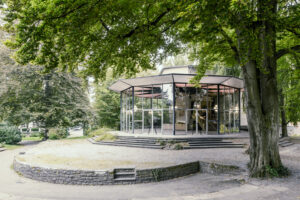
Characterized by continuity, inventiveness, and a fervent exploration of the relationship between architecture and the environment at large, the work of Lisbeth Sachs was included in the 1979 issue of the Aktuelles Bauen magazine on women and architecture. This contribution proposes an in-depth review of Sachs’ underexplored work, suggesting a better understanding of her role as a practicing woman architect at a time when this task was not a matter of course. It places an emphasis on the dialogue Sachs established with her contemporaries, on the dense network of experiences that shaped her design approach, and on the ways it intersected with the late twentieth-century discourse on the relationship between architecture, ecology, and nature. It is not coincidental that the work of Frei Otto would have a long-lasting influence on Sachs’ design experimentation, informing her theoretical and applied design projects. Her design exploration, too, was influenced by the technological advances, the societal changes and the shifts in the cultural agency of  architecture, proposing each time a solution that addressed, rather than excluded, its surrounding context, cultural, physical, or environmental. 
Image associated with the article: A New “Book of  the City of Ladies”
Book Review Urbanism Open Access

A New “Book of the City of Ladies”

by Dörte Kuhlmann, Guest-Editor, Alexia Bumbaris pp. 503–511
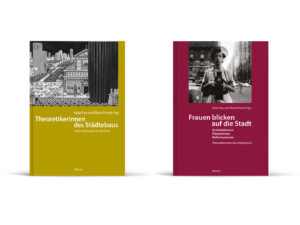
           Theoretikerinnen des Städtebaus.Texte und Projekte für die Stadt, By Katia Frey and Eliana Perotti (eds.)Berlin: Reimer, 2015240 mm x 170 mm42 b/w illustrations352 pages€ 49 (paperback)ISBN: 978-3-496-01532-1   Frauen blicken auf die Stadt. Architektinnen, Planerinnen, Reformerinnen. Theoretikerinnen des Städtebaus II, By Katia Frey and Eliana Perotti (eds.)Berlin: Reimer, 2019240 mm x 170 mm45 b/w illustrations360 pages€ 49 (paperback)ISBN: 978-3-496-01567-3
Book Review Theory Open Access

Sibyl Moholy-Nagy: Architecture, Modernism and Its Discontents
by Eszter Polonyi pp. 513–518
 Sibyl Moholy-Nagy:Architecture, Modernismand Its Discontents By Hilde HeynenLondon: BloomsburyStudies in Modern Architecture, 2019234 mm x 156 mm 288 pagesUS$ 100.00 (hardback),US$ 31.46 (paperback)ISBN: 978-1-350094-11-6 
Image associated with the article: Women [Re]Build: Stories, Polemics, Futures
Book Review Criticism Open Access

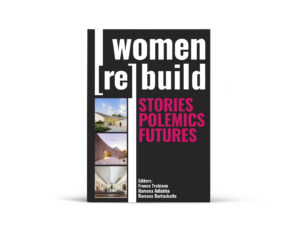
Women [Re]Build: Stories, Polemics, Futures

by Lynnette Widder pp. 519–523
   Women [Re]Build: Stories, Polemics, Futures          By Franca Trubiano, Ramona Adlakha, and Ramune Bartuskaite (eds.)   Novato CA, USA: Applied Research and Design / Oro Editions, 2019, 2018241 mm x 165 mm144 pagesUS$ 29.95 (paperback)ISBN: 978-1-943532-43-8