
Archive
Category: Housing
Essay
Housing
Open Access
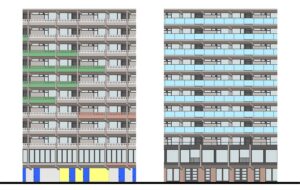
Fine-Tuning the Intensity of Modifications to Revitalize Brutalist Mass Housing: Learning from Park Hill and Bijlmermeer
by Fabio Lepratto
pp. 103–128
This essay investigates design opportunities associated with the revitalisation of Brutalist mass housing megastructures. Through a comparative analysis of two sets of projects – one pair in the Park Hill Estate (Sheffield, UK) and one pair in the Bijlmermeer district (Amsterdam) – the text theorizes an implicit process where intensity of modification is honed from one experience to the next. This process responds to the need for change brought by new social, spatial, environmental, and figurative requirements while simultaneously addressing conceptual and material integrity issues of these controversial architectures. The essay takes as its starting point the dilemmas ideally present in a practitioner’s mind when adopting an inventive approach to modifying these buildings, overcoming a purely conservative mindset. Following a reflection on possible actions, it emphasises four lessons derived from four design themes: the ground floor as a link between building and city; inner circulation as a relational experience; dwelling interiors as variable spaces; and façade design as a means of expressing change. The reflections thus offer interpretative and operational contributions to imagine actions for similar housing structures.
Article
Housing
Open Access
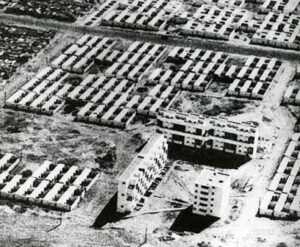
Beyond Modernist Housing: Can the Mass Housing Model Accommodate Human Agency?
by Nadia Shah
pp. 23–43
The lack of attention paid to the disempowerment of the residents has been a shortcoming of the modern mass housing model. Even today, no policies promote and support the residents’ efforts to continue improving their quality of life through actions involving changing the physical environment. Following a brief history of the origins of mass housing in the West through the discourse in the modern movement, the paper expands on implementing these modern ideas in the post-War non-Western region and how they were received and appropriated there. The article presents the case study from the author’s work on Korangi Town in Karachi, Pakistan, to show that the residents’ changes reflect their active agency. However, it was an unintentional outcome of modernist design and planning. This paper is more than just a critique of the cultural apathy of modernism. It questions what happens to a modernist project after the expert leaves the arena. How do residents adapt to or cope with their physical environment? Moreover, is there a way to include human agency in mass housing?
Article
Housing
Subscribers
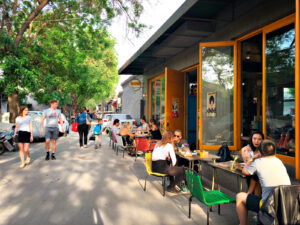
Politicized Gentrification: The New Urban Renewal Movement in Beijing
by Wei (Windy) Zhao
pp. 93–112
In April 2017, the Beijing municipal government enacted a new, three-year urban renewal policy that is aimed to restore and improve the built environment of the 2,435 alleyways located in the historic center of the city. The local implementation, however, has focused on the sealing of doors and windows that led to homes and small businesses for decades. As a result, thousands of businesses that had provided daily services to local residents have shut down, forcing many people to move to other cities. Drawing on archival research and interviews, this article argues that the Beijing municipal government is merely using urban renewal as camouflage for a politically-oriented gentrification project which not only eliminates non-permanent residents, but also deconstructs, as well as reconstructs, “place” at the local level as a means to control social activities and relationships. The result is the creation of a new image of the capital of China, which exhibits the ideas of regularity, singularity, segregation, and authoritarianism.
Buy
Already in your cart -
View cart
Article
Housing
Open Access
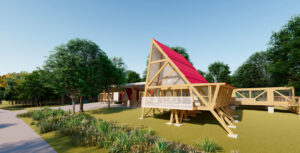
Permitting a Homeless Transition Village: Transactions between the Informal and the Formal
by Stephen Luoni
pp. 137–157
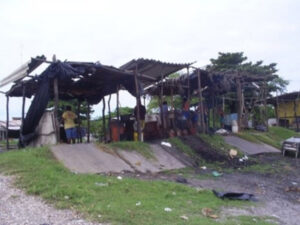
More than three million Americans experience homelessness annually. Emergency shelter capacity is limited while local governments are unable to provide even temporary housing. Informal housing involving interim self-help solutions are now popular adaptive actions for obtaining shelter, despite nonconformance with city codes. Unfortunately, most informal solutions have resulted in objectionable tent cities and squatter campgrounds where the local response has simply been to move the problem around. Our homeless transition village plan prototypes a shelter-first solution using a kit-of-parts that can be replicated in other communities. Village design reconciles key gaps between informal building practices and formal sector regulations, creating a permittable solution under most city codes. While informality is traditionally associated with the “topography” of unplanned hyper-growth in developing nation economies — and not with design disciplines or advanced economies— our project highlights informality as a mode for effecting new urban solutions within obdurate regulatory environments. Indeed, the informal has emerged as an important design epistemology in advanced market economies given the polarization of their economies and the need for distributive justice.
Article
Housing
Subscribers
Housing by People and Work: Design Principles for Favelas Residents in Economies of Commerce and Service
by Ana Rosa Chagas Cavalcanti, Tiziano Li Piani
pp. 113–136
This article proposes a new approach towards the design and planning of social housing destined to residents living in informal settlements of Brazil. It is aimed at restoring the proximity between the labor and domestic functions within the spatial domain of the house. This need emerges from a field research aimed at addressing the spatial logics emplaced by residents in Brazilian favelas. The integration proposed in the article is meant to be achieved with the combined goal of improving the living conditions of the residents, sustaining also their socio-economic development, while promoting also the economy of the city. Graphic guidelines are shown to the reader after a critical analysis of the main systems of housing currently emplaced for unprivileged people.
Buy
Already in your cart -
View cart
Article
Housing
Open Access
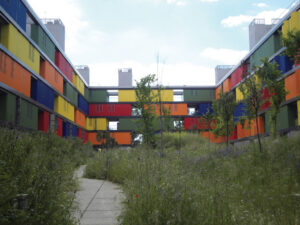
Project Strategies and Evaluation Methods for Contemporary Social Housing
by Romina Marvaldi, Elisabetta Pani
pp. 45–57
The deep social transformations occurred in the last decades have deeply affected the patterns of urban living. In this sense, experimentation on housing plays the dual role of investigation and validation of our hypothesis that residential space should reflect new life-styles. At the beginning of the 21st century, social housing represents the main field for experimentation.In the current architectural scenario, many interesting experimentations on contemporary housing can be observed.The approach proposed in this article starts with post-occupancy evaluation of some case-studies extracted from extensive research on European case-studies realized projects. It then analyzes the results of such evaluation to abstract issues concerning different aspects of contemporary living that could be coped at the design level. This method combines spatial and typological research, issues about housing and planning approaches developed by the promoters of the case-studies discussed. Providing quality social housing involves the coordination of multiple actors and synergies..