
Archive
Category: Sustainability
Article
Sustainability
Subscribers
Unkapani Upcycle: Cultivating Grassroots Enterprise and Urbanism in Istanbul
by Jeff Balmer, Demet Mutman Uluengin, Mehmet Bengü Uluengin, Peter Wong
pp. 223–238
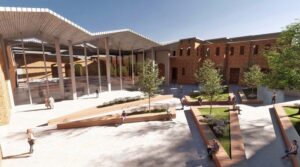
Pervasive environmental and social crises necessitate the invention of new models for conceptualizing architecture. In pursuit of a more sustainable and equitable paradigm, our research lies at the intersection of social equity through community engagement, the adaptive enhancement of architecture and urban fabric, and sustainable practices centered on the salvage and reuse of materials and infrastructure. Our research questions are prompted by this same approach: can the emergent conditions and needs of a fully contemporary project help inform its expression, use, and cycle of life in more advantageous ways than the two positions above? How might we structure an a posteriori methodology that allows for flexible project-making alongside the changing conditions of buildings in time? The current locus for our research is the city of Istanbul, a metropolitan region unique in its historical, cultural, and political contexts, yet simultaneously representative of pervasive social, economic, and environmental conditions in cities across the globe.
Buy
Already in your cart -
View cart
Book Review
Sustainability
Open Access
Wet Architecture
by Elizabeth Farrelly
pp. 185–189
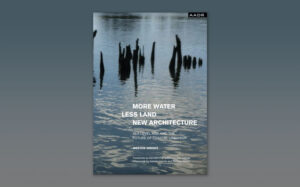
More Water, Less Land, New Architecture Sea Level Rise and the Future of Coastal UrbanismBy Weston Wright With forewords by Kenneth Framptonand Ana Tostoes, and afterwords by Rasmus Waern and Karsten HarriesBaunach, Ger.: AADR - Spurbuch Verlag, 202217.3 x 2 x 24 cm[6.8 x 0.8 x 9.4 inches in.] illustrated176 pages€38 / $36.42 paperbackISBN: 978-3-88778-588-8
Conference Report
Sustainability
Open Access
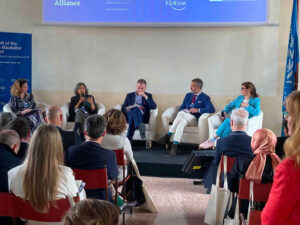
Baukultur at the 18th Venice Biennale: The Davos Alliance Kick-off Meeting
by Maurizio Sabini
pp. 191–196
Article
Sustainability
Subscribers
Topological Transmutation of the Urban Heat Island: Experimenting Ecological Urbanistic Intervention of Public Space in Toledo
by Yong Huang
pp. 131–146
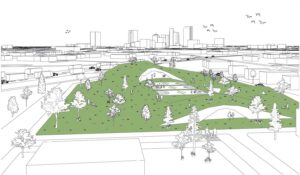
The exodus of urban dwellers to suburbs and the countryside, dramatized by the pandemic, has both escalated the UHI effects of cities and expanded the carbon footprint at a greater pace, further contributing to the climate crisis. Traditional remedies to mitigate UHI are reactive to existing urban conditions and less well equipped to address the complex urban issues holistically at multiple levels. This design-based research explores topological transmutation as a twofold design approach. It aims at testing alternative design approaches of urban environments that will address UHI issues based on a holistic attitude toward ecological urbanism, while simultaneously investigating mutation as a design strategy that could renegotiate, reconnect, and recreate new centers of public space. Toledo, a legacy city in the Midwest, was selected as the model for this design-based research due to its intensifying social inequality and urban decay and climbing UHI effects. Prototypes of adaptable and sustainable design concepts were tested in selected sites representing typical urban situations. Urban interventions to the public space are envisioned to enrich everyday spatial experiences in the streets, neighborhoods, and the city.
Buy
Already in your cart -
View cart
Book Review
Sustainability
Open Access
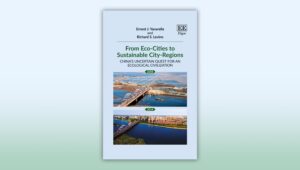
From Eco-Cities to Sustainable City-Regions: China’s Uncertain Quest for an Ecological Civilization
by Robert J. Koester
pp. 237–242
From Eco-Cities to Sustainable City-Regions: China’s Uncertain Quest for an Ecological CivilizationBy Ernest J. Yanarella and Richard S. Levine Edward Elgar Publishing, 2020Dimensions illustrations288 pagesUS$142 (hardcover)US$45 (paperback)US$36 (eBook) ISBN: 9781839102783
Article
Sustainability
Subscribers
Sea-Level Rise and South Florida: Envisioning Public Space as a Function of a Changing Natural Environment
by John Sandell
pp. 143–162
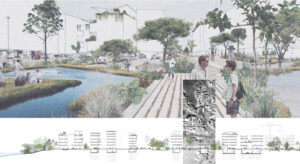
Sea-level rise and its effects on low-lying territory posit a rethinking of urban environments. Drawing on green infrastructure concepts and resiliency principles in urban design, this study examines how these urban environments could evolve. The study describes the challenges that coastal cities face and advances a cross-disciplinary research approach to a specific coastal site. The site location is Fort Lauderdale, Florida. The study adopts a transformational strategy that directs the development of an urban design inclusive of hydro-patterns, vegetation, building mass, and its orientation. The strategy foregrounds nature’s role in the conceptualization of changing conditions and the built morphologies at the scale of territory and neighborhood. By exploring these relationships, the project highlights the dynamics of the natural environment as a frame for reconfiguring public space as permeable and adaptive networks, enabling an open and indeterminant understanding of urban commons.
Buy
Already in your cart -
View cart
Article
Sustainability
Subscribers
Cut|Fill: Technofossil Waste Narratives of Brick and Dredged Sediments
by Catherine De Almeida
pp. 163–196
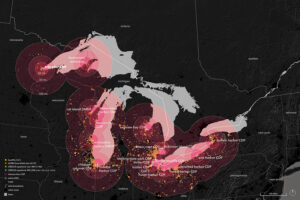
Today’s waste landscapes derive from nineteenth-twentieth century materials extraction, processing, and disposal practices by which certain landscapes are sacrificed for the construction of others. Long term impacts of material byproducts from these industries may be understood as technofossils—new materials shaped into artifacts that will likely be preserved as geological deposits. This article explores shifts in cultural attitudes and approaches towards waste materials and landscapes by focusing on two types of extraction-based industries that create technofossils: brick, in which desired materials such as sands and clays are extracted and manipulated, and dredged sediment, in which undesirable materials, such as sands, clays, and soils, are extracted from shipping channels and stored in landfills of land. The tension between these industries reveals opportunities for rethinking linear models of materials extraction, processing, and disposal as cyclical and integrative. Historiographic, archival, and case study research are used to investigate these industries. Speculative mapping and a design research studio explore these material legacies, and their potential ecological, socio-economic, and cultural values.
Buy
Already in your cart -
View cart
Article
Sustainability
Open Access
Food Hubs and Rebuilding Missing Middle Market Structure in Agriculture: The Social in Supply Chain Development
by Stephen Luoni
pp. 111–142
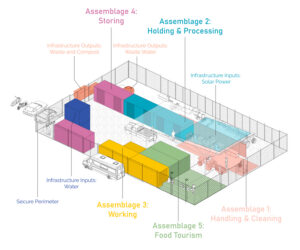
Tens of millions of Americans became food insecure during the COVID-19 pandemic as independent farmers dumped millions of tons of food due to economic lockdowns. Yet contract growers looped into vertically integrated monopoly supply chains escaped system breakdowns. Food provisioning is often seen as polarized between local scale and continental/global market scale. Food supply and consumption are functions more of market structure than scale. Farmers reliant on direct sales to local restaurants, schools, universities, and hospitals saw their markets evaporate overnight. This Food Away from Home market constitutes 54 percent of food consumed nationally yet is vulnerable since direct-to-consumer sales lack supply chain structure. Urban food hubs dotting American cities before their eclipse by agrifood monopolies could have maintained supply. The food hub was a resilient public supply channel (a food commons) organizing a plurality of local and global providers alike. To address food insecurity our food planning effort for the State of Hawaii is premised on building similar missing middle market structure featuring a food hub, a food innovation center, and farm base yard processing facilities.
Book Review
Sustainability
Open Access
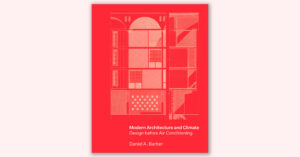
Modern Architecture and Climate
by Brian Ford
pp. 265–270
Modern Architecture and Climate: Design before Air ConditioningBy Daniel A. BarberPrinceton University Press, 20208 in. x 10.5 in. [203 mm x 267 mm]76 color + 196 b/w illustrations336 pages$60.00 / £50.00 (hardcover) ISBN: 978-0-691-17003-9
Article
Sustainability
Subscribers
Landscape Lifecycles as a Speculative Design Research Practice for Transforming Waste Conditions
by Catherine De Almeida
pp. 185–220
Published: 2020-06-23
Research-based design has been foundational for landscape architecture. Analytical layering in geographically-based mappings has become a universally applied, formulaic approach. For waste landscapes, this has generated similar redevelopment strategies for drastically differing waste landscape conditions. This site typology, however, requires more nuanced approaches. As a design-research framework, “landscape lifecycles” aims to tackle waste landscapes with integrative strategies and techniques that reactivate waste as a legible and dynamic contributor to local and regional contexts; a method for integrating multiple diverse programs rooted in economic, environmental, and social performance to form hybrid assemblages in the transformation of perceived material and spatial waste. This article highlights design-research and generative representational methods developed through projects and coursework that embrace speculation as a means of engaging with waste conditions at multiple scales — from the material to the region. These methods range from speculative geographic, process, and abstract mapping to scenario testing to time-based, projective design that document, explore, and test an argumentative hypothesis and the multi-scalar design implications of research on the imaginative potentials of waste transformation.
Buy
Already in your cart -
View cart