
Archive
Tag: Aldo Rossi
Article
Theory
Subscribers
Three Aspects of Nostalgia: Thoughts on the Work of Aldo Rossi
by Edna Langenthal, Hagit Leshem
pp. 153–175
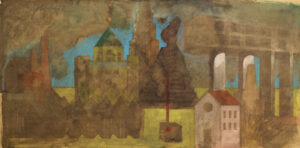
This essay discusses various aspects of the term “nostalgia.” Rather than an individual plight, it will be considered here as a symptom of contemporary society, which does not stand in contrast to modernity but is derived from it. Nostalgia characterizes humans’ connections to the past, to their sense of self, home and community. We reflect on how this affects our longing for home, how we envision our collective home, and how we place ourselves in the world. We distinguish three types of nostalgia: Restorative, longing for the restoration of a lost home; Utopian, transforming our longing into a utopian ideal; and Reflective, which differs by shifting the focus from recovering what is perceived as a loss of absolute truth to pondering questions of history and the passing of time. The essay focuses on nostalgia’s bearing on architecture, as demonstrated in the work of Architect Aldo Rossi. His oeuvre, in which the contemplation of time and memory are inherent, reveals all three forms of nostalgia, highlighting and questioning their centrality to architectural thought and practice.
Buy
Already in your cart -
View cart
Article
Theory
Open Access
Planning Criticism: Operative Contingencies in the Project of the Italian Tendenza
by Pasquale De Paola
pp. 31–44
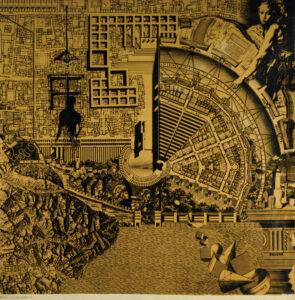
In order to re-assess architecture’s critical role and redefine the disciplinary domain of its production, this essay looks beyond forms of technocratic utopias, while it historically analyzes operative theoretical contingencies relative to the “project” of the Italian Tendenza, which is examined as an historical form of ideological criticism of the discipline of architecture and its contentious relationship between intellectual and capitalistic production. Particularly, this essay explores the ideological and historiographical production of the 1960s and 1970s. This was when the term Rationalism and its theoretical body of work acquired renewed prestige replacing the ephemeral aesthetic of the Modern Movement with a grounded and critical discourse based on Aldo Rossi’s and Massimo Scolari’s position relative to the need for architecture to re-affirm its own statute, in order to free itself from any form of technocratic utopia. While questions of interdisciplinarity remain essential toward an understanding of future architectural contingencies, it is only by questioning the status quo of architecture and re-examining its past that a new sense of criticality can be generated.