
Archive
Tag: American City
Essay
Urbanism
Subscribers
A Prairie Archipelago
by Martin Hättasch, Dean Almy
pp. 91–118
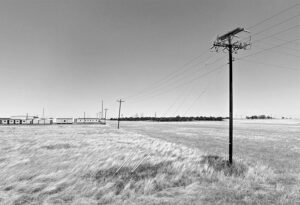
The Green Archipelago, introduced by Oswald Mathias Ungers in 1977 in response to Berlin’s depopulation, amplified a lack of urban coherence by reducing the city to a series of idealized urban islands floating on a green “sea.” This framework established a dialectical relationship between zones of urban intensity – islands – and a diffuse, low-intensity landscape – the sea. Within this duality of formal control and laissez-faire, the island preserves the authority of architectural form and serves as the site of concentrated urbanity. Conversely, the “sea” is the city’s antithesis – defined not by its content but by its emptiness. But how can the dialectic of the archipelago be sustained – or initiated – under conditions of rapid urban expansion, when the starting point is an urban landscape that, in its entirety, resembles the “sea”? Building on research into the periphery of Austin, TX, this essay proposes a conceptual reversal of the archipelago without abandoning its fundamental principles: where Ungers’ dialectical agency resides in the island’s architectural morphology, the Prairie Archipelago shifts this agency to a landscape capable of producing friction, limits, and differentiation from within.