
Archive
Tag: architectural space
Essay
Theory
Open Access
The Wall That Articulates: Characteristics and Operability in Space
by Joana Pinheiro
pp. 87–105
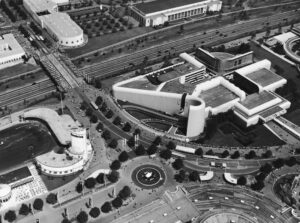
This essay stems from a dissertation that studies the “architectural wall” from a conceptual point of view. The wall acts in space in different ways and can present the purpose of emplacement, reference, articulation, enclosure or of an inhabitable wall. Among the wall types studied in the thesis, the wall that performs as an articulation agent is described in this paper. For that matter, a group of architectural works, that translate in a definite manner the operativity of this theory, is presented. Through the analysis of these case-studies, the definition of the type, by its determining properties, is reached. Besides considering this research as a scientific instrument in the field of architecture to understand the comprehensive element “wall,” which further interacts with man and its environment, it is also regarded as a didactical means. Through the acknowledgement of the properties given in the tables and diagrams of the type, it is possible along the process of design to identify this architectural element within its complex play of variables, and thereby use it in a more scrupulous and consequent manner.
Essay
Cross-Disciplinary Studies
Open Access
Casting Call: Spatial Impressions in the Work of Rachel Whiteread
by Peter L. Wong
pp. 97–110
Published: 2016-05-01
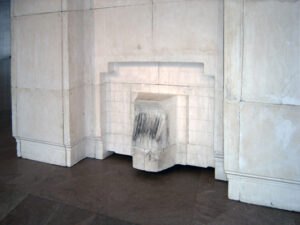
For more than 20 years, Rachel Whiteread has situated her sculpture inside the realm of architecture. Her constructions elicit a connection between: things and space, matter and memory, assemblage and wholeness by drawing us toward a reciprocal relationship between objects and their settings. Her chosen means of casting solids from “ready-made” objects reflect a process of visual estrangement that is dependent on the original artifact. The space beneath a table, the volume of a water tank, or the hollow undersides of a porcelain sink serve as examples of a technique that aligns objet-trouvé with a reverence for the everyday. The products of this method, now rendered as space, acquire their own autonomous presence as the formwork of things is replaced by space as it solidifies and congeals. The effect is both reliant and independent, familiar yet strange. Much of the writing about Whiteread’s work occurs in the form of art criticism and exhibition reviews. Her work is frequently under scrutiny, fueled by the popular press and those holding strict values and expectations of public art. Little is mentioned of the architectural relevance of her process, though her more controversial pieces are derived from buildings themselves – e,g, the casting of surfaces (Floor, 1995), rooms (Ghost, 1990 and The Nameless Library, 2000), or entire buildings (House, 1993). From an architect’s perspective, Whiteread offers an unsettling interpretation of architectural space, one that is dependent on filling space to the brim, barring life from entering or holding it in suspended animation from within. This paper argues that architectural form, whether fashioned from contingencies or autonomous acts, has reached a saturation point in architectural criticism. The work of Whiteread helps forge an alternative reading that embraces the object-oriented methods inherent in design by turning the tables on our fascination of figural form and the obsession of substance. The essay analyzes several of Whiteread’s projects in order to explain the meaning and techniques of her work, and places them within the context of Luigi Moretti’s 1953 essay on the “Structures and Sequences of Spaces.” It concludes with research work that attempts to use Whiteread’s method to better understand the figural and material attributes of architectural space.