
Archive
Tag: autonomy
Article
Criticism
Subscribers
The Japan National Stadium: Between Architectural Bigness and Urban Smallness
by Aya Jazaierly, Andrea Canclini
pp. 57–77
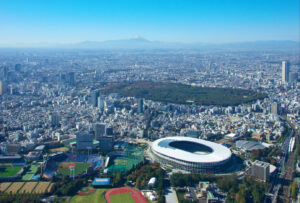
In 2012, Zaha Hadid Architects (ZHA) was announced winner for the competition to design the Japan National Stadium, the main venue for the 2020 Olympics. Over the years, the project faced a range of controversy that ended with the scrapping of ZHA’s proposal in 2015, and the adoption of a non-iconic stadium designed by Kengo Kuma, one that is more integrated with its context. The critique against ZHA’s project involved Japanese architects led by Fumihiko Maki; it stemmed from the urban consequences such an architectural object would have, bringing the protagonists into conflict at the very intersection of their nature as architects and urban planners. This paper aims to analyze the reasons behind this controversy, which lies within the theoretical debate between a phenomenological approach on one hand and the autonomy of design on the other. Despite her established status as an archistar, Hadid’s proposal seemed to suffer the side effects of Koolhaasian “bigness”; the heritage discipline of preserving the built and natural environment of the neighborhood suddenly became a matter such an important structure had to deal with.
Buy
Already in your cart -
View cart
Essay
Theory
Open Access
The Absurd Alibi
by Joseph Godlewski
pp. 7–14
Published: 2016-01-28
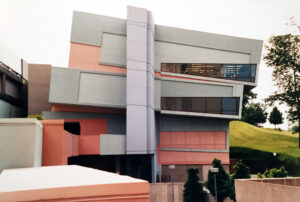
Generated from a discussion at the Fall 2015 ACSA Conference in Syracuse, New York, this article tackles the very topic of the conference (“Between Autonomous and Contingent Objects of Architecture”). It reflects on projects of autonomy (new and old) asking what they contribute to architecture as a discipline and profession. What, if anything, is at stake in such projects? It discusses some contemporary examples of autonomous and object-oriented theories of architecture. While autonomy originally posed a radical challenge to ways architecture was made and reasoned, this article contends that the critical energy generated with that challenge has been exhausted and replaced with disengaged copies of earlier experiments. It is unclear what insights these newer versions provide to architectural discourse. This article further conjectures that the socio-economic context in which autonomy re-emerges today is fundamentally altered leaving its advocates in a much more precarious position than the exponents of previous iterations of architectural autonomy. It concludes that notions of architectural autonomy are an absurd alibi, incommensurate with a discipline so constrained by social and economic expectations as architecture.
Article
Cross-Disciplinary Studies
Open Access
Landscape as a Conceptual Space for Architecture: Shifting Theories and Critical Practices
by Michelle Laboy
pp. 77–96
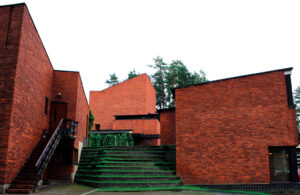
Architecture constantly negotiates the ideal and the real. These two conditions, being a reflection of cultural values and practices, change over time. I suggest that what remains constant to architecture are the lasting spatial and formal qualities that engage in constructing the physical and cultural landscape: how it channels natural light and air, how its permanent structures organize space, frame and supports life, shelter, protect and comfort. There are the qualities that make architecture endure and adapt to a changing cultural and natural environment. The placement of architecture in the real world often seems contaminated by a multiplicity of socio-economic structures and processes, but its situation in the world is also what provides an opportunity to engage in the making of a landscape where over time architecture finds a critical autonomy and relevance. The role of architecture in making or responding to the landscape is one of the critical questions in current debates about autonomy and contingency. In this paper, I expand on the work I presented at the ACSA conference at Syracuse University in the Fall of 2015, where I explored how the discipline of architecture has absorbed the landscape as a conceptual space, to “theorize critical means of engagement with the formal, spatial and performance qualities of its territory, to define critical contingencies that are meaningful through space and time, and to refuse those that can keep it tied to the trivialities of a temporary situation.” More specifically, my work examines how the notion of the ecological permeates the architecture discipline from the field of landscape, providing a framework for architectural discourse to theorize the relationship of the idealized and the real, to create new singular form within a situation of multiplicity.
Article
Reflective Practice
Open Access
Practice as Autonomous Object
by Marc Manack
pp. 47–57
Published: 2016-01-26
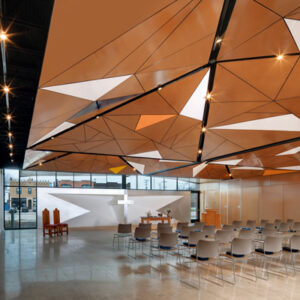
The purpose of this paper is to argue for “practice” as an autonomous object in architecture by rehearsing contemporary attempts at its definition, and offering an alternative. To support the argument, the author utilizes the characterization of objects from the philosophical practice Object Oriented Ontology (OOO). Additionally, exemplars from a realized project designed by the author are used to demonstrate how representations reveal the metaphysical autonomous object of practice from within material projects. The aspiration of this work is to hunt for an object of architecture independent of the polemics and compromises that seek to legitimize practice with academic and professional audiences. The author suggests that the pursuit and articulation of an autonomous practice that exists outside of both the contingent singular building, and the relations to all other architectures that academic discipline demands, is useful in empowering new creative practices in the field.
Article
Theory
Open Access
Designed and Emergent Tectonics: Resituating Architectural Knowledge
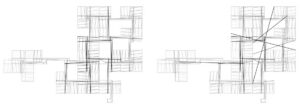
by Sophia Psarra, Fani Kostourou, Kimon Krenz
pp. 15–32
Architecture is usually defined through intent while cities come into being out of multiple human actions over a long period of time. This seems to trap us between a view of architecture as authored object, and a view of the city as authorless, evolutionary process. The debate about the autonomous and the contingent object thus, goes back to the separation of architecture from its skill base in craft and building practice that took place in the Renaissance. This separation also includes the operations through which buildings and cities are produced by designers, clients, users, regulatory codes, markets and infrastructures. The resurgence in the debate on the competing claims of autonomy and contingency testifies that since the Renaissance we have failed to develop theories and techniques that address the relationship between authored architecture and authorless contexts. As a result, coupled with commercial forces, recent advancements in digital technology and complexity theory claim architecture and the city as self-organization, dismantling architecture and depriving it from relevance in shaping social capital. If in the Renaissance, architecture was separated from the city, which was the relationship between the ways in which a city was built and the urban fabric? How can we better understand the relationship between the architectural project and the processes that configure the urban structure in which it is situated? This paper argues that for architecture to reclaim its scope as a social discipline it needs to theorise its relationship with the social, the political and the economic processes of its context.