
Archive
Tag: Berlin
Project
Reflective Practice
Subscribers
Berlin Fragments. A Heterography of an Architectural Form
by conrad-bercah
pp. 23–45
Published: 2018-06-25
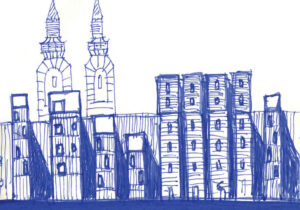
Architectural form lives a number of mysterious lives that are characterized by different yet simultaneous temporalities. It has been said that a “secret date” exists between the modern and the archaic, not so much because the modern is fascinated by the archaic but because “the key to understanding the modern is hidden somewhere beneath the timeless and the pre-historical.” The mystery surrounding the intellectual sources in the architect’s work arguably lies in the multifaceted (aesthetic, sociological, political, spatial) relationships it establishes with a multitude of friends - be they artists, poets, or architects - who are responsible for his development and keep feeding his practice, even if long dead.
Buy
Already in your cart -
View cart

Essay
Urbanism
Open Access
Urban Hacking. A Nobel Project for the Redundant City
by conrad-bercah
pp. 99–118
In 1963, Constantinos Doxiadis, Buckminster Fuller and Marshall Mc Luhan signed, among others, the little known “Delos Declaration,” which alerted the world that the “problem of expanding urban area may soon outstrip all other problems facing mankind, except that of nuclear war.” In the year 2016, it is clear to most that the “urban meltdown” has indeed outstripped “all other problems facing mankind, ‘including’ the possibility of nuclear war” and the reality of the financial meltdown, of which it is a direct result and from which there is no U-turn. How can we assure that modern cities develop a regenerative relationship to the living world on whose health they ultimately depend?The current scenario is dominated by the Redundant City whose march cannot be stopped ex-ante. Staying clear of Renzo Piano’s misguided (and falsely politically correct) rhetoric of urban mending, through "urban adjustments" we have a shot at trying to restore a sense of urbanity or “cityness” to constantly growing, shapeless conurbations. “Urban Hacking” argues for a new way to organize our urban systems, and for thinking and acting beyond what is considered “sustainable” development. Urban Hacking aims at establishing a healthier relationship between Natur and Kultur. The theory sponsors a new attitude towards urban matter based on little talked about modus operandi like demolition, recycling, multi-scaling and urban hacking.Urban Hacking may eventually lead to a Dörfer-Großstadt (metropolis of villages), namely an adjustable planning concept to counter the various redundancies of our time.