
Archive
Tag: climate change
Essay
Cross-Disciplinary Studies
Open Access
Rain, Rain, Go Away: Geoengineering and the Illusion of Control
by Hannibal Newsom
pp. 109–130
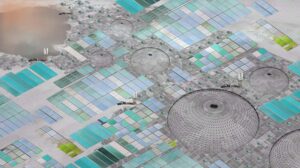
“Geoengineering” is increasingly seen as the best, perhaps even last, hope in the fight against global warming. Calls for such practices as Solar Radiation Management are becoming urgent as the effects of the climate crisis make themselves visible. This essay uses California’s Salton Sea, a geo-engineered palimpsest of once natural terrain turned toxic and inhospitable through human intervention, as a case study against the illusion of control. Through the critical lens of Magical Realism and the visual language of the architecture studio, this essay calls into question the desire to exert human control over natural systems, illustrating that the unintended consequences of such efforts will only serve to compound the problems they were initially meant to resolve.
Article
Landscape Urbanism
Subscribers
The Adaptive Island: Proving Ground for Temporal Awareness in the Anthropocene
by Dalia Munenzon, Kayci Gallagher
pp. 177–196
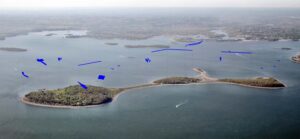
Peddocks Island is a 200-acre [80.9 ha] island which is part of The Boston Harbor Islands National Recreation Area (US). The island has limited public transportation and is rarely visited by humans. Its use and ecology has transformed throughout history and it is now positioned to transform again with climate change and rising sea levels. This article suggests that the island’s history, geology, mythology, and ecology situate it perfectly to experience climate change’s temporal and spatial impacts. Amitav Ghosh points out the need to communicate and narrate the uncertainty of the changing climate and build temporal awareness through narratives. In this work, we suggest the island as a “living lab,” available for both controlled observations and for the public to experience the realities of climate change. This article provides tangible and experiential concepts for Ghosh’s question by exploring mutable and ephemeral infrastructure design strategies
Buy
Already in your cart -
View cart
Article
Open Access
Resilient Urban Ecologies: Adaptive Sustainable Infrastructures for Addis Ababa
by Ruben Garcia Rubio, Taylor J. Scott
pp. 473–494
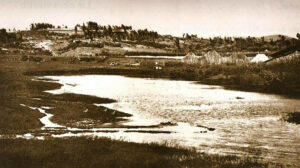
Addis Ababa, Ethiopia’s capital city, is currently experiencing an unprecedented population boom and subsequent rapid urbanization which has fostered internal imbalances within the city’s urban landscape. To this should be added the negative effects derived from the continued impacts of a changing global climate. Together, these combined consequences have compromised the sustainable development of Addis Ababa. This essay addresses the initial outcomes of the “Addis Ababa River City” research project, an academic program created to address these aforementioned challenges through a holistic urban resilience strategy and design methodology. To do this, the research project proposes the use of a sustainable infrastructure as the primary design intervention, where the existing ecological elements serve as the foundational backbone but also include other urban dimensions. This paper will elaborate on the design methodology and resulting sustainable infrastructure intervention in two different and nested scales, the upper region of the Kebena river and Peacock Park. Together, this body of work demonstrates how to elucidate a holistic understanding of the complex urban realities that Addis Ababa, and many other growing worldwide metropolises, face today and into the future.
Project
Subscribers
Magic Circles: The New Arks
by Alberto Francini, Fabrizio Mangiaveti
pp. 297–310
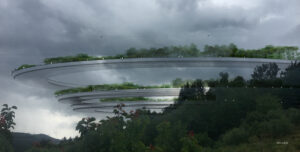
This article presents a project vision whose aim is to underline the necessity to completely change the current world narrative and start a new one, fully compatible with the protection of the planet and all its inhabitants. The authors started from the meaning of “device” and its role in this new narrative: a new salvific “ark,” an ecological living machine able to restore the balance between the forms of anthropization and the planet. The New Arks replace the current crystallized devices, unable to efficiently answer to the needed shift, in order to preserve the human systems, attacked by new social, ecological, and health diseases. In this vision, within the New Arks human beings regain the “lost paradise” through changes such as the implementation of green areas and biodiversity, less housing density, eco-friendly mobility, energy supply and technologies, and sustainable agricultural production. The outcome of this vision suggests the birth of a “Neoland,” a transformed world system in which the union between the natural accident and the anthropic genesis leads to the start of a new ethical and ecological narrative.
Buy
Already in your cart -
View cart
Article
Sustainability
Open Access
Waving the Magic Wand: An Argument for Reorganizing the Aridlands around Watersheds
by Danika Cooper
pp. 163–184
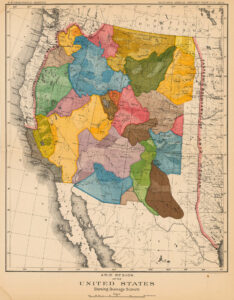
Irrigation remains the primary means of sustaining urbanization and stabilizing agricultural productivity in arid America. In the contest for the West, water is both wealth and power. Today’s struggle to overturn water scarcity is traceable through a long history of legislation overseeing land regulation, property speculation, societal development, and cultural attitudes, real and perceived, inscribed within the America’s aridlands. In reality, there is no magic wand - no miraculous technology - that alone will fulfill the needs of all who have been promised abundance in the aridlands. This paper proposes that revisiting John Wesley Powell’s 1893 proposal for aridland development in the context of today’s ecological conditions catalyzes an alternative response to today’s predictions of changing climates, and can provide the basis of an approach to the aridlands which builds from the enmeshed relationship between social and environmental systems.
Essay
Urbanism
Subscribers
Reconfronting Sprawl: Still Paved with Good Intentions as Well as Asphalt
by Doug Kelbaugh
pp. 187–199
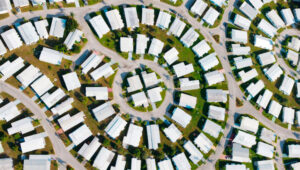
This paper, based on the author’s new book The Urban Fix: Resilient Cities in the War against Climate Change, Heat Islands and Overpopulation (2019), culminates over three decades of researching, teaching, and writing on American sprawl. One of the country’s biggest and most familiar problems, it could be described as a conspiracy of good intentions: short-sighted desires to live in nature; traffic safety engineers’ preference for wide thoroughfares; fire marshals’ desire to turn around hook-and-ladder trucks at the end of every cul-de-sac, etc. Over half of American homes are single-family dwellings – 69 million out of a total of 132 million. The fatal flaw is that these positive intentions quickly led to very high energy/carbon/ecological footprints per suburbanite – a challenge that is difficult because of extensive, indelible infrastructure. Densifying arterial strips, inserting transit, redeveloping a walkable, bikeable, mixed-use, and human-scaled urbanity is as urgent as it is essential in the nation’s effort to combat climate change.
Buy
Already in your cart -
View cart
Article
Open Access
Climate Change Adaptations for Coastal Farms: Bridging Science and Mātauranga Māori with Art and Design
by Martin Bryant, Penny Allan, Huhana Smith
pp. 497–518
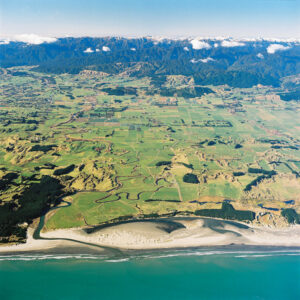
Indigenous coastal farming communities need to address future climate change impacts, yet many communities are slow to respond, due to lack of adequate information, economic pressures, the abstract nature of climate change science and poor communication between what science knows and what indigenous farming communities need to know. Art and design can address these issues by synthesizing broad scientific principles with local place-specific culture and their visual language can effectively communicate short and long-term benefits to local communities. Art and design are thus both generative research methods and media for representation. This research uses art and design to provide a bridge between the Māori culture of a local farming community in coastal New Zealand and climate change science. It provides a framework of strategies for new farm practices. Underpinned by the qualitative awareness of thresholds and an open-ended toolbox of land-based strategies, the role of the framework is to catalyze adaptation. The framework is responsive to both the Māori worldview and scientific knowledge, and has the potential to provide a model for other coastal communities.
Article
Open Access
Waterscapes in Transformation: The Case of the Belgian Coastal Area
by Sis Pillen, Kris Scheerlinck, Erik Van Daele
pp. 743–766
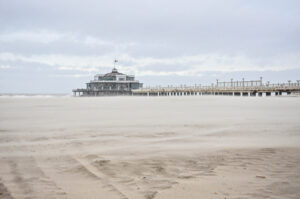
The socio-economic impact of nature in Belgian coastal landscapes on a regional scale is high due to their general attractiveness for visitors, their strongly developed tertiary service economy and other related sectors (tourism, residential, agriculture…). Due to climate changes however, these coastal landscapes and their required accessibility and continuous character are threatened by the unavoidable planned infrastructures (dikes, new connections, floodable areas, etc.) that will generate ruptures, frictions and additional transition spaces within the landscape. Flanders urgently needs to unfold policies and strategies to avoid or reduce the undesirable effects of the expected changes. Influential changes for the coastal zone will be sea level rising, increasing temperature, changing rainfall patterns, floods, fragmented ecological system, salinization, and reduced drainage capabilities to sea. A thoughtful planning policy forms the necessary key to a sustainable development. Policies and plans lead to the formulation of spatial proposals for mitigation and adaptation, to be executed by major infrastructural works planned for the next decades. Most of these infrastructures, conceived at a large scale, generate a different model of accessibility for the Flemish Coastal landscape.
Article
Open Access
(Geo)Design Coastal Cities: Design with Data (and Nature too)
by Ming-Chun Lee, José L.S. Gamez
pp. 337–366
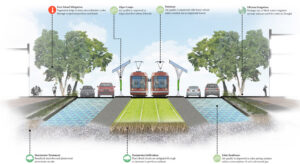
The geography of a coastal city, such as its native geological, biological, and physical conditions, plays an important role in understanding the impacts of climate change upon the area. To better identify strategies for adaption to global climate change, planners and designers need better tools and techniques to learn and analyze the geographical context of their cities on coastlines worldwide. This article describes an urban design studio conducted in the spring of 2014. Students in this class explored the future of North Carolina coastal cities in light of rising global sea level. Geodesign using GIS and other visualization tools enabled the students to focus on urban morphology, development patterns, and environmental characteristics of the city in order to identify new interventions that can support a new set of relationships between urbanity and nature.
Article
Open Access
Interrupted Atolls: Riskscapes and Edge Imaginaries in Tuvalu
by Elizabeth Yarina, Shoko Takemoto
pp. 287–321
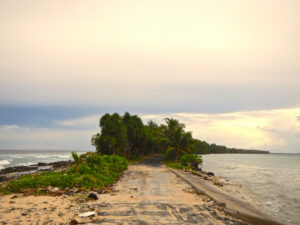
Climate change puts the edge between land and sea in sharp relief; sea level rise is essentially a condition of drifting littoral edges.As rising seas threaten to encroach on land-based territories, cities and nations have responded by attempting to fix the edge at a moment in time, blocking the sea’s insidious creep. Atolls formed by coral reefs are mobile, living geographies, which resist attempts to harden their perimeter through structures such as seawalls. We explore how ideas and imaginaries associated with the “edge” between sea and land in the atoll-nation of Tuvalu illustrate competing “riskscapes” and objectives associated with the actors involved. This essay explores this interplay between politics, aid, technocratic solutions, media representations, global aspirations, local ambitions, and climate risk in Tuvalu through an examination of past/future seawalls and other proposals (realized and unrealized) for controlling atoll edges. Through the cases, we seek to re-politicize the edge, unpacking the difficulties surrounding adaptation issues in small-island states, and explore alternative models of “resilient edges” for atoll-dwellers living with climate changes.