
Archive
Tag: COVID-19
Article
Cross-Disciplinary Studies
Open Access
Design for COVID-19: Rethinking an American Campus and the Dilemma of the Second Wave
by Aneesha Dharwadker
pp. 147–164
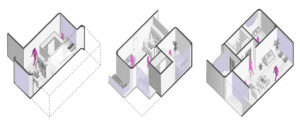
In 2020, the presence of COVID-19 forced, among other serious reflections, a reevaluation of how university spaces are used and how higher education may achieve efficacy while protecting public health. This essay presents work from a Fall 2020 graduate studio at the University of Illinois at Urbana-Champaign that explores how the campus could adapt to the specifics of social distancing and offer new kinds of outdoor and indoor spaces for learning and living. From the materiality of the ground plane to the layout of campus residences, the projects reimagine the campus at the scales of the site, building, and rooms. While the built environment can be viewed as a passive backdrop (or worse, an active culprit) in public health crises, this studio argues that strategic and thoughtful design, anchored by distancing recommendations of the Centers for Disease Control and Prevention, could also be a remedy.
Article
Subscribers
A Productive City in a Time of Pandemics: Healthy Food Access as Justice in Baltimore
by Cristina C. Murphy, Carla Brisotto
pp. 447–472
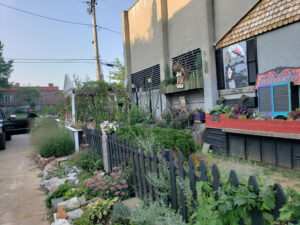
Inequity is the underlying cause of today’s major societal health dilemmas. The World Health Organization (WHO) defines social health as “the conditions in which people are born, grow, live, work and age.” The success of this sequence depends on the distribution of money, power, and resources. Food is central in everyone’s life: an extended commitment for an equitable access to healthy food is necessary--even more during times of isolation due to the COVID19 pandemic. Focus group studies with community residents are important in increasing public understanding and community engagement around food accessibility, prevention of “food deserts,” and associated health issues. Urban United Roots, an organization discussed in this paper, offers an overview on how Baltimore, Maryland is assisting access to healthy food both spatially (elimination of food desert) and socially (achievement of food equity). This Baltimore-group addresses healthy food options that impact every aspect of the quality of life through the Honey Badger Promenade project in Harlem Park.
Buy
Already in your cart -
View cart
Article
Subscribers
(sub)URBAN Hybrid Housing: Rethinking the City with Healthy, Sustainable Housing
by Craig Griffen
pp. 407–424
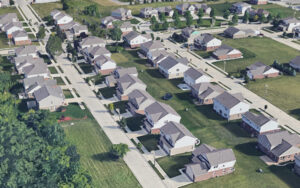
City dwellers have historically fled to the countryside to escape disease but returned when it was safe. US cities have experienced growth for decades, but that trend is slowing and, in some cases, reversing. Increasingly, millennials are leaving cities for the suburbs to combat escalating housing costs and lack of family-friendly amenities, and the current pandemic has sped up that rate of exodus. Urban dwelling is a very sustainable lifestyle, so how can we provide healthier and more sustainable qualities of suburban living in the city to entice people to return and/or stay? This research/design project, proposed to fill large vacant blocks in cities, produced a (sub)Urban hybrid housing model that combines qualities of suburban housing with the benefits of urban dwelling. The resulting design, based on the Charleston house typology arranged in a checkerboard pattern, provides a south-facing side yard with access from most rooms to sunlight, fresh air, shade, photovoltaic panels and a private, green, social distancing space not found in the common urban row home typology.
Buy
Already in your cart -
View cart
Essay
Open Access
Imprints of an Invisible Virus: How Airborne Diseases Change Cities
by Aki Ishida
pp. 311–330
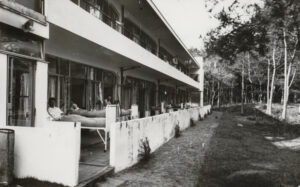
Once a clinical cure for COVID-19 is found, which infection prevention practices – both social and spatial – might remain, and what long-term impacts will they leave? This article examines the interrelationships between airborne diseases, social practices, and the design of physical and digital infrastructures for cities. Historically, infectious diseases have left long-term imprints on cities, from plumbing to hospitals. Spatial practices to prevent infection, such as clear physical barriers and car-free streets for socializing, must be implemented with a close examination of impacts on the mental, social wellbeing of both individuals and the broader community. Prevention practices examined include the use of transparent barriers that separate and connect people, the increased use of open windows, the adaptation of sidewalks and roads for physically distant socializing, and spatial negotiation and trust-building that occur in public spaces. As cities make design and policy changes to protect their citizens from the invisible virus, they must be mindful of the imprints the physical, social, and policy changes have on comprehensive wellness and equity for all people.