
Archive
Tag: design method
Essay
Subscribers
From Empty to Evergreen: Gardens as Architectural Design Forces
by Bramasta Putra Redyantanu, Stephanus Wirawan Dharmatanna, Elvina Shanggrama Wijaya
pp. 309–331
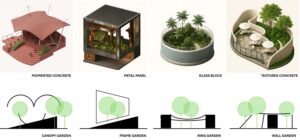
This study reframes gardens from decorative elements to active, generative agents in architectural design. It investigates how gardens shape spatial systems, support social interaction, and catalyze ecological processes in urban contexts. Four case studies from Tanatap Café, Ring, Frame, Wall, and Canopy Gardens show that gardens do more than enhance aesthetics; they initiate new design strategies and spatial organizations. Using a force-based framework, the study identifies spatial qualities, experiential conditions, and preferred configurations to reveal how gardens influence material, ecological, and social dimensions. Findings are organized into three themes. (1) Residue to Rules: Garden as Generator positions gardens as producers of spatial structure. (2) Edge that Breathes: Porosity as Threshold interprets garden boundaries as active membranes that enable interaction and ecological flow. (3) Frame is the Form: Typology as Emergent demonstrates how garden arrangements generate new urban types. By presenting gardens as essential ecological and functional components, the study contributes to ecological urbanism and argues for shifting from viewing nature as complementary to a nurturing, formative force in urban design.
Buy
Already in your cart -
View cart
Essay
Criticism
Subscribers
Pouillon’s Practical Theory. A Design Method for Contemporary Architectural Practice
by Emilio Mossa
pp. 47–68
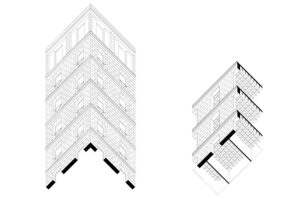
The aim of this paper is to underline the currency and modernity of Fernand Pouillon’s method for contemporary architectural practices. In particular, this dissertation analyzes the theory hidden behind Pouillon’s practice, and the motivation influencing the final quality of his works in order to make this method implementable to the current conditions of architectural design related to the management of complexity, buildability and quality of buildings. This paper explains Pouillon’s design process through the case study of Résidence Les 200 Logements, or dwellings, built in Aix-en-Provence between 1951 and 1955. This work represents the turning point experience in the development of a design methodology that Pouillon will use for the following twenty years of his career. The 200 Logements project demonstrates the absolute effectiveness of this design method to achieve a certain quality in all the production phases. By merging technological and humanistic culture, the buildings designed by Pouillon exemplify the possibility of making theory through practice. Intended as “practical theories,” the models and the approaches proposed by Pouillon represent a design method that can still be used today.
Buy
Already in your cart -
View cart