
Archive
Tag: design
Article
Subscribers
Streetscape Ecologies in Southern Europe: Design for Culturally Rooted Nature-Based Regeneration
by Alessandro Raffa, Marilena Baggio
pp. 443–469
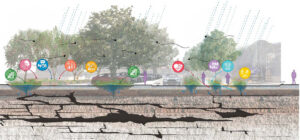
Urban streets are increasingly acknowledged as more than infrastructural corridors, serving as accessible and pervasive spaces where ecological processes and collective life unfold. In the context of climate change and ecological transition, cities worldwide are experimenting with nature-based street regeneration. Yet current research and practice often prioritize ecological performance metrics, overlooking the nuanced, spatially embedded, and culturally grounded processes through which urban nature evolves. This risk of homogenized solutions is particularly evident in Southern European cities, where layered urban fabrics and historically situated conceptions of nature have long shaped the interface between built form and ecology. This article argues that regenerating streetscapes in such contexts requires more than standardized interventions. Building on a three-year academic research project, it introduces a framework of ten cultural dimensions for culturally rooted nature-based solutions, tested across speculative and practice-based projects. Five operational lines of work are distilled, positioning streets as palimpsestic urban ecologies where ecological performance and cultural narratives converge. By aligning nature-based adaptation strategies with cultural sensitivity and spatial quality, the article advances pathways for resilient streetscape regeneration.
Buy
Already in your cart -
View cart
Article
Cross-Disciplinary Studies
Open Access
The Urban Forum Dialogue Tool: Reflecting on a Designerly Approach to Transdisciplinary Research
by Sonia Curnier, Per-Johan Dahl, Lisa Diedrich, Andrea Kahn
pp. 45–67
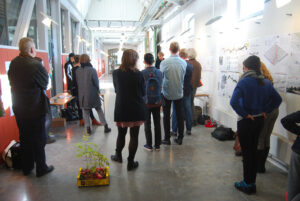
With a view to working toward urban sustainability goals, two Swedish research platforms, SLU Urban Futures at the University of Agricultural Sciences in Alnarp (SLU) and the Urban Arena at Lund University, launched Urban Forum, a transdisciplinary dialogue format, in 2019. Designed to foster exchange between practitioners and scholars in the spatial design fields the Forum convenes actors from practice and academia working on matters of shared concern to increase their interaction and defuse preconceptions against each other. The initiative recognizes that academic and non-academic design actors are equally needed to build transformative capacities and reflects two related convictions: that siloing practice and academia is unproductive and that synthetic encounters can serve to reimagine roles and retool mindsets currently hampering mutually beneficial knowledge exchange. This article analyzes a series of Urban Forum events from 2019-21 to extrapolate procedures for overcoming entrenched notions of the practice/academia dynamic; identify criteria for productive knowledge exchange; suggest ways to design transdisciplinary dialogues; and highlight the benefit of involving designerly knowledge and working methods into the transdisciplinary methodology toolbox.
Article
Open Access
Countering the “Troublesome Unit”: Compensatory Design to Create Equity in Social Housing
by Christina Bollo
pp. 345–361
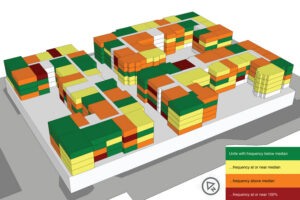
Housing scholars have shown that moving has inherent hazards and can create disruption for social housing residents as well as collective disruption within communities. This paper draws from social housing case study sites in the Pacific Northwest of the United States. Analyzing those apartments with the highest rates of turnover, what property managers call “troublesome units,” revealed architectural attributes that influence frequent moves. These attributes are related to apartment size, layout, and location within the building. To reconcile the resultant inequity in apartment design, this paper proposes a theory of compensatory design, in which the architect offsets unavoidable negative attributes with positive elements to equalize turnovers between apartments. Ultimately, architects who see a troublesome unit, not as a lost cause, but as a challenge to excellent design solutions, will better serve their clients, the residents who live in the buildings, and the communities at large through the reduction of lost housing.
Essay
Open Access
Dotte Agency: A Participatory Design Model for Community Health
by Shannon Criss, Matt Kleinmann
pp. 213–237
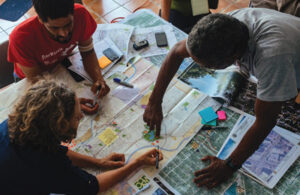
As community activists resist racial injustice, food insecurity, and infrastructural delinquency, many groups are attempting to articulate the voice of the citizen. It is within this landscape that architects have historically struggled to find common ground to afford democratic access for citizens to engage in discussions about the future of their city. Based upon surrogate models of other professions, there has emerged a proactive movement towards Social Impact Design. Like many urban core areas, our community faces a health epidemic compounded by poverty. In response to requests for collaboration, and through cross-disciplinary academic partnerships in both public health and social welfare, we have begun to leverage design advocacy to improve health outcomes. This has evolved into an alternative model of practice that advances public design through interdisciplinary, adaptive and incremental spatial agency. It is a sustainable practice that fosters conversations and supports events originating from within the community. Our approach seeks to scaffold an infrastructure of public health through methods of participatory design and advocacy. Through new forms of design intelligence and collaborative design tools, our critical spatial practice demonstrates new ways for how architectural design can be relevant to society.