
Archive
Tag: development
Article
Subscribers
Five Esthetics of the Global Development Industry: Building Low-Cost Housing in Rwanda
by Yutaka Sho
pp. 477–502
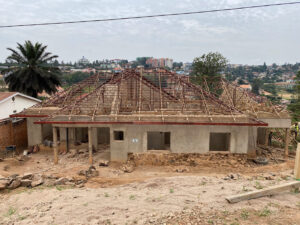
This paper argued that, in parallel to financial feasibility, the esthetics play a powerful role in swaying the donation and investments away from low-cost housing projects in the development context. The paper analyzes the development industry’s structure and its players and asks how architects could ally with the End Users by understanding their self-building practices. The architect in the global development industry works with at least five clients. They are the Funders (often from the global North), the Local Government (often in the global South), the Architectural Disciplines in the funder nations, the Local Building Sector, and the End Users. Our survey of 370 self-build homes in Rwanda attests that not all actors represent their values equally, and the End Users, the actor with little resource and leverage, may be rendered silent in this process although they have the most at stake. While the global development industry tries to eradicate self-building activities, the End Users continue to claim the built environment by tapping into their social capital, and share labor, materials, and knowledge. Their architecture simultaneously protests and participates in development.
Buy
Already in your cart -
View cart
Conference Report
Criticism
Open Access
The Transformative Power of Urbanism. The Urban Age Conference, Venice Biennale (July 2016)
by Brunella Angeli
pp. 119–128
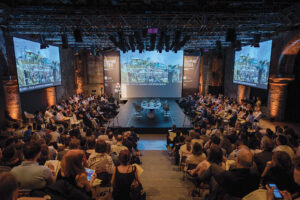
As the world population is increasing at unprecedented rates and wastelands are extending at a variety of new scale and in various spaces organizing the sprawling landscape, the line between formal and informal settings, God’s eye view planning walled off from the outside world and temporary structures seems to intensify. There is an urgency to reverse such inefficient growth with its consequent inhuman conditions and better plan world’s cities by means of urbanization. The Urban Age “Shaping Cities” Conference at the Venice Biennale (July 14-15, 2016) with the exhibition Conflicts of an Urban Age explored the connections among the political, economic and social city with the scale of its physical and urban form. Addressing themes such as expansion, redevelopment, adaption and confronting speakers and urban solutions from different backgrounds, the conference questioned the role of planning in the definition of more inclusive, safe, resilient and sustainable cities. The theme reconnects to Habitat III, the UN global cities summit set for Quito, Ecuador, in October 2016 implementing the New Urban Agenda for the world’s rapidly urbanizing areas.