
Archive
Tag: ecological design
Article
Open Access
Biofacades: A Framework for Vertical Building–Nature Integration in Urban Ecosystems
by Mary Ben Bonham, Kyoung Hee Kim, Christiane M. Herr
pp. 383–404
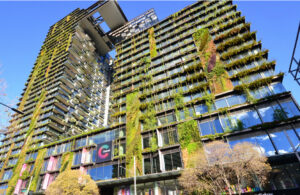
Urban landscapes are characterized by adaptable urban ecosystems that integrate natural and human-made aspects. This paper argues that building-scale biofacades can make key contributions to these ecosystems beyond conventional green facades. The paper introduces the concept of biofacades as a means of integrating biological processes into facade design, supporting diverse organisms across scales and fostering interconnected urban ecosystems. The Biofacade Classification system is introduced as a framework for vertical building–nature integration. The framework organizes biofacades according to wall layer position, biotic distribution, and operational mode, while also describing associated ecosystem services. Case studies illustrate its capacity to clarify the complexity of building–nature interactions and to encompass engineered solutions ranging from microalgae facades to microbial growth-promoting materials. By positioning facade design as a part of urban biomes, the framework supports architects, planners, and other stakeholders in establishing goals and communicating integrated performance benefits in the effort to create more resilient and ecologically integrated cities.
Essay
Subscribers
From Human to Holobiont: Reframing the Human/Nature Divide in Urban Architecture
by Elizabeth L. McCormick
pp. 269–284
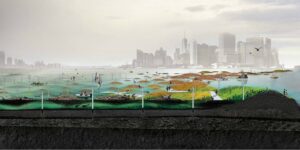
Urban environments have long been shaped by a conceptual boundary that separates humans from nature, positioning nature as something external to be controlled, excluded, or aestheticized. In architecture, this worldview has materialized through technologies of separation – sealed facades, HVAC systems, and airtight enclosures that engineer the indoors as sanctuaries from the natural world. These spatial logics have not only shaped cities but have influenced cultural attitudes, public health outcomes, and our collective understanding of what it means to be human in a changing climate. Scientific advances like the Human Microbiome Project challenge the paradigm of human exceptionalism, revealing the human body as an ecological community, rather than an individual organism. Instead, biologist Lynn Margulis describes us as holobionts – interconnected networks of microbial and physiological relationships that blur the lines between humanity and ecology. If we are not separate from nature, then the boundaries we construct must be rethought. This paper introduces the holobiont as a design-relevant paradigm that embraces ecological entanglement and environmental heterogeneity, positioning buildings as dynamic participants in a larger web of life.
Buy
Already in your cart -
View cart
Article
Sustainability
Subscribers
Expanding the Field: Virtual Fencing as Responsive Landscape Technology
by Forbes Lipschitz
pp. 159–185
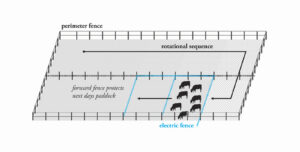
Livestock is the largest driver of landscape change in the world, depleting land and water resources, negatively impacting biodiversity and contributing significantly to climate change. Though the environmental impact of livestock farming has been well documented, the role of the fence in shaping the form and function of livestock production landscapes deserves more attention. The evolution of fencing technology from wooden post to barbed wire has transformed vast swaths of the American landscape, facilitating agricultural intensification at the cost of ecological fragmentation. Emerging technologies in virtual fencing offer the opportunity to subvert this paradigm by electronically corralling and moving livestock via GPS-enabled collars. This article places the application of virtual fencing technologies within design discourse and outlines untapped opportunities for design intervention. The first section comprises a survey of historical and contemporary fencing technologies, highlighting the economic drivers and ecological consequences of innovation. The second section explores the emergence of sustainable ranching systems and virtual fencing technology. Finally, a speculative design proposal considers the potential of responsive fencing technologies to reformat grazing landscapes for adaptation and ecological production.
Buy
Already in your cart -
View cart