
Archive
Tag: engagement
Article
Subscribers
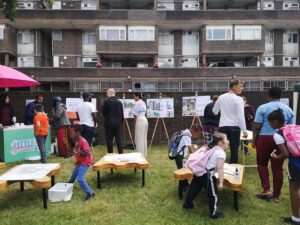
Listening as a Methodology, Longevity as a Goal: London’s Tustin Estate Master Plan as a Case Study for Community-Led Design Development
by Judith Stichtenoth, Ann Dingli
pp. 453–476
This essay explores the relationship between a group of design professionals, a community of residents, and a local council in the early stages of the Tustin Estate renewal project – a Master Plan and Phase One Regeneration for a south-east London post-war housing estate. In 2021, the estate’s residents voted in favor of demolishing and rebuilding its low-rise buildings in a residents’ ballot. This essay positions Tustin Estate’s engagement phase as a notable case study for community-led design, providing an overview of London’s introduction of resident ballots in estate development, leading onto the example of Tustin Estate’s ballot, which initiated its engagement strategy. Interviews with key members of the engagement process form the central research to this essay, which explores the role of ballots in estate regeneration; approaches to building authentic engagement; the importance of community ownership; and how listening enables knowledge transfer and creates a blueprint for longevity. The essay defines longevity as the culmination of design and build solutions based on principles drawn directly from residents’ needs, each of which being robust enough to avoid demolition for the long-term.
Buy
Already in your cart -
View cart
Article
Subscribers
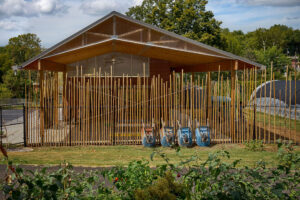
The Engaged Project: Representation, Dissent, and the Architecture of Public Space
by Jennifer Akerman
pp. 341–362
Vandalism is an alternative form of design narrative, a subversive practice of reading architecture and urban systems, and a fundamental way key voices can be heard. Architects, city planners, officials and the public should value such reads as constructive engagement enriching the life of a built work. Architecture usually results from elaborate systems of power, capital, and privilege - though its presence affects everyone in the city. In the periphery of public space, dynamic alternative practices emerge that communicate and critique. Vandalism, especially in areas of contested “ownership” in public space, is an architectural counterpoint, a dissent available to people without conventional means of power. It is intrinsically linked to the pedestrian experience of cities, and therefore opens reconsideration of walking as knowing, especially in an urban terrain vague [empty lot]. Technologies of sharing allow us to broadcast transgressions, track goings on, exploit urban problems for artistic gain, and conduct vandalism in public space. Focusing attention on a public farm building designed collaboratively within an urban park will frame broader discussion of these complex relationships at work, specifically considering vandalism as a form of engagement.
Buy
Already in your cart -
View cart