
Archive
Tag: food desert
Article
Subscribers
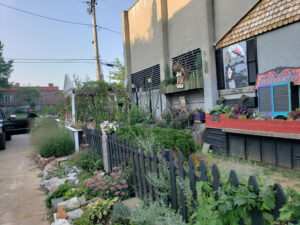
A Productive City in a Time of Pandemics: Healthy Food Access as Justice in Baltimore
by Cristina C. Murphy, Carla Brisotto
pp. 447–472
Inequity is the underlying cause of today’s major societal health dilemmas. The World Health Organization (WHO) defines social health as “the conditions in which people are born, grow, live, work and age.” The success of this sequence depends on the distribution of money, power, and resources. Food is central in everyone’s life: an extended commitment for an equitable access to healthy food is necessary--even more during times of isolation due to the COVID19 pandemic. Focus group studies with community residents are important in increasing public understanding and community engagement around food accessibility, prevention of “food deserts,” and associated health issues. Urban United Roots, an organization discussed in this paper, offers an overview on how Baltimore, Maryland is assisting access to healthy food both spatially (elimination of food desert) and socially (achievement of food equity). This Baltimore-group addresses healthy food options that impact every aspect of the quality of life through the Honey Badger Promenade project in Harlem Park.
Buy
Already in your cart -
View cart
Article
Open Access
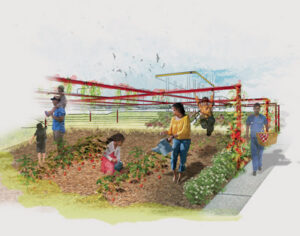
Social Impact through Design: Experiments in Urban Agriculture
by Sallie Hambright-Belue, Martin J. Holland
pp. 287–302
This paper describes the work of students at the School of Architecture and the Department of Landscape Architecture at Clemson University with a local, non-profit organization - the Feed & Seed - in creating alternatives to the current threads that affect the urban area of West Greenville, South Carolina. Starting on the definition of Food Desert as an area without access to fresh and whole foods, students address issues of economic equity, community building and social justice by developing urban agriculture solutions that focus on food hub and food cycle, promote education and foster social cohesion. With the gaps between the haves and have-nots apparently widening each and every year students perceive, challenge, and test the role that designers have in the decision making processes that constitute possible solutions of fractured neighborhoods, cities and regions.