
Archive
Tag: gentrification
Article
Urbanism
Subscribers
Reclaiming the Right to the City: Architectural Strategies for Urban Regeneration
by Silvia Dalzero
pp. 23–40
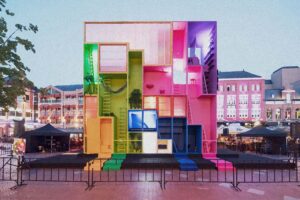
This study examines the impact of privately managed tourist rentals on urban contexts through a review of the literature on overtourism in historic city centers, where architectural heritage is increasingly shaped by speculative pressures. The research maps tourist rental units in Brescia in 2023, the year the city was designated Italian Capital of Culture and experienced a marked increase in tourist flows. The survey identifies approximately 400 short-term rental units, compared to 140 units intended for medium- and long-term rental. Based on this quantitative and locational analysis, the study develops a design-oriented approach that translates empirical data into an architectural strategy. Using software-assisted tools, a minimal housing unit is defined according to a modular typological archetype adopted as a compositional principle. This process generates a volumetric system in which distributive elements are organized first, followed by the aggregation and optimization of housing units in relation to orientation, natural lighting, openings, views, and accessibility. The research contributes a compositional and comparative method for interpreting the physical and spatial transformations of the urban fabric driven by the expansion of tourist rentals.
Article
Open Access
Jiyūgaoka as Women’s Realm: A Case Study on Tokyo Genderfication
by Noemí Gómez Lobo, Yoshiharu Tsukamoto, Diego Martín Sánchez
pp. 403–427
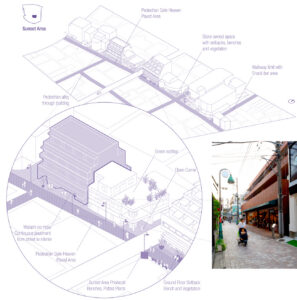
Framed within the question of how gender influences the production of urban space, this study reveals how Jiyūgaoka, a high-end suburban area in Tokyo, has developed by targeting a particular gender role: women as caretakers and consumers. Car-safe and bike-friendly, Jiyūgaoka pedestrian areas have more greenery, pavement, and urban furniture in comparison with the average Tokyo street. Jiyūgaoka spatial practices encourage the meeting of people in the public realm, creating relationships between behaviors and their supporting physical environment. By aiming at women, other non-normative bodies were rendered into the city, enhancing public life and creating an accessible milieu. Jiyūgaoka genderfication process, by which the overlaying of commercial and gender mechanisms has impacted urban phenomena, is shown through a chronological investigation of gender-charged contents and its mapping in the urban fabric. This study demonstrates how urban transformation in Jiyūgaoka has encompassed changes in the lives of women in Japanese society. Representative examples from each period illustrate the physical translation of this development, from a home cooking school to a promenade with hundreds of benches.
Article
Housing
Subscribers
Politicized Gentrification: The New Urban Renewal Movement in Beijing
by Wei (Windy) Zhao
pp. 93–112
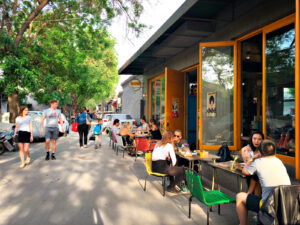
In April 2017, the Beijing municipal government enacted a new, three-year urban renewal policy that is aimed to restore and improve the built environment of the 2,435 alleyways located in the historic center of the city. The local implementation, however, has focused on the sealing of doors and windows that led to homes and small businesses for decades. As a result, thousands of businesses that had provided daily services to local residents have shut down, forcing many people to move to other cities. Drawing on archival research and interviews, this article argues that the Beijing municipal government is merely using urban renewal as camouflage for a politically-oriented gentrification project which not only eliminates non-permanent residents, but also deconstructs, as well as reconstructs, “place” at the local level as a means to control social activities and relationships. The result is the creation of a new image of the capital of China, which exhibits the ideas of regularity, singularity, segregation, and authoritarianism.
Buy
Already in your cart -
View cart
Article
Open Access
Gentrification and the Heterogeneous City: Finding a Role for Design
by Sally Harrison, Andrew Jacobs
pp. 239–259
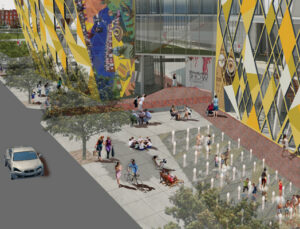
That cities will change is indisputable: urban evolution mostly signifies healthy growth, but it is also true that in the contemporary context, gentrifying neighborhood change increasingly operates on an extraterritorial plane, happening quickly, opportunistically and unilaterally. Neighborhoods are evaluated and disposed of as trading commodities in a process that violates the citizen’s fundamental right to the expectation of a stable dwelling situation. Gentrification also threatens a city’s spatial heterogeneity which, through its diverse forms and meanings, can support the enactment of democratic urban life. It leaves little room for a broader discourse around place – a discourse that might lead to the creation of more porous urban space, to the emergence of hybrid institutions and to new sites of pluralistic engagement. This paper will consider a pair of contiguous neighborhoods in Philadelphia where market-driven gentrification has come face to face with powerful grassroots civic advocacy; and it looks at what architects, landscape architects and urban designers can do to help neighborhoods resist gentrification and support heterogeneity in making places where the hand-print of multiple publics might be found.