
Archive
Tag: hybridity

Essay
Theory
Subscribers
Train Yourself: Architectural Recycling Between Digital and Physical Realities
by Andy Bako
pp. 21–43
As generative AI reshapes architectural practice, a critical paradox emerges: while new computational tools offer unprecedented creative possibilities, the physical resources essential to building grow increasingly scarce. This paper investigates how architecture can productively engage this tension through novel approaches to material recycling and digital transformation. Rather than treating physical and virtual domains separately, this research proposes an integrative framework where design emerges through continuous feedback between material manipulation and computational processing. The exhibition Train Yourself demonstrates this methodology, presenting a series of experimental artifacts that evolve through iterative exchanges between physical material, AI-driven formal exploration, and imaging techniques. These hybrid objects gain definition through recursive operations that blur boundaries between physical construction and digital representation. Beyond resource conservation, this approach reveals how architectural practice might cultivate new forms of creative intelligence capable of navigating between material constraints and computational possibilities. The findings of this research suggest a mode of practice where designers orchestrate dynamic interactions between physical matter, algorithmic processes, and human intention, pointing toward a more nuanced understanding of ecological sensitivity in contemporary design practice.
Buy
Already in your cart -
View cart
Essay
Subscribers
AI and Design Synthesis: Hybridity and Hybrid Form
by Karim W. F. Youssef
pp. 335–348
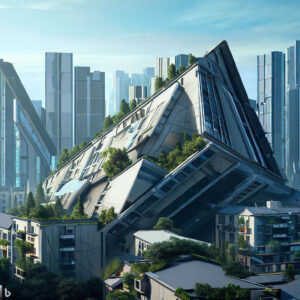
AI, as a gamechanger, is revolutionizing the architectural and urban scenes so drastically that the way our buildings and cities will look like and be experienced will fundamentally change. The overarching purpose of the paper is to take a modest step towards understanding the paradigmatic role of AI in changing the form of our built environments. The paper conceptualizes AI’s role in the design process as essentially the suggestion of hybrid solutions, transforming the nature of the built environment to a hybrid between its static and non-static, real and virtual forms. The basic question to pose is the role of AI technology in assisting the design process, gearing it towards the creation of hybrid forms that redefine the relationship between humans and their built environment in a meaningful way and that also address the complex problems of our contemporary society which hinge upon the resilience of the architecture and urban form of the space we inhabit. AI technology is being increasingly embedded into our inhabited environment affecting the built expression of architecture as well as the process and practice of designing architecture.
Buy
Already in your cart -
View cart