
Archive
Tag: landscape
Project
Reflective Practice
Open Access
Art Walk / Bridging Urban Spaces
by Heather Woofter, Sung Ho Kim
pp. 59–72
Published: 2016-09-26
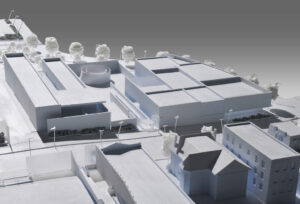
The Art Walk project is a stitched landscape that joins several art and media institutions in Grand Center, St. Louis. The current condition of Grand Center allows few moments of connectivity and sense of continuity between urban spaces. The project is divided into four multi-cultured zones that are currently separated by parking lots, pedestrian inaccessible easements, and gated buildings. The urban strategies are part architecture, art, and industrial design elements. They interface with landscape planning to engage the public in multiple scales of activity in order to bridge between discreet urban spaces.
Article
Cross-Disciplinary Studies
Open Access
Landscape as a Conceptual Space for Architecture: Shifting Theories and Critical Practices
by Michelle Laboy
pp. 77–96
Architecture constantly negotiates the ideal and the real. These two conditions, being a reflection of cultural values and practices, change over time. I suggest that what remains constant to architecture are the lasting spatial and formal qualities that engage in constructing the physical and cultural landscape: how it channels natural light and air, how its permanent structures organize space, frame and supports life, shelter, protect and comfort. There are the qualities that make architecture endure and adapt to a changing cultural and natural environment. The placement of architecture in the real world often seems contaminated by a multiplicity of socio-economic structures and processes, but its situation in the world is also what provides an opportunity to engage in the making of a landscape where over time architecture finds a critical autonomy and relevance. The role of architecture in making or responding to the landscape is one of the critical questions in current debates about autonomy and contingency. In this paper, I expand on the work I presented at the ACSA conference at Syracuse University in the Fall of 2015, where I explored how the discipline of architecture has absorbed the landscape as a conceptual space, to “theorize critical means of engagement with the formal, spatial and performance qualities of its territory, to define critical contingencies that are meaningful through space and time, and to refuse those that can keep it tied to the trivialities of a temporary situation.” More specifically, my work examines how the notion of the ecological permeates the architecture discipline from the field of landscape, providing a framework for architectural discourse to theorize the relationship of the idealized and the real, to create new singular form within a situation of multiplicity.