
Archive
Tag: mass housing
Essay
Housing
Open Access
Fine-Tuning the Intensity of Modifications to Revitalize Brutalist Mass Housing: Learning from Park Hill and Bijlmermeer
by Fabio Lepratto
pp. 103–128
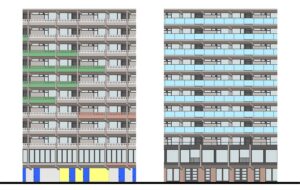
This essay investigates design opportunities associated with the revitalisation of Brutalist mass housing megastructures. Through a comparative analysis of two sets of projects – one pair in the Park Hill Estate (Sheffield, UK) and one pair in the Bijlmermeer district (Amsterdam) – the text theorizes an implicit process where intensity of modification is honed from one experience to the next. This process responds to the need for change brought by new social, spatial, environmental, and figurative requirements while simultaneously addressing conceptual and material integrity issues of these controversial architectures. The essay takes as its starting point the dilemmas ideally present in a practitioner’s mind when adopting an inventive approach to modifying these buildings, overcoming a purely conservative mindset. Following a reflection on possible actions, it emphasises four lessons derived from four design themes: the ground floor as a link between building and city; inner circulation as a relational experience; dwelling interiors as variable spaces; and façade design as a means of expressing change. The reflections thus offer interpretative and operational contributions to imagine actions for similar housing structures.
Article
Housing
Open Access
Beyond Modernist Housing: Can the Mass Housing Model Accommodate Human Agency?
by Nadia Shah
pp. 23–43
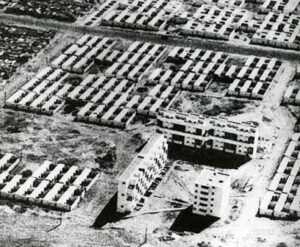
The lack of attention paid to the disempowerment of the residents has been a shortcoming of the modern mass housing model. Even today, no policies promote and support the residents’ efforts to continue improving their quality of life through actions involving changing the physical environment. Following a brief history of the origins of mass housing in the West through the discourse in the modern movement, the paper expands on implementing these modern ideas in the post-War non-Western region and how they were received and appropriated there. The article presents the case study from the author’s work on Korangi Town in Karachi, Pakistan, to show that the residents’ changes reflect their active agency. However, it was an unintentional outcome of modernist design and planning. This paper is more than just a critique of the cultural apathy of modernism. It questions what happens to a modernist project after the expert leaves the arena. How do residents adapt to or cope with their physical environment? Moreover, is there a way to include human agency in mass housing?
Article
Open Access
Experimenting with Mass-Housing Regeneration: Two Pioneer Actions in Bolzano (Italy) as Part of the SINFONIA Project
by Fabio Lepratto
pp. 529–552
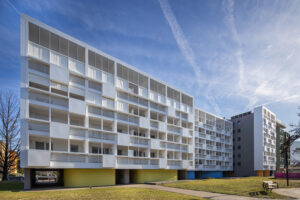
The public housing sector in Italy faces a generalized crisis, which does not spare the issue of architectural and urban quality, both in the (relatively few) new buildings realized over the last three decades, and in increasingly frequent regeneration actions. The latter – the subject of this essay – generally do not go beyond conventional maintenance and are typically limited to applying essential technical solutions for energy efficiency. They miss the opportunity to update the building stock to address current housing needs. Against this backdrop, the case of SINFONIA – a five-year project financed by the European Union – represents a relevant exception. The paper presents two recent housing renovation actions developed within SINFONIA and conceived by AREA Architetti after winning two design competitions. Both actions interpret conversion in the most inventive ways, demonstrating an aptitude for a real aesthetic rethinking that changed the appearance of the buildings experimenting with two profoundly different design approaches: reinterpretation and metamorphosis. In presenting the two actions, this essay reflects on the procedure and design lessons to be learned from this experience for transfer to other situations.