
Archive
Tag: nature-based solutions
Article
Subscribers
Streetscape Ecologies in Southern Europe: Design for Culturally Rooted Nature-Based Regeneration
by Alessandro Raffa, Marilena Baggio
pp. 443–469
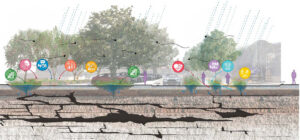
Urban streets are increasingly acknowledged as more than infrastructural corridors, serving as accessible and pervasive spaces where ecological processes and collective life unfold. In the context of climate change and ecological transition, cities worldwide are experimenting with nature-based street regeneration. Yet current research and practice often prioritize ecological performance metrics, overlooking the nuanced, spatially embedded, and culturally grounded processes through which urban nature evolves. This risk of homogenized solutions is particularly evident in Southern European cities, where layered urban fabrics and historically situated conceptions of nature have long shaped the interface between built form and ecology. This article argues that regenerating streetscapes in such contexts requires more than standardized interventions. Building on a three-year academic research project, it introduces a framework of ten cultural dimensions for culturally rooted nature-based solutions, tested across speculative and practice-based projects. Five operational lines of work are distilled, positioning streets as palimpsestic urban ecologies where ecological performance and cultural narratives converge. By aligning nature-based adaptation strategies with cultural sensitivity and spatial quality, the article advances pathways for resilient streetscape regeneration.
Buy
Already in your cart -
View cart
Article
Tectonics
Open Access
Moss as a Multifunctional Material for Technological Greenery Systems
by Valeria Marsaglia, Guido Brusa, Ingrid Paoletti
pp. 85–114
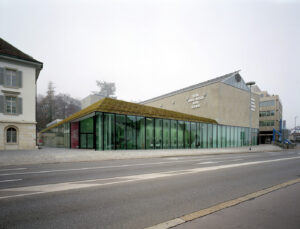
Nature-based solutions can help mitigate the heat island phenomenon in densely populated urban areas. As far as building envelopes are concerned, both green roofs and walls provide multiple benefits to the surrounding areas and to the buildings where they have been installed by using plants that act as building materials with specific attributes and performances. In detail, living wall systems are particularly sensitive to the vegetal choice due to their sophisticated technology and to the artificial vertical layer where plants are forced to live. The purpose of this paper is to investigate the characteristics of mosses in relation to their potential use in technological greenery systems. In this regard, the most recent and innovative application examples in buildings and design are presented and discussed.