
Archive
Tag: participation
Position Paper
Open Access
Towards a Spatialized Model of Democracy
by Teresa Hoskyns
pp. 337–348
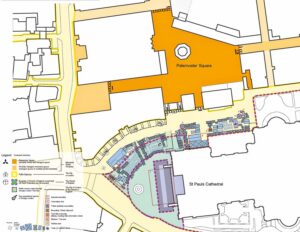
This position paper describes diverse models of democracy in political philosophy and discusses how these models can produce the public spaces of the city. In late neoliberal western societies privatization of public space has greatly diminished the democratic infrastructure of our cities, and we have witnessed a corporatization and commercialization of the public realm. This paper contrasts public space in late neoliberal society in the West with public space in China. Since the start of Deng Xiaoping’s reform era, China has seen a focus by communities and government on developing new public space and I argue that a civic, collaborative, community model of public space is emerging. I find that the focus on the creation of new community public spaces in China is a key tool towards its democratization and call for a radical democratic rethinking of public space as the space of democracy in the West. By thinking spatially about democracy, we can move towards a model where diverse models and practices co-exist.
Essay
Theory
Open Access
Claude Parent’s Oblique Travels: From Architectural Form to Social Participation
by Igor Siddiqui
pp. 79–101
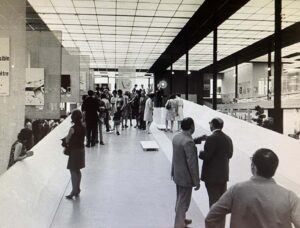
This article focuses on the French architect Claude Parent’s exploration of oblique architecture during a series of traveling programs pursued between 1969 and 1975. Based on a theory of the inclined plane developed in the 1960s with Paul Virilio as part of the group Architecture Principe, Parent conducted this exploration through temporary installations and staged public events hosted by cultural centers throughout France. This article examines the institutional context within which Parent’s traveling repertoire took place as well as the government policies, social movements, and cultural forces that shaped it. Through such an approach, the article develops a perspective on the relationship between Parent’s practice and the cultural centers’ objectives as mutually beneficial, and of his interventions as site specific, both architecturally and socially. The article furthermore provides evidence that these participatory experiences had a lasting effect on the architect’s attitude toward experimental architecture, shifting his priorities from form to subject.
Article
Subscribers
Towards a Cooperative Architecture Platform
by Jose Manuel Sanchez
pp. 327–340
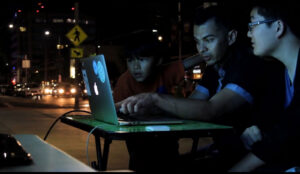
This paper outlines the use of videogame simulations as a representation of the complex interactions of resources within an urban neighborhood. The research advances the use of videogames as a mechanism for the production of design patterns for the city, in the hands of its inhabitants. By establishing a real-time feedback loop between players and an ecological simulation of the city, a user can learn and make decisions that could be shared with a community. This paper will mainly discuss the research developed through the videogame Block’hood, a project developed by the Author at the University of Southern California School of Architecture and the Plethora-Project research that attempts to critically address the use of mass media technology for collective organization and value production.
Buy
Already in your cart -
View cart