
Archive
Tag: participatory design
Article
Subscribers
Digital Participatory Design as a Tool for Inclusive and Democratic Post-conflict Reconstruction in Damascus, Syria
by Karam Alkatlabe
pp. 429–450
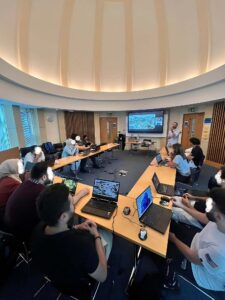
This research investigates the implementation of digital participatory design to include the engagement of externally displaced persons (EDPs) in envisioning the future of their neighborhoods in post-conflict cities. In a world where conflicts cause large-scale displacement, the conventional top-down framework for reconstruction cannot achieve democratic and sustainable recovery as it excludes EDPs. It has become critical to shift toward a digital, bottom-up participatory approach to steer the reconstruction of space. This study is the first to investigate how EDPs can remotely participate in rebuilding their destroyed cities. It offers insights into how architects and urban recovery practitioners can emphasize the critical role of architecture in enhancing democracy in post-conflict cities. The findings show that a participatory approach helps engage EDPs and leads to an inclusive democratic reconstruction process. Digital participatory practice can also increase drivers of democracy, including social cohesion and citizens’ sense of ownership, and legitimize reconstruction planning. Despite its challenges and limitations, this approach assists architects in forming a deeper understanding of the contextual challenges facing destroyed cities to facilitate creating spaces shaped by the input of EDPs.
Buy
Already in your cart -
View cart
Article
Subscribers
Crowdsourcing + Shared Architecture
by Niloufar Vakil, Joe Colistra
pp. 363–373
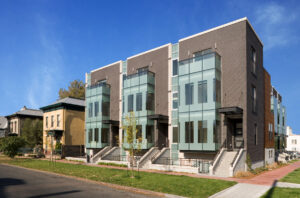
This paper describes a participatory development strategy that leverages the cooperative nature of a sharing economy. Three case studies will be explored that provide unique strategies for empowering community. These crowdsourced projects pool resources and expertise in order to design and build projects that resist gentrification, stimulate investment, and build community. Residents utilize the participatory actions of establishing a pro forma, acquiring land, securing financing, selecting professional engineers and contractors, and ultimately constructing the project all as larger components of community building. The models of community development presented here offer an alternative to the traditional designer-client dichotomy and allow the once-clear boundary between architect and client to be redrawn. Also, by sharing resources, community members are able to become active participants in their built environment.
Buy
Already in your cart -
View cart
Article
Open Access
Many Voices, One Project: Participation and Aesthetics in Community-Built Practices
by Katherine Melcher
pp. 351–366
Published: 2017-04-10
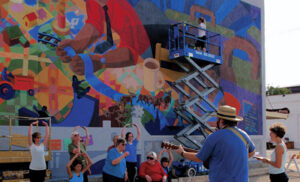
In architecture and related design fields, there is a perception that community participation in design requires a compromise with aesthetic quality. Alternatively, community-built design (the practice of involving local residents in the design and construction of places) values both participation and aesthetics. Community-built practitioners value aesthetic quality because it instills a sense of pride in the project that in turn strengthens the connections between people and the place involved; it builds community. A qualitative analysis of articles written by and about community-built artists and designers illustrates how their processes work to respect the contributions of all participants while, at the same time, producing artful design solutions. Practitioners utilize a form of structured openness in their projects, processes, and roles. Community-built practices suggest that designers in fields such as architecture, landscape architecture, and urban design, should not think of participation and aesthetics as trade-offs but, instead, consider participation as an opportunity to bring new ideas into their work and to develop an aesthetic that reflects the richness and complexity of the participatory process.