
Archive
Tag: pedagogy
Essay
Open Access
Other Than Infrastructure: Leaving Room for the Fantastical in the Resilient Project
by Michael Jefferson, Suzanne Lettieri
pp. 167–184
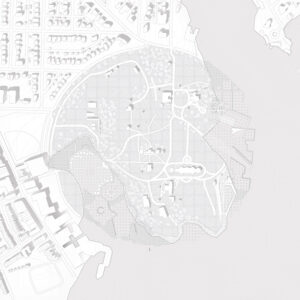
The manuscript reflects on the delightful and absurd qualities that might be harbored in routine infrastructures. Through a series of contemporary and historical examples the paper highlights how experience, material quality, narrative, and civic engagement can unlock new potentials in the mundane, and often intangible systems, which are intended to protect and serve those in flood prone territories. Understanding first that resilient water-management infrastructures exist along a spectrum of defense, and second that they each participate in their own extensive system of flows and processes, generates a set of opportunities for designers to interject and draw out new possibilities. Locating projects within these systems calls for two approaches: 1. identifying the “objecthood” of infrastructure; and 2. techniques for “unblackboxing” or bringing parts of now hidden systems to the foreground of the civic realm. The paper suggests that these two approaches aid in locating the whimsical within systems and offer calculated ways to confront flood mitigation methods that all too often privilege what is deemed as efficient over what is enjoyable.
Article
Open Access
Cidade Oceanico. Environment and Urbanization in Rio de Janeiro
by José Gámez, Jeffrey S. Nesbit
pp. 439–459
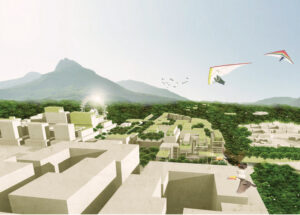
Using Rio de Janeiro as a case study in urbanization within the context of climate change, this multi-year urban design studio examines the challenges of addressing rising sea levels in one of Latin America’s largest cities. As a coastal metropolis, Rio requires that heterogeneous networks be woven between ecological and 21st century urban design processes. Yet, Rio continues to grow in low-lying, ecologically sensitive areas - and this has been exacerbated over recent decades by mega-event driven development coupled with inter-dependent informal urbanization. These forces characterize Zona Oeste, the focus area of the design initiative. This essay reflects on an international urban design pedagogy that seeks to integrate strategies to address climate change, rising sea levels, and unpredictable growth. Inherently, this project opens up a discussion into many sensitive questions regarding historical and cultural responsiveness. Filtered through the work of Lucio Costa, his proposals for Baja da Tijuca, and opportunities to re-engage the legacy of a modernist plan, students engage this rich context through a discursive design prompt with implications for both pedagogy and practice within and beyond Rio de Janeiro.