
Archive
Tag: resilience
Article
Landscape Urbanism
Subscribers
Knowledge Infrastructure for Coastal Infrastructure: The Y02A Patent Initiative and Site-Based Climate Adaption Strategies
by Richard L. Hindle
pp. 131–155
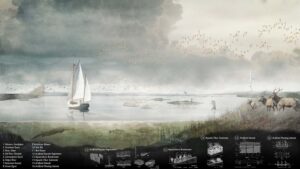
Innovation in climate adaptation and resilience practices is among the most critical issues in architecture, design, and planning. This essay explores how coastal adaptation and resilience planning processes may be informed by the Y02A patent classification scheme to design advanced forms of site-specific coastal infrastructure. The Y02A scheme covers the “technologies for adaptation to climate change,” organizing coastal, riverine, and urban climate adaptation innovations into distinct sub-classes, with the aim of building technical capacity and coordinating discovery in related sectors. The mechanisms and processes through which these novel technologies are invented, tested, translated, and implemented within environmental design and planning praxis remain largely unknown, creating opportunities for new methods of knowledge exchange to be developed. To address the unique, and potentially transformative relationship, important aspects of the Y02A classification scheme are introduced in conjunction with a case study analysis from 2017/18 Resilience by Design Bay Area Challenge in California, during which the Common Ground Team utilized patent innovation studies to conceptualize site-based adaptation and resilience strategies for the San Pablo Baylands.
Buy
Already in your cart -
View cart
Article
Subscribers
Performance-Based Computational Design and Fabrication for A Resilient Solution: Dredged Material for Masonry Vault Construction
by BoSheng Liu, Rui Liu
pp. 437–456
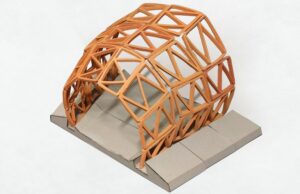
Contemporary sustainable and resilient architecture encompasses design with nature, dynamic adaptability to external disturbances, smart redundancy, and changing futures, which are essential to cope with the prerequisites of cultural influences. Contributing to the existing literature, this paper presents a series of built scaled vault prototypes which integrated material performance-based approaches in computational design and advanced fabrication, utilizing locally sourced dredged material (DM) as one of the primary building ingredients. The investigated DM is acquired from Ohio’s Lake Erie harbors and one of the coastal ports in southern Louisiana. Annual sediment removal is a required task for local port authorities and federal agencies to maintain transportation waterways for economic viability. This paper discusses DM processing procedures, and granular mixture methods integrated into a number of computational frameworks to produce a range of vaulting projects from the contemporary DM-compressed stabilized tiles (DM-CST) vault to DM 3D printed vaults, considering material workability, buildability, and extrudability, as well as element’s strength and durability. Each design has to consider these factors while responding to the force of gravity in order to achieve desired structural geometry.
Buy
Already in your cart -
View cart
Essay
Subscribers
The Sharing Cosmopolis. Prosperity without Growth
by Doug Kelbaugh
pp. 273–286
Why is sharing important to our civilization, our cities and the earth? It is critical, even essential to our survival, because without it, we will overconsume the planet’s resources and overheat it. It is of paramount importance that we find ways to increase prosperity without economic growth, or better yet, to achieve degrowth. Sharing our assets, our services and places, even our activities and experiences may be our best hope to reduce the human ecological, energy and carbon footprints. Whether a reformed version of capitalism or a fundamentally new economy, the sharing city and no-growth ethic form a large, profound and open question. In any case, from an energy use and emissions point of view, doubling energy and technological efficiency or doubling the intensity of asset use though sharing have much the same impact - whether it is cars, transit, homes, equipment, offices or workshops. This realization opens up a huge new opportunity for reforming or replacing neo-liberal capitalism with longer-term thinking and more humane economics.
Buy
Already in your cart -
View cart
Article
Open Access
An Eco-Leap Forward: Shifting Agriculture
by Xinyu Xiao, Hai Anh Nguyen
pp. 563–583
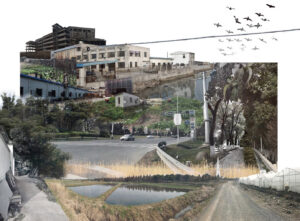
Human activity has been changing the surface of the earth for several thousand years. In recent decades, the rate of change however was accelerated in the Yangtze River Delta, propelled by China’s rapid and continually chaotic process of urbanization and industrialization. How can our cities eventually face haze, water pollution, soil contamination, and natural disasters caused by climate change? The challenge is indeed to explore how to achieve an ecological resilience by enhancing biodiversity and by reviving and revising productive landscape.
Project
Open Access
Design Strategies and Non-Standard Territories. The Resilience of the Domitian Coastline
by Giovanni Multari
pp. 669–683
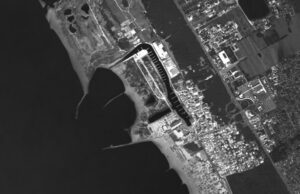
Coastal areas are an extraordinary condition for research and investigation, at a scale encompassing multiple landscapes that underwent a massive transformation, leading to their current crisis state. A landscape with different degrees of depth, with complex conditions and rules of the spatial systems that can be fully understood only through an accurate selection and study of the elements that concurred to its creation. The natural cycle that built the different elements of this landscape is definitely an element to take into account during the definition of the design strategies: through the alluvial deposit first and marine next, it “built” the shore, the dunes - a natural protection against the sea-water level rise - and the pinewood behind the dunes. Our goal is strategy that, recovering and recycling the ancient and pre-existing dialogue between the form of the city and the form of the landscape, recovers and recycles that long and natural resilience process: a quality those areas always had, considering also the potential rising of sea levels.