
Archive
Tag: sustainability
Essay
Open Access
2 in 1 – A Playful Approach to the Sustainable Use of Building Materials
by Angie Müller-Puch, Erik Hegre, Michael Innerarity
pp. 323–336
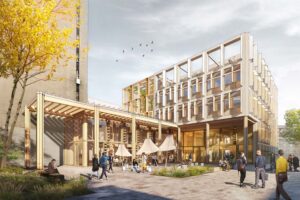
To the observer, the building industry strives to develop the most optimized construction materials to build faster, better and cheaper, which has created an expanding pallet of increasingly complex, highly specific product systems. As a result, it is assumed that buildings are comprised of an established collection of parts, selected from a catalogue, and have the consequence of a one-time useful lifespan. This does not suggest that we have abandoned technological development; however, we suspect this approach will stall in its ability to address environmental challenges and create healthy, quality spaces because the sum is not greater than its parts. What if we use and assemble materials in a way that they can serve multiple functions at one time? The 2 in 1 – design strategy is a playful process that assembles materials so one material can incorporate several functions at a time. By finding synergies between well-known, standardized construction elements we can create a positive effect on the quality of building and reduce the carbon footprint.
Article
Subscribers
Research Towards Shape-Changing Composites with Thermal Responsiveness: 4D Print Experiments in Small Scale
by Michaela Gebetsroither, Oliver Schürer
pp. 521–548
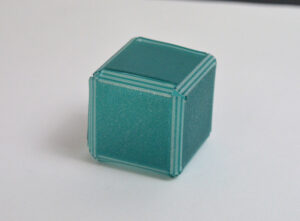
Latest SMP (Shape Memory Polymers) materials may allow to produce future building elements that change their shape in various ways. This study focuses on (1) developing shape-changing multi-materials from SMP and (2) control the change in shape by harnessing its thermal responsiveness. We focus on the manufacturing of SMP/PLA (Polylactic acid), SMP/TPU (Thermoplastic Polyurethane) and SMP/PETG (Polyethylene terephthalate glycol) composites, with special attention to SMP/TPU and SMP/PETG composites and their material behaviors compared to single SMPs. The first step was to initially investigate shape-changing and self-transforming composites. We report on (a) a thermo-active SMP capable of recovering from a shape-change after exposure to a temperature of 55°C and (b) testing the concept of 4D printing with FFF (Fused Filament Fabrication) technique. Their printability and cohesion were tested, and consequently, a geometric connection strategy was introduced to design SMP/PLA and SMP/PETG composites. Finally, we managed to activate shape-change in an SMP/PETG with embedded heating wires controlled by a microcontroller.
Buy
Already in your cart -
View cart
Conference Report
Criticism
Open Access
The Transformative Power of Urbanism. The Urban Age Conference, Venice Biennale (July 2016)
by Brunella Angeli
pp. 119–128
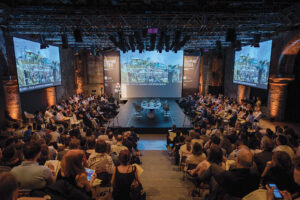
As the world population is increasing at unprecedented rates and wastelands are extending at a variety of new scale and in various spaces organizing the sprawling landscape, the line between formal and informal settings, God’s eye view planning walled off from the outside world and temporary structures seems to intensify. There is an urgency to reverse such inefficient growth with its consequent inhuman conditions and better plan world’s cities by means of urbanization. The Urban Age “Shaping Cities” Conference at the Venice Biennale (July 14-15, 2016) with the exhibition Conflicts of an Urban Age explored the connections among the political, economic and social city with the scale of its physical and urban form. Addressing themes such as expansion, redevelopment, adaption and confronting speakers and urban solutions from different backgrounds, the conference questioned the role of planning in the definition of more inclusive, safe, resilient and sustainable cities. The theme reconnects to Habitat III, the UN global cities summit set for Quito, Ecuador, in October 2016 implementing the New Urban Agenda for the world’s rapidly urbanizing areas.

Article
Urbanism
Open Access
China’s Grand Canal. Strategies for Sustainable Urban Development in China
by Andrea Degli Angeli
pp. 73–97
China has had to deal with the huge architectural and urban development challenges created over the past fifty years. China’s economic growth model has been based on accelerated consumption and manufacturing, with inevitable and significant environmental and social consequences. The model discussed in this paper seeks to employ the principles of sustainability in a specific urban development context: the massive Beijing-Hangzhou Canal, the longest artificial waterway in the world. The model simulates a macro strategy for the redevelopment of this ancient water system utilizing and adapting highly successful traditional Chinese planning methods for urban, wetland and rural areas. Elements of this model could serve as the basis for effective future Chinese urban development in similar contexts. China has already begun actualizing policies and strategies to address major concerns about environmental and social issues. The proposed model is intended to contribute to this endeavour and to promote sustainable growth in the most populated country in the world. The project outlined in this paper shows that the planning elements that inspired Marco Polo’s admiration for Chinese cities are still highly relevant in a country increasingly damaged by inappropriate and standardized international urban development approaches.