
Archive
Tag: theory
Book Review
Urbanism
Open Access
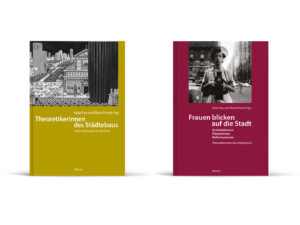
A New “Book of the City of Ladies”
by Dörte Kuhlmann, Guest-Editor, Alexia Bumbaris
pp. 503–511
Theoretikerinnen des Städtebaus.Texte und Projekte für die Stadt, By Katia Frey and Eliana Perotti (eds.)Berlin: Reimer, 2015240 mm x 170 mm42 b/w illustrations352 pages€ 49 (paperback)ISBN: 978-3-496-01532-1 Frauen blicken auf die Stadt. Architektinnen, Planerinnen, Reformerinnen. Theoretikerinnen des Städtebaus II, By Katia Frey and Eliana Perotti (eds.)Berlin: Reimer, 2019240 mm x 170 mm45 b/w illustrations360 pages€ 49 (paperback)ISBN: 978-3-496-01567-3
Essay
Theory
Open Access
The Absurd Alibi
by Joseph Godlewski
pp. 7–14
Published: 2016-01-28
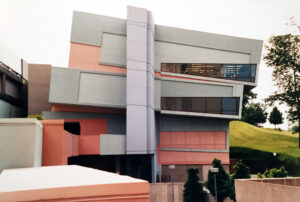
Generated from a discussion at the Fall 2015 ACSA Conference in Syracuse, New York, this article tackles the very topic of the conference (“Between Autonomous and Contingent Objects of Architecture”). It reflects on projects of autonomy (new and old) asking what they contribute to architecture as a discipline and profession. What, if anything, is at stake in such projects? It discusses some contemporary examples of autonomous and object-oriented theories of architecture. While autonomy originally posed a radical challenge to ways architecture was made and reasoned, this article contends that the critical energy generated with that challenge has been exhausted and replaced with disengaged copies of earlier experiments. It is unclear what insights these newer versions provide to architectural discourse. This article further conjectures that the socio-economic context in which autonomy re-emerges today is fundamentally altered leaving its advocates in a much more precarious position than the exponents of previous iterations of architectural autonomy. It concludes that notions of architectural autonomy are an absurd alibi, incommensurate with a discipline so constrained by social and economic expectations as architecture.
Article
Cross-Disciplinary Studies
Open Access
Landscape as a Conceptual Space for Architecture: Shifting Theories and Critical Practices
by Michelle Laboy
pp. 77–96
Architecture constantly negotiates the ideal and the real. These two conditions, being a reflection of cultural values and practices, change over time. I suggest that what remains constant to architecture are the lasting spatial and formal qualities that engage in constructing the physical and cultural landscape: how it channels natural light and air, how its permanent structures organize space, frame and supports life, shelter, protect and comfort. There are the qualities that make architecture endure and adapt to a changing cultural and natural environment. The placement of architecture in the real world often seems contaminated by a multiplicity of socio-economic structures and processes, but its situation in the world is also what provides an opportunity to engage in the making of a landscape where over time architecture finds a critical autonomy and relevance. The role of architecture in making or responding to the landscape is one of the critical questions in current debates about autonomy and contingency. In this paper, I expand on the work I presented at the ACSA conference at Syracuse University in the Fall of 2015, where I explored how the discipline of architecture has absorbed the landscape as a conceptual space, to “theorize critical means of engagement with the formal, spatial and performance qualities of its territory, to define critical contingencies that are meaningful through space and time, and to refuse those that can keep it tied to the trivialities of a temporary situation.” More specifically, my work examines how the notion of the ecological permeates the architecture discipline from the field of landscape, providing a framework for architectural discourse to theorize the relationship of the idealized and the real, to create new singular form within a situation of multiplicity.