
Archive
Tag: urban design
Essay
Subscribers
At Scale: Democracy in the Balance
by Edgar G. Adams
pp. 351–373
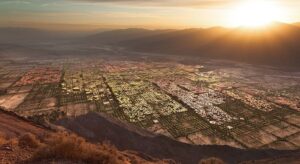
Democracies are in decline. Some blame the erosion of the public realm and proliferation of digital media for a decline in the means of authentic discourse and our capacity for building meaningful consensus. American democracy was uniquely shaped by the struggle against the tyranny of the Crown, and tenaciously clings to individual liberty and land ownership. Most European democracies evolved more gradually alongside hereditary monarchies maintaining stronger communal values. Consequently, many of our prized urban models and most vibrant public spaces, were created under aristocratic regimes or in republican city states with powerful religious influences. What can these examples teach us about the current potential for “democratic space” and what can we learn from its present impediments? This essay surveys the evolution of urban settlements in response to a range of influences, culminating with an examination of a potential combination and transformation of two paradigms, one historic and one contemporary, to create an urban framework that is reflective of democratic principles at various scales for our reflection and debate.
Buy
Already in your cart -
View cart
Article
Sustainability
Subscribers
Sea-Level Rise and South Florida: Envisioning Public Space as a Function of a Changing Natural Environment
by John Sandell
pp. 143–162
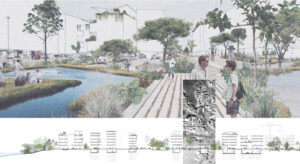
Sea-level rise and its effects on low-lying territory posit a rethinking of urban environments. Drawing on green infrastructure concepts and resiliency principles in urban design, this study examines how these urban environments could evolve. The study describes the challenges that coastal cities face and advances a cross-disciplinary research approach to a specific coastal site. The site location is Fort Lauderdale, Florida. The study adopts a transformational strategy that directs the development of an urban design inclusive of hydro-patterns, vegetation, building mass, and its orientation. The strategy foregrounds nature’s role in the conceptualization of changing conditions and the built morphologies at the scale of territory and neighborhood. By exploring these relationships, the project highlights the dynamics of the natural environment as a frame for reconfiguring public space as permeable and adaptive networks, enabling an open and indeterminant understanding of urban commons.
Buy
Already in your cart -
View cart
Book Review
Urbanism
Open Access
A New “Book of the City of Ladies”
by Dörte Kuhlmann, Guest-Editor, Alexia Bumbaris
pp. 503–511
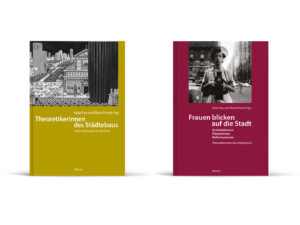
Theoretikerinnen des Städtebaus.Texte und Projekte für die Stadt, By Katia Frey and Eliana Perotti (eds.)Berlin: Reimer, 2015240 mm x 170 mm42 b/w illustrations352 pages€ 49 (paperback)ISBN: 978-3-496-01532-1 Frauen blicken auf die Stadt. Architektinnen, Planerinnen, Reformerinnen. Theoretikerinnen des Städtebaus II, By Katia Frey and Eliana Perotti (eds.)Berlin: Reimer, 2019240 mm x 170 mm45 b/w illustrations360 pages€ 49 (paperback)ISBN: 978-3-496-01567-3
Essay
Open Access
Resilient Edges: Exploring a Socio-Ecological Urban Design Approach in Metro Manila
by Stephen Gray, Mary Anne Ocampo
pp. 519–561
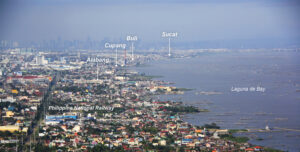
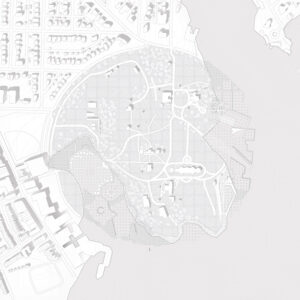
With the notable uptick of natural disasters impacting densely-populated areas, attention to the subject of urban resilience has increased among ecologists, economists, engineers, social scientists, and designers. But despite an extraordinary cross-disciplinary interest in a single subject, the urban resilience discourse has remained largely siloed by discipline. This essay builds on concepts of resilience from ecology and social science and positions urban design (in itself at the intersection of architecture, planning, and landscape architecture) as uniquely situated for integrating and operationalizing various concepts of urban resilience. The authors propose a socio-ecological urban design approach that bridges natural, human, and spatial systems and is empirically grounded in historical research, field observations, and interviews with informal settler families (ISFs) living along the shoreline of Laguna de Bay in Metro Manila. The findings revealed that while many were affected by regular flooding and issues of housing security, these were not necessarily deciding factors when determining where to live. In response to programs which emphasize out-of-city relocation, authors developed three principles of urban resilience that instead spatially integrate formal and informal communities.
Essay
Open Access
Other Than Infrastructure: Leaving Room for the Fantastical in the Resilient Project
by Michael Jefferson, Suzanne Lettieri
pp. 167–184
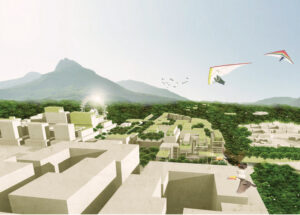
The manuscript reflects on the delightful and absurd qualities that might be harbored in routine infrastructures. Through a series of contemporary and historical examples the paper highlights how experience, material quality, narrative, and civic engagement can unlock new potentials in the mundane, and often intangible systems, which are intended to protect and serve those in flood prone territories. Understanding first that resilient water-management infrastructures exist along a spectrum of defense, and second that they each participate in their own extensive system of flows and processes, generates a set of opportunities for designers to interject and draw out new possibilities. Locating projects within these systems calls for two approaches: 1. identifying the “objecthood” of infrastructure; and 2. techniques for “unblackboxing” or bringing parts of now hidden systems to the foreground of the civic realm. The paper suggests that these two approaches aid in locating the whimsical within systems and offer calculated ways to confront flood mitigation methods that all too often privilege what is deemed as efficient over what is enjoyable.
Article
Open Access
Cidade Oceanico. Environment and Urbanization in Rio de Janeiro
by José Gámez, Jeffrey S. Nesbit
pp. 439–459
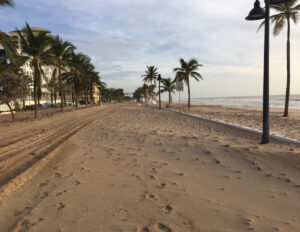
Using Rio de Janeiro as a case study in urbanization within the context of climate change, this multi-year urban design studio examines the challenges of addressing rising sea levels in one of Latin America’s largest cities. As a coastal metropolis, Rio requires that heterogeneous networks be woven between ecological and 21st century urban design processes. Yet, Rio continues to grow in low-lying, ecologically sensitive areas - and this has been exacerbated over recent decades by mega-event driven development coupled with inter-dependent informal urbanization. These forces characterize Zona Oeste, the focus area of the design initiative. This essay reflects on an international urban design pedagogy that seeks to integrate strategies to address climate change, rising sea levels, and unpredictable growth. Inherently, this project opens up a discussion into many sensitive questions regarding historical and cultural responsiveness. Filtered through the work of Lucio Costa, his proposals for Baja da Tijuca, and opportunities to re-engage the legacy of a modernist plan, students engage this rich context through a discursive design prompt with implications for both pedagogy and practice within and beyond Rio de Janeiro.
Essay
Open Access
Salty Urbanism: Towards an Adaptive Coastal Design Framework to Address Sea Level Rise
by Jeffrey E. Huber, Keith Van de Riet, John Sandell, Lawrence Scarpa
pp. 105–130
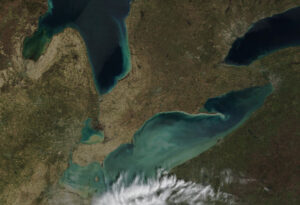
Utilizing the North Beach Village neighborhood in Fort Lauderdale, Florida, as case study, “Salty Urbanism” establishes an interdisciplinary team to develop a coupled research methodology and pedagogical approach that envisions and quantifies the experiential and ecological outcomes of alternative ways forward for the neighborhood in response to climate instability, disruption and rising sea levels. These outcomes consider an inevitable future of saturated landscapes and, as a result, integrate research models that accommodate a variety of best management practices (BMP), low impact development (LID), green infrastructure (GI) and other alternative concepts to be implemented over time in the neighborhood adaptation plan.
Article
Open Access
Water-Born Micro-Cities: Bringing the Great Lakes Closer to Natural Symbiosis with Eco-Based Design
by Dustin Altschul, Kim Buchholz
pp. 87–104
Through design-based research, we investigate how a water-borne micro-city can participate in ecological repair that also supports healthy, human life by removing harmful algae from the water and utilizing it as a supply resource for energy. In this proposed scenario, urbanism becomes the active component in prevention of toxic algae blooms. By bringing together scientific research with research from medicine, design, history and social science, we begin to animate design strategies that promote local and regional resiliency within the Great Lakes. These hypothetical designs, while focusing on algae within the Great Lakes, can provide a feasible prototype for other coastal regions around the world. The priorities of this project are relatable to all coastal-adjacent settlements and the pending depletion of resources that will jeopardize human life.