
Archive
Tag: urban development
Essay
Open Access
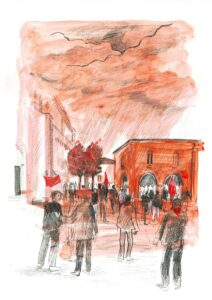
Exploring Expressed Democratic Attempts in Space: Architecture and Landscape in Pier Paolo Pasolini
by Riccardo Maria Balzarotti, Luca Maria Francesco Fabris
pp. 389–403
This article explores the works of Pier Paolo Pasolini, focusing on the interplay between his artistic output and spatial themes like architecture and landscape, particularly as they reflect democratic values. Pasolini viewed space as a physical entity and a site for political, social, and cultural interaction. By examining locations such as Friuli and Casarsa della Delizia, Pasolini’s youth environment, the paper delves into how these landscapes shaped his vision of democratic spaces. It also connects Pasolini’s perspective to contemporary public spaces, which, like his poetics, emphasize the role of dissent in democracy. The article further investigates how modern urban developments may limit this potential for democratic engagement by prioritizing aesthetic and commercial objectives over historical and social memory. Additionally, Pasolini’s involvement in education and local politics illustrates how spaces like schools and civic centers become arenas for resistance and public discourse. Ultimately, the essay argues that spaces become truly democratic when they foster active engagement and dissent, as reflected in Pasolini’s works and the symbolic power of place.
Article
Urbanism
Open Access
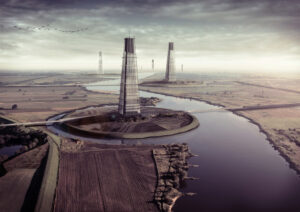
China’s Grand Canal. Strategies for Sustainable Urban Development in China
by Andrea Degli Angeli
pp. 73–97
China has had to deal with the huge architectural and urban development challenges created over the past fifty years. China’s economic growth model has been based on accelerated consumption and manufacturing, with inevitable and significant environmental and social consequences. The model discussed in this paper seeks to employ the principles of sustainability in a specific urban development context: the massive Beijing-Hangzhou Canal, the longest artificial waterway in the world. The model simulates a macro strategy for the redevelopment of this ancient water system utilizing and adapting highly successful traditional Chinese planning methods for urban, wetland and rural areas. Elements of this model could serve as the basis for effective future Chinese urban development in similar contexts. China has already begun actualizing policies and strategies to address major concerns about environmental and social issues. The proposed model is intended to contribute to this endeavour and to promote sustainable growth in the most populated country in the world. The project outlined in this paper shows that the planning elements that inspired Marco Polo’s admiration for Chinese cities are still highly relevant in a country increasingly damaged by inappropriate and standardized international urban development approaches.