
Archive
Tag: urban nature
Essay
Subscribers
From Human to Holobiont: Reframing the Human/Nature Divide in Urban Architecture
by Elizabeth L. McCormick
pp. 269–284
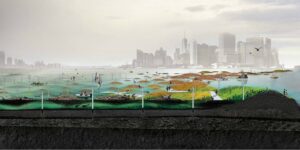
Urban environments have long been shaped by a conceptual boundary that separates humans from nature, positioning nature as something external to be controlled, excluded, or aestheticized. In architecture, this worldview has materialized through technologies of separation – sealed facades, HVAC systems, and airtight enclosures that engineer the indoors as sanctuaries from the natural world. These spatial logics have not only shaped cities but have influenced cultural attitudes, public health outcomes, and our collective understanding of what it means to be human in a changing climate. Scientific advances like the Human Microbiome Project challenge the paradigm of human exceptionalism, revealing the human body as an ecological community, rather than an individual organism. Instead, biologist Lynn Margulis describes us as holobionts – interconnected networks of microbial and physiological relationships that blur the lines between humanity and ecology. If we are not separate from nature, then the boundaries we construct must be rethought. This paper introduces the holobiont as a design-relevant paradigm that embraces ecological entanglement and environmental heterogeneity, positioning buildings as dynamic participants in a larger web of life.
Buy
Already in your cart -
View cart
Essay
Subscribers
From Empty to Evergreen: Gardens as Architectural Design Forces
by Bramasta Putra Redyantanu, Stephanus Wirawan Dharmatanna, Elvina Shanggrama Wijaya
pp. 309–331
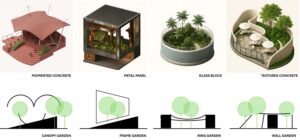
This study reframes gardens from decorative elements to active, generative agents in architectural design. It investigates how gardens shape spatial systems, support social interaction, and catalyze ecological processes in urban contexts. Four case studies from Tanatap Café, Ring, Frame, Wall, and Canopy Gardens show that gardens do more than enhance aesthetics; they initiate new design strategies and spatial organizations. Using a force-based framework, the study identifies spatial qualities, experiential conditions, and preferred configurations to reveal how gardens influence material, ecological, and social dimensions. Findings are organized into three themes. (1) Residue to Rules: Garden as Generator positions gardens as producers of spatial structure. (2) Edge that Breathes: Porosity as Threshold interprets garden boundaries as active membranes that enable interaction and ecological flow. (3) Frame is the Form: Typology as Emergent demonstrates how garden arrangements generate new urban types. By presenting gardens as essential ecological and functional components, the study contributes to ecological urbanism and argues for shifting from viewing nature as complementary to a nurturing, formative force in urban design.
Buy
Already in your cart -
View cart