
Archive
Tag: vernacular architecture
Article
Tectonics
Open Access
Opus Versatilium: A Meta Vernacular Approach for Contemporary Load-Bearing Walls
by Pablo Moyano Fernandez
pp. 129–151
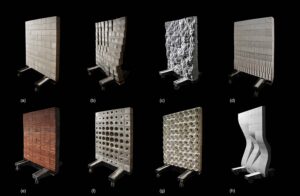
The load-bearing wall has historically served as the primary enclosure and structural component of buildings. However, the Industrial Revolution brought about technological advancements that allowed structural frames to be separated from non-structural enclosures. Today, questions of building resilience and the sustainability of materials and resources are challenging the separation of the wall in terms of its structural, performance, and aesthetic properties. This article explores the hybridization of vernacular knowledge and building construction methods with emerging digital and material technologies as an alternative to current construction practices. The overarching goal is to position the load-bearing wall as a more efficient, resilient, and high-performance enclosure. The material of choice is concrete due to its versatility, strength, durability, availability, affordability, and resiliency. As the result of applied research, the author presents Opus Versatilium (OV), an innovative casting methodology. The commission and construction of a bird blind was essential to demonstrate the feasibility of the proposed method. Capitalizing on the fluidity and versatility of concrete, OV advances load-bearing walls and mobilizes formwork as an active and accessible design tool for innovation in building envelopes.
Essay
Criticism
Subscribers
Vernacular Architecture on Display: From Exhibited Artifact to Operative Discourse
by Stamatina Kousidi
pp. 35–56
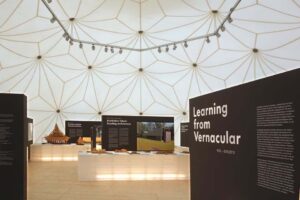
This article sets out to interrogate the exhibition as an essential form of critical discourse in architecture, looking at how it has engendered new conceptual and operative approaches to the vernacular notion. Focusing on the late 20th century, it explores how the exhibition space contributed to the praise of the vernacular as a valid design reference, by creating a platform for its renewed, consistent, and systematic reinterpretation. This praise did not entail the recovery of history but the redefinition of the relation between tradition and concepts of modernity, building and pre-existent context. The exhibition space thus served as a catalyst to the return of the vernacular model; it enabled new connections between project, travel, and theoretical discourse, engaging ever more international audiences. In recent exhibitions such a model manifests itself again through full-scale models, mock-ups, and pavilions that prioritize issues of materiality, construction, and experience. The article, ultimately, explores the vernacular as a cogent theme which may hold the key for a more inclusive, culturally-rooted, and holistic approach to the design of the built environment and its interpretation.
Buy
Already in your cart -
View cart