
Archive
Tag: wellbeing
Article
Open Access
Countering the “Troublesome Unit”: Compensatory Design to Create Equity in Social Housing
by Christina Bollo
pp. 345–361
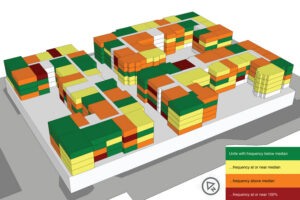
Housing scholars have shown that moving has inherent hazards and can create disruption for social housing residents as well as collective disruption within communities. This paper draws from social housing case study sites in the Pacific Northwest of the United States. Analyzing those apartments with the highest rates of turnover, what property managers call “troublesome units,” revealed architectural attributes that influence frequent moves. These attributes are related to apartment size, layout, and location within the building. To reconcile the resultant inequity in apartment design, this paper proposes a theory of compensatory design, in which the architect offsets unavoidable negative attributes with positive elements to equalize turnovers between apartments. Ultimately, architects who see a troublesome unit, not as a lost cause, but as a challenge to excellent design solutions, will better serve their clients, the residents who live in the buildings, and the communities at large through the reduction of lost housing.
Opinion
Open Access
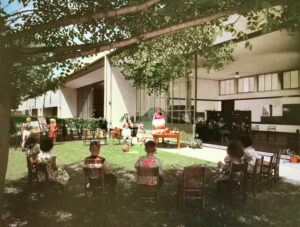
Public Health Themes in Survival Through Design: A Son’s Appreciation
by Raymond Richard Neutra
pp. 289–295
Essay
Cross-Disciplinary Studies
Subscribers
Wellbeing in the Built Environment: Designing Discontinuities Between Function and Semantic
by Nicoletta Brancaccio, Davide Giacomo Maria Gattoni, Federico Niola, Stefano Rozzi
pp. 31–52
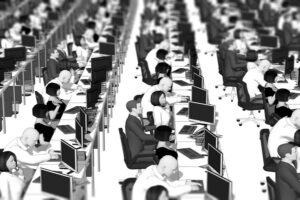
Space is relational. How many relationships can occupy a space? How do they work? These are both interesting questions that we would like to answer. We know that we interact with space and that its configuration affects us: we can be aggregative while experiencing it, rather than competitive. Space has considerable power in influencing our brain. Essentially, our actions are somehow manipulated by what we see and what we touch. How does our space (peripersonal space) interfere with another’s? The idea of interaction within space (or social space) and space of selfhood thus becomes an essential subject for architecture and cannot be simply parameterized in a geometric manner. Physical space must, therefore, allow solitary or cooperative movement without alienating the individual. We base our judgments on movement, culture, personal psychical characteristics, memory, and personal experience. Taking these elements as our base, we gave a new perspective for designers to draw from the semantic, which can be rhetorical and disconnected by the function.
Buy
Already in your cart -
View cart