
2 issues
22 articles
2 issues
VOLUME 8/2023
n.2
10 articles · AI Time · Issue n.2 (2023)
Essay
Open Access
Jarvis, Hal, or AlphaZero? Looking Beyond Conventional Narratives Concerning AI and Architecture
by Cem S. Kayatekin, June Aoun, Yusuf Sühan Bozkurt, Daphné Fournel
pp. 217–236
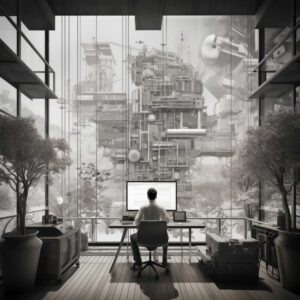
Since early 2021, the discourse concerning the potential and impacts of artificial intelligence on architecture has radically expanded. Discussions have largely focused on the heightened levels of productivity or efficiency that can be achieved within the existing ecology of architectural production processes, as well as the potential disruptions that may arise through human–AI co-authorship of the built world. What this paper asserts is that these dominant narratives appear to be extensions of quite conventional storylines which either frame artificial intelligence as a hyper-computational prosthetic for the enhancement of the architect or architectural office or as a critically disruptive force that will trigger micro- to macro-scale reconfigurations of the domain of built- environmental authorship. The dilemma is that we appear to be thinking of AI on old models of brute-force computation (i.e., Deep Blue) or dystopian conceptions of AI systems that can readily cross-pollinate with and radically disrupt existing societal configurations and dynamics (i.e., HAL-9000). What we have not quite considered are the real capacities and limits exhibited by artificial neural networks anchored around self-play reinforcement learning models (i.e., AlphaZero).
Article
Open Access
Exploring the Role of AI in Urban Design Research: A Comparative Analysis of Analogical and Machine Learning Approaches
by Carla Brisotto, Jeff Carney, Forough Foroutan, Karla Saldana Ochoa, Whittaker Schroder
pp. 237–264
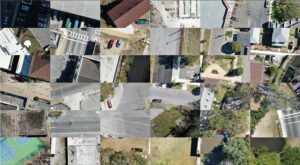
We conducted an experiment to explore how Machine Learning (ML) can be utilized as a tool in urban studies research. The current study aims to compare two methodologies to identify urban indicators of the residents’ well-being focusing on three transects across two local watersheds in Jacksonville. The study is framed within the theory of transect analysis. The goal of this experiment was to compare an analogical transect analysis method (AT) to Machine Learning one (MLT) to understand (1) what kind of contribution the latter approach can provide to the development of transect analysis methodologies, and (2) if and how it can connect digitally generated site analysis to local knowledge.The experiment’s findings highlight the ability of the ML algorithms to find noticeable patterns of built environment from aerial imagery. However, local knowledge is indispensable to interpret results in a meaningful way. The combination of the two approaches emphasizes the complementary nature of them and shows how ML methods can be a tool at the service of communities.
Essay
Subscribers
Navigating AI-Enabled Modalities of Representation and Materialization in Architecture: Visual Tropes, Verbal Biases, and Geo-Specificity
by Asma Mehan, Sina Mostafavi
pp. 267–282
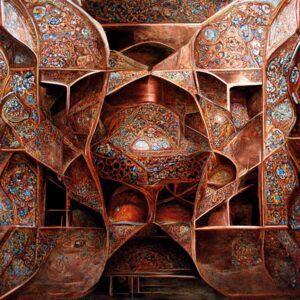
This research delves into the potential of implementing artificial intelligence in architecture. It specifically provides a critical assessment of AI-enabled workflows, encompassing creative ideation, representation, materiality, and critical thinking, facilitated by prompt-based generative processes. In this context, the paper provides an examination of the concept of hybrid human–machine intelligence. In an era characterized by pervasive data bias and engineered injustices, the concept of hybrid intelligence emerges as a critical tool, enabling the transcendence of preconceived stereotypes, clichés, and linguistic prejudices. This paper not only explores the applied and generative capacities of AI-enabled workflows but also suggests fundamental approaches that can enhance the creative process and confront the embedded biases and injustices within data-driven systems.
Buy
Already in your cart -
View cart
Article
Subscribers
Architecture’s “Recording Deluge”: The Nexus Between Architectural Design, AI, and Data Harvesting
by Giuseppe Canestrino
pp. 283–301
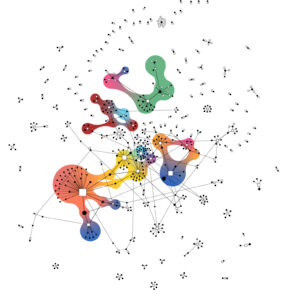
As contemporary artificial intelligence (AI) tools are showing the ability to decipher intricate systems through the identification of correlations within vast datasets, the capacity to record, store, and utilize this data nowadays takes a central position in the cultural debate of an increasing number of disciplines. Architectural scholars, however, seem more interested in the explicit expression of AI, such as the development of new tools, rather than in how AI can challenge the ontology and epistemology of architectural design. Discussion of the research of scholars like Maurizio Ferraris, or Shoshanna Zuboff who investigates the societal consequences of data-harvesting practices, may reveal an ongoing change in the accumulation, preservation, and exploitation processes of architectural knowledge. This research intends to explore how one of the raw materials on which AI is nurtured, namely the abundance of data, has the potential to shape and guide forthcoming developments in architectural design.
Buy
Already in your cart -
View cart

Essay
Subscribers
To Think a New Thing: AI, Metaphor, and the Fantasies of Knowing
by Karel Klein
pp. 303–315
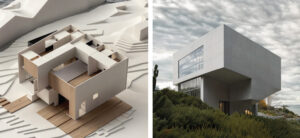
This essay aims to explore the unexpected intersection of AI-generated images, metaphor, and fantasies of knowledge. Expanding on the notions of metaphor in the philosophy of Jose Ortega y Gasset, we view the AI-generated images (such as those from mis-trained StyleGAN models) as ‘objects’ in possession of an inherent surplus that transcends their perceived qualities and constituent parts. Metaphors reveal latent qualities of ‘objects’ that extend beyond human perception. We consider how these image-objects operate not merely as generators of visual metaphors but as metaphor-like entities themselves, shifting our perception of reality. As a result, these image-objects behave like disembodied expressions of a new kind of knowledge. This feeling, or fantasy of knowledge, is what Steven Connor calls ‘epistemopathy.’ By examining the interplay between human imagination, AI-generated outputs, and the epistemopathic experiences they evoke, we explore how AI becomes a manifestation of the human desire for expanded knowledge and imaginative exploration. In the blurring of the boundaries between our own understanding and AI’s perplexing output, we are confronted with a sort of knowledge boundary that conflates reverie with reasoning.
Buy
Already in your cart -
View cart
Essay
Subscribers
Site and AI: A Paradigm Shift
by Genevieve Baudoin, Bruce A. Johnson
pp. 319–333
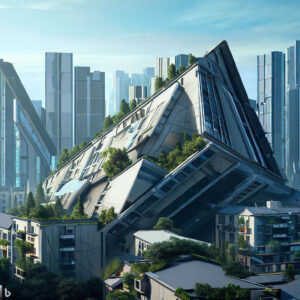
AI’s potential is in its ability to sift through vast amounts of contextual data that can drive design decisions. It offers the opportunity to process information about a virtually limitless number of subjects, at a conscious or unconscious level. This has created what Thom Mayne describes as a “paradigm shift” in our perception of site. The architect can now curate, directing results based on AI to restore specificity to projects that, through the distance created between the real site and the computer model, we have lost along the way. We rely on technological workarounds to fix many designable issues in our buildings – an over-reliance on climate control, a willingness to place buildings directly in harm’s way (i.e., building on flood plains), and an ignorance of the context of a site (from archeology to gentrification). This paper offers a provocation: AI can create a return to site and construction sensibilities by harnessing layered data sets such as orientation, topography, climate, or even social fabric. Can AI chart a course towards less reliance on technological band-aids in the production of building?
Buy
Already in your cart -
View cart
Essay
Subscribers
AI and Design Synthesis: Hybridity and Hybrid Form
by Karim W. F. Youssef
pp. 335–348
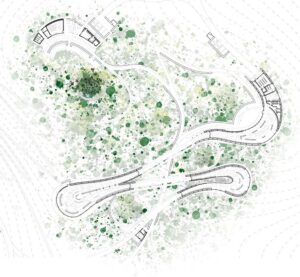
AI, as a gamechanger, is revolutionizing the architectural and urban scenes so drastically that the way our buildings and cities will look like and be experienced will fundamentally change. The overarching purpose of the paper is to take a modest step towards understanding the paradigmatic role of AI in changing the form of our built environments. The paper conceptualizes AI’s role in the design process as essentially the suggestion of hybrid solutions, transforming the nature of the built environment to a hybrid between its static and non-static, real and virtual forms. The basic question to pose is the role of AI technology in assisting the design process, gearing it towards the creation of hybrid forms that redefine the relationship between humans and their built environment in a meaningful way and that also address the complex problems of our contemporary society which hinge upon the resilience of the architecture and urban form of the space we inhabit. AI technology is being increasingly embedded into our inhabited environment affecting the built expression of architecture as well as the process and practice of designing architecture.
Buy
Already in your cart -
View cart
Article
Subscribers
AI as a Facility for Sustainability: Digital Design Studio Education’s Prospects and Challenges
by Anas Lila, Sigita Zigure
pp. 349–368
This research presents the implementation of AI-driven design approaches for final-year architectural design students, aiming to enhance environmental decision-making in their projects. It explores motivations, challenges, and outcomes of integrating AI tools into architectural practice. The use of AI facilitated evidence-based design and increased design exploration. Students showed a strong interest in quantitative environmental design. The research highlights the need for adapting architectural education to incorporate AI and sustainability, aligning with recent reforms in the field. It offers valuable insights for educational bodies, practitioners, and program administrators, emphasizing the importance of AI in training future architectural professionals.
Buy
Already in your cart -
View cart
n.1
12 articles · Issue n.1 (2023)
Article
Urbanism
Open Access
Blue Urban Commons: A Cross-Examination of Water Bodies an Urban Informality
by Taraneh Meshkani
pp. 7–21
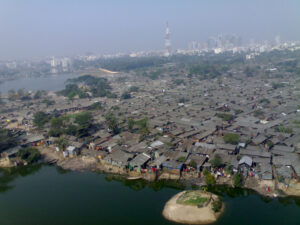
This study uses the “urban water commons” lens to examine the intricate interplay between urban informality and bodies of water. Case studies from Jakarta, Beirut, Medellín, and Dhaka are analyzed, each illuminating a unique array of challenges. Themes of environmental degradation, involuntary displacement, and infrastructural deficits are prevalent across these urban contexts. The paper stresses the urgent need for comprehensive urban planning strategies that safeguard equitable access to and shared stewardship of urban water resources. It underscores the necessity of government policies that prioritize community involvement, environmental sustainability, and the integration of informal settlements into the wider urban fabric.
Article
Housing
Open Access
Beyond Modernist Housing: Can the Mass Housing Model Accommodate Human Agency?
by Nadia Shah
pp. 23–43
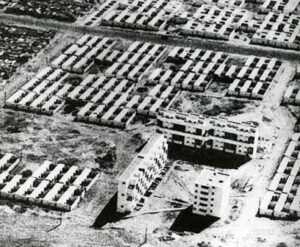
The lack of attention paid to the disempowerment of the residents has been a shortcoming of the modern mass housing model. Even today, no policies promote and support the residents’ efforts to continue improving their quality of life through actions involving changing the physical environment. Following a brief history of the origins of mass housing in the West through the discourse in the modern movement, the paper expands on implementing these modern ideas in the post-War non-Western region and how they were received and appropriated there. The article presents the case study from the author’s work on Korangi Town in Karachi, Pakistan, to show that the residents’ changes reflect their active agency. However, it was an unintentional outcome of modernist design and planning. This paper is more than just a critique of the cultural apathy of modernism. It questions what happens to a modernist project after the expert leaves the arena. How do residents adapt to or cope with their physical environment? Moreover, is there a way to include human agency in mass housing?
Article
Cross-Disciplinary Studies
Open Access
The Urban Forum Dialogue Tool: Reflecting on a Designerly Approach to Transdisciplinary Research
by Sonia Curnier, Per-Johan Dahl, Lisa Diedrich, Andrea Kahn
pp. 45–67
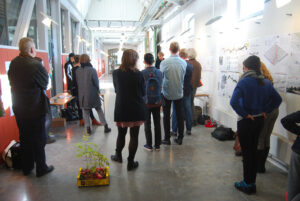
With a view to working toward urban sustainability goals, two Swedish research platforms, SLU Urban Futures at the University of Agricultural Sciences in Alnarp (SLU) and the Urban Arena at Lund University, launched Urban Forum, a transdisciplinary dialogue format, in 2019. Designed to foster exchange between practitioners and scholars in the spatial design fields the Forum convenes actors from practice and academia working on matters of shared concern to increase their interaction and defuse preconceptions against each other. The initiative recognizes that academic and non-academic design actors are equally needed to build transformative capacities and reflects two related convictions: that siloing practice and academia is unproductive and that synthetic encounters can serve to reimagine roles and retool mindsets currently hampering mutually beneficial knowledge exchange. This article analyzes a series of Urban Forum events from 2019-21 to extrapolate procedures for overcoming entrenched notions of the practice/academia dynamic; identify criteria for productive knowledge exchange; suggest ways to design transdisciplinary dialogues; and highlight the benefit of involving designerly knowledge and working methods into the transdisciplinary methodology toolbox.
Article
Reflective Practice
Subscribers
Why the Energy Transition Needs Designers
by Thomas Auer, Ulrike Andres, Wolfgang Fiel
pp. 69–84
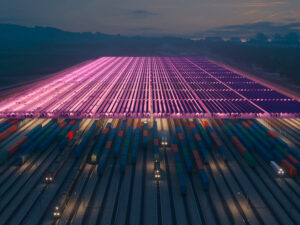
This study is based on the work of Vienna-based architectural firm Delugan Meissl Associated Architects. Together with a group of experts, the office has developed an exemplary approach for the energy transition in the field of architecture and landscape design on the basis of five concrete scenarios. The authors maintain that the energy transition is not only subject to technical solutions but of equal importance to designers, which they underpin by policy frameworks on climate change in the DACH region. Since all five design scenarios are located in Austria, the study focuses on the situation there. The authors view the scenarios as concrete examples and practical guidelines for the implementation of similar projects at a municipal level by providing local decision-makers with concrete planning tools. The design is focused on photovoltaic energy provision since the implementation of such systems currently has the greatest financial incentives and the lowest implementation hurdles in terms of legal frameworks in the DACH region.
Buy
Already in your cart -
View cart
Article
Tectonics
Open Access
Moss as a Multifunctional Material for Technological Greenery Systems
by Valeria Marsaglia, Guido Brusa, Ingrid Paoletti
pp. 85–114
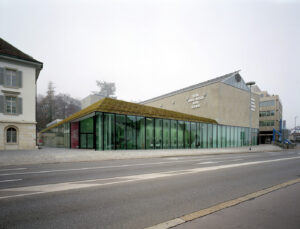
Nature-based solutions can help mitigate the heat island phenomenon in densely populated urban areas. As far as building envelopes are concerned, both green roofs and walls provide multiple benefits to the surrounding areas and to the buildings where they have been installed by using plants that act as building materials with specific attributes and performances. In detail, living wall systems are particularly sensitive to the vegetal choice due to their sophisticated technology and to the artificial vertical layer where plants are forced to live. The purpose of this paper is to investigate the characteristics of mosses in relation to their potential use in technological greenery systems. In this regard, the most recent and innovative application examples in buildings and design are presented and discussed.
Essay
Theory
Subscribers
In Search of the New Eden. From Le Corbusier’s Boîte to Sejima’s Curtain
by Javier Pérez-Herreras
pp. 115–132
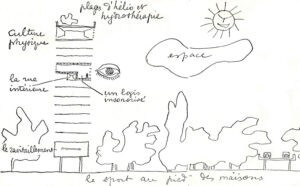
Le Corbusier’s Unité d’Habitation in Marseille established the relationship between an old man and a new world that arrived. This old self found in the interior of a long rectangle a domestic Eden that was once lost. The exterior was still a place for waiting, a place to be seen, writes Beatriz Colomina. But this modern Eden could not last forever: his indoor paradise had to move. In 1999 Terence Riley inaugurated at the Museum of Modern Art of New York the Un-private House. In it, he discovers a new dweller that does not occupy the interior of that domestic laboratory, but its own limits. Contemporary man is a social being, Jose Pardo asserts. His public self is moved to a liminal threshold, writes Victor Turner, that Kazuyo Sejima turns into the new house. Architecture is no longer the air volume contained within its limits, but that which prowls said limits. The new domestic home of contemporaneity becomes a porosity line: a curtain that publicizes domestic life. The house is converted into a habitat of borders, where man discovers his new domestic Eden.
Buy
Already in your cart -
View cart
Article
Theory
Open Access
The Meta-Project, Eisenman, and Capital: Lessons for Critical Architectural Practice
by Cem S. Kayatekin, Ujal Gorchu, Mikhail Frantsuzov
pp. 133–151
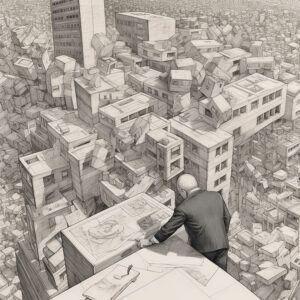
How does Peter Eisenman’s conception of the meta-project relate to capital? Within much of the relevant discourse, the Eisenmanian ideal of achieving autonomy from politico-economic dynamics is underscored, with strict references to the notion of capital remaining absent from the literature. However in studying narratives articulated by Eisenman himself over the course of several lectures spanning several decades, a more integrated connection with capital begins to emerge—wherein Eisenman’s conception of capital not only shapes later stages of the meta-project evolution but even seems to partially shape the anti-phenomenological position, anchoring it in its formative stages. These findings offer a distinct counterpoint to the Eisenmanian meta-project, both in terms of its efficiency at achieving distance from politico-economic dynamics and, more fundamentally, in terms of its presumed apolitical anchoring. However, far from being solely applicable to a scholarly niche, these discursive wrinkles offer contemporary practitioners a proactive theoretical framework for how to structure meta-projects to better resist contemporary capitalistic intricacies, and avoid the paths which led Eisenman’s own meta-project being appropriated by dominant politico-economic dynamics.
Article
Theory
Subscribers
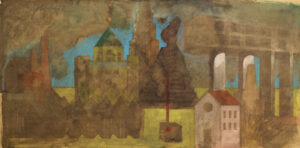
Three Aspects of Nostalgia: Thoughts on the Work of Aldo Rossi
by Edna Langenthal, Hagit Leshem
pp. 153–175
This essay discusses various aspects of the term “nostalgia.” Rather than an individual plight, it will be considered here as a symptom of contemporary society, which does not stand in contrast to modernity but is derived from it. Nostalgia characterizes humans’ connections to the past, to their sense of self, home and community. We reflect on how this affects our longing for home, how we envision our collective home, and how we place ourselves in the world. We distinguish three types of nostalgia: Restorative, longing for the restoration of a lost home; Utopian, transforming our longing into a utopian ideal; and Reflective, which differs by shifting the focus from recovering what is perceived as a loss of absolute truth to pondering questions of history and the passing of time. The essay focuses on nostalgia’s bearing on architecture, as demonstrated in the work of Architect Aldo Rossi. His oeuvre, in which the contemplation of time and memory are inherent, reveals all three forms of nostalgia, highlighting and questioning their centrality to architectural thought and practice.
Buy
Already in your cart -
View cart
Book Review
Criticism
Open Access
Architecture in Times of Rebuilding
by Ute Poerschke
pp. 179–184
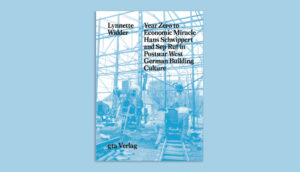
Year Zero to Economic Miracle. Hans Schwippert and Sep Ruf in Postwar West German Building CultureBy Lynnette WidderWith photographs by Thad RussellZurich: gta Verlag 202222 x 28 cm [9 x 11 in.]170 illustrations320 pages€ 52 hardcoverISBN: 9783856764272
Book Review
Sustainability
Open Access
Wet Architecture
by Elizabeth Farrelly
pp. 185–189
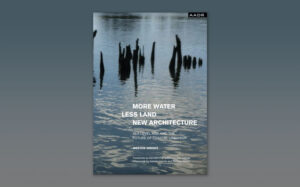
More Water, Less Land, New Architecture Sea Level Rise and the Future of Coastal UrbanismBy Weston Wright With forewords by Kenneth Framptonand Ana Tostoes, and afterwords by Rasmus Waern and Karsten HarriesBaunach, Ger.: AADR - Spurbuch Verlag, 202217.3 x 2 x 24 cm[6.8 x 0.8 x 9.4 inches in.] illustrated176 pages€38 / $36.42 paperbackISBN: 978-3-88778-588-8
Conference Report
Sustainability
Open Access
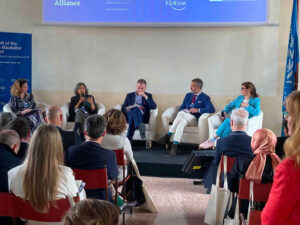
Baukultur at the 18th Venice Biennale: The Davos Alliance Kick-off Meeting
by Maurizio Sabini
pp. 191–196