
Archive
Category: Cross-Disciplinary Studies
Article
Cross-Disciplinary Studies
Subscribers
Research by Drawing: Imagining the Otherwise in Rio de Janeiro’s Metropolitan Peripheries
by Rodrigo d’Avila, Irene Luque Martín
pp. 41–61
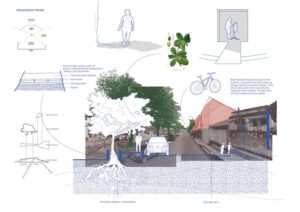
This article explores the use of drawing as a research method to reimagine ecological, social and spatial changes in urban areas undergoing global urbanization. Focusing on the rapidly transformation of the landscape of Seropédica on the outskirts of Rio de Janeiro, the article frames urbanization as a contested process in which multiple histories and temporalities coexist. Rather than treating informality and nature as issues to be resolved, the article proposes a pluriversal urban ecology that centers the “otherwise”: informal, marginalized and non-human forms of life. The article introduces “research by drawing” as an alternative where drawing makes visible what is excluded from conventional planning. Three visual methods reveal Seropédica’s overlooked dynamics. We trace the shifting relationships between rural life, logistics and symbolic erasures, translate a transect into a performative score, documenting rhythms and human–non-human encounters and overlay narratives to expose the multiplicity of urbanization. The findings depict this metropolitan periphery as a fragmented yet interconnected mosaic, challenging binaries such as formal/informal and city/nature and emphasizes the importance of the otherwise for achieving just and ecological urban futures.
Essay
Cross-Disciplinary Studies
Open Access
Rain, Rain, Go Away: Geoengineering and the Illusion of Control
by Hannibal Newsom
pp. 109–130
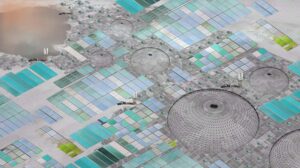
“Geoengineering” is increasingly seen as the best, perhaps even last, hope in the fight against global warming. Calls for such practices as Solar Radiation Management are becoming urgent as the effects of the climate crisis make themselves visible. This essay uses California’s Salton Sea, a geo-engineered palimpsest of once natural terrain turned toxic and inhospitable through human intervention, as a case study against the illusion of control. Through the critical lens of Magical Realism and the visual language of the architecture studio, this essay calls into question the desire to exert human control over natural systems, illustrating that the unintended consequences of such efforts will only serve to compound the problems they were initially meant to resolve.
Book Review
Cross-Disciplinary Studies
Open Access
Democracy and the Place of No-Thing
by Maurizio Sabini
pp. 577–582
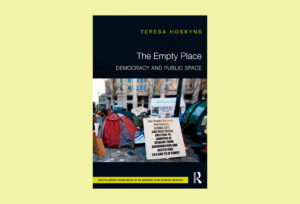
The Empty Place. Democracy and Public Space By Teresa HoskynsAbingdon, UK: Routledge, 201463/8 x 5/8 x 91/2 in. [16.2 x 1.6 x 24.1 cm] 23 illustrations (b/w)222 pagesUS$142.50 (hardcover)ISBN: 978-0415724371US$52.49 (paperback)ISBN: 978-1138216976US$52.49 (e-book)ISBN: 978-1315851617
Book Review
Cross-Disciplinary Studies
Open Access
War Diaries: Design after the Destruction of Art and Architecture
by Taraneh Meshkani
pp. 297–301
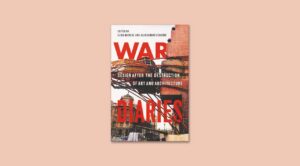
War Diaries: Design after the Destruction of Art and ArchitectureBy Elisa Dainese and Aleksandar StanicicCharlottesville VA, USA: The University of Virginia Press, 2022 61/8 x 11/4 x 91/4 in. [15.6 x 3.2 x 23.5 cm]42 b/w illustrations230 pagesUS$35.00 (paperback)ISBN: 9780813948027US$90.00 (hardcover)ISBN: 9780813948010US$26.25 (eBook)ISBN: 9780813948034
Article
Cross-Disciplinary Studies
Open Access
The Wisdom of Cultural Mapping in Reparative Planning — City in the Woods: Mapping of Cherokee Village, Arkansas
by Stephen Luoni
pp. 239–269
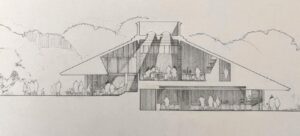
As communities and design professionals confront complex cultural issues in planning, new tools are needed to introduce interdisciplinary cultural inquiry into urban design/planning. Reparative planning is premised on a reckoning with socio-economic and environmental decline through design of the built environment. Cultural mapping is necessary to both visibilize suppressed narratives behind decline and inequity, as well as underwrite new policy and development approaches. City in the Woods is a cultural mapping project that supports planning for Cherokee Village. Moving beyond the map as object to mapping as a process, we employed the deep map to sketch a memoir of place different from the disciplinary linearity found in conventional cartography. Cultural mapping animates diverse data sets through various visual literacies ranging from serial filmstrip narratives, to collages, thick description drawings that reconstruct lost local heritage landscapes, and geospatial mapping of the built environment. Change requires storytelling. This descriptive agency in planning, entailing collaboration between design professionals and community, models an equity-based approach beginning with stories that enable community self-advocacy, motivate institutional redesign, and construct new urban forms.
Article
Cross-Disciplinary Studies
Open Access
The Urban Forum Dialogue Tool: Reflecting on a Designerly Approach to Transdisciplinary Research
by Sonia Curnier, Per-Johan Dahl, Lisa Diedrich, Andrea Kahn
pp. 45–67
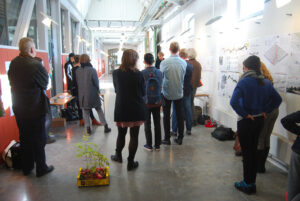
With a view to working toward urban sustainability goals, two Swedish research platforms, SLU Urban Futures at the University of Agricultural Sciences in Alnarp (SLU) and the Urban Arena at Lund University, launched Urban Forum, a transdisciplinary dialogue format, in 2019. Designed to foster exchange between practitioners and scholars in the spatial design fields the Forum convenes actors from practice and academia working on matters of shared concern to increase their interaction and defuse preconceptions against each other. The initiative recognizes that academic and non-academic design actors are equally needed to build transformative capacities and reflects two related convictions: that siloing practice and academia is unproductive and that synthetic encounters can serve to reimagine roles and retool mindsets currently hampering mutually beneficial knowledge exchange. This article analyzes a series of Urban Forum events from 2019-21 to extrapolate procedures for overcoming entrenched notions of the practice/academia dynamic; identify criteria for productive knowledge exchange; suggest ways to design transdisciplinary dialogues; and highlight the benefit of involving designerly knowledge and working methods into the transdisciplinary methodology toolbox.
Article
Cross-Disciplinary Studies
Open Access
Design for COVID-19: Rethinking an American Campus and the Dilemma of the Second Wave
by Aneesha Dharwadker
pp. 147–164
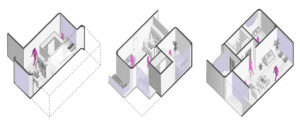
In 2020, the presence of COVID-19 forced, among other serious reflections, a reevaluation of how university spaces are used and how higher education may achieve efficacy while protecting public health. This essay presents work from a Fall 2020 graduate studio at the University of Illinois at Urbana-Champaign that explores how the campus could adapt to the specifics of social distancing and offer new kinds of outdoor and indoor spaces for learning and living. From the materiality of the ground plane to the layout of campus residences, the projects reimagine the campus at the scales of the site, building, and rooms. While the built environment can be viewed as a passive backdrop (or worse, an active culprit) in public health crises, this studio argues that strategic and thoughtful design, anchored by distancing recommendations of the Centers for Disease Control and Prevention, could also be a remedy.
Article
Cross-Disciplinary Studies
Subscribers
Interplanetary Architecture
by María Asunción Salgado de la Rosa, Belén Butragueño Díaz-Guerra, Javier Francisco Raposo Grau
pp. 87–110
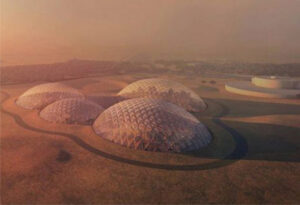
Since man first walked on the Moon, humanity has imagined inhabiting other planets, a dream fueled by fiction, architecture and folk art. Currently, there is a real commitment to begin exploring Mars in the next decade. In creating these expectations, the contributions of writers, architects and film directors have been necessary, all of whom have imagined these new cities beyond our planet. We will review the germinal proposals that have contributed to the construction of current space ideology, comparing them with recent proposals. The objective is to analyze these architectures in modern context, recognizing their contribution in the development of new ideas.
Buy
Already in your cart -
View cart
Book Review
Cross-Disciplinary Studies
Open Access
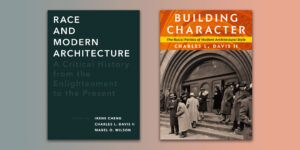
On Race and Modern Architecture
by Diane Ghirardo
pp. 277–284
Race and Modern Architecture.
A Critical History from the Enlightenment to the Present
By Irene Cheng, Charles L. Davis II, and Mabel O. Wilson, eds Pittsburgh PA, USA: University of Pittsburgh Press, 2020
7 x 10 in. [17,8 x 25,4 cm]
96 b&w illustrations
424 pages
$45 paperback
July, 2020
ISBN: 978-082 296 6593
Building Character. The Racial Politics of Modern Architectural Style
By Charles L. Davis II
Pittsburg PA, USA: University of Pittsburgh Press, 2019
7 x 10 in. [17,8 x 25,4 cm]
89 b&w illustrations, 12 color plates
320 pages
$55 hardcover
December, 2019
ISBN: 978-0822945550