
Archive
Category: Reflective Practice
Project
Reflective Practice
Subscribers
Berlin Fragments. A Heterography of an Architectural Form
by conrad-bercah
pp. 23–45
Published: 2018-06-25
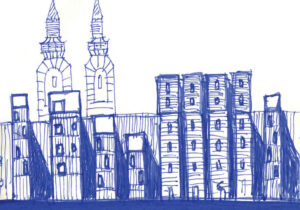
Architectural form lives a number of mysterious lives that are characterized by different yet simultaneous temporalities. It has been said that a “secret date” exists between the modern and the archaic, not so much because the modern is fascinated by the archaic but because “the key to understanding the modern is hidden somewhere beneath the timeless and the pre-historical.” The mystery surrounding the intellectual sources in the architect’s work arguably lies in the multifaceted (aesthetic, sociological, political, spatial) relationships it establishes with a multitude of friends - be they artists, poets, or architects - who are responsible for his development and keep feeding his practice, even if long dead.
Buy
Already in your cart -
View cart
Project
Reflective Practice
Subscribers
The Headquarters of Métropole Rouen Normandie
by Jacques Ferrier
pp. 7–22
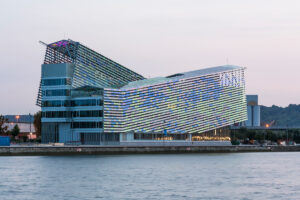
The main idea behind the Métropole Rouen Normandie headquarters project by Jacques Ferrier Architecture was to unite all the “energy” that is found in this port site in France. While taking inspiration from the paintings of Claude Monet, especially of the Rouen Cathedral, the façades of the building were designed to be able to constantly change color depending on day, season, and time. The design is aimed at maximum efficiency and comfort of the offices inside. An innovative and exemplary building that is also easy and intuitive to navigate.
Buy
Already in your cart -
View cart
Project
Reflective Practice
Open Access
Art Walk / Bridging Urban Spaces
by Heather Woofter, Sung Ho Kim
pp. 59–72
Published: 2016-09-26
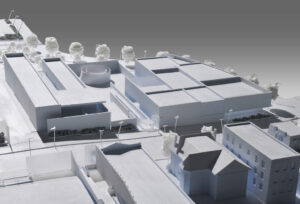
The Art Walk project is a stitched landscape that joins several art and media institutions in Grand Center, St. Louis. The current condition of Grand Center allows few moments of connectivity and sense of continuity between urban spaces. The project is divided into four multi-cultured zones that are currently separated by parking lots, pedestrian inaccessible easements, and gated buildings. The urban strategies are part architecture, art, and industrial design elements. They interface with landscape planning to engage the public in multiple scales of activity in order to bridge between discreet urban spaces.
Article
Reflective Practice
Open Access
Practice as Autonomous Object
by Marc Manack
pp. 47–57
Published: 2016-01-26
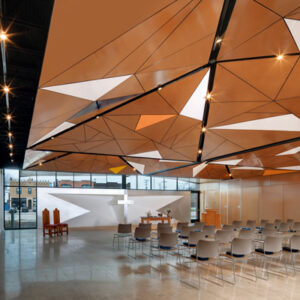
The purpose of this paper is to argue for “practice” as an autonomous object in architecture by rehearsing contemporary attempts at its definition, and offering an alternative. To support the argument, the author utilizes the characterization of objects from the philosophical practice Object Oriented Ontology (OOO). Additionally, exemplars from a realized project designed by the author are used to demonstrate how representations reveal the metaphysical autonomous object of practice from within material projects. The aspiration of this work is to hunt for an object of architecture independent of the polemics and compromises that seek to legitimize practice with academic and professional audiences. The author suggests that the pursuit and articulation of an autonomous practice that exists outside of both the contingent singular building, and the relations to all other architectures that academic discipline demands, is useful in empowering new creative practices in the field.