
Archive
Tag: design research
Article
Sustainability
Subscribers
Landscape Lifecycles as a Speculative Design Research Practice for Transforming Waste Conditions
by Catherine De Almeida
pp. 185–220
Published: 2020-06-23
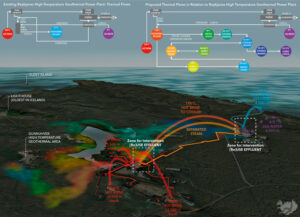
Research-based design has been foundational for landscape architecture. Analytical layering in geographically-based mappings has become a universally applied, formulaic approach. For waste landscapes, this has generated similar redevelopment strategies for drastically differing waste landscape conditions. This site typology, however, requires more nuanced approaches. As a design-research framework, “landscape lifecycles” aims to tackle waste landscapes with integrative strategies and techniques that reactivate waste as a legible and dynamic contributor to local and regional contexts; a method for integrating multiple diverse programs rooted in economic, environmental, and social performance to form hybrid assemblages in the transformation of perceived material and spatial waste. This article highlights design-research and generative representational methods developed through projects and coursework that embrace speculation as a means of engaging with waste conditions at multiple scales — from the material to the region. These methods range from speculative geographic, process, and abstract mapping to scenario testing to time-based, projective design that document, explore, and test an argumentative hypothesis and the multi-scalar design implications of research on the imaginative potentials of waste transformation.
Buy
Already in your cart -
View cart
Article
Landscape Urbanism
Open Access
Cities as Hydro-Geologic Terrain: Design Research to Transform Urban Surfaces
by Mary Pat McGuire
pp. 165–190
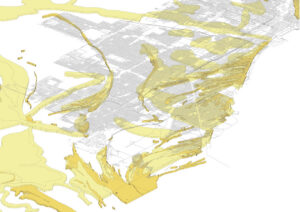
Imperviousness is a significant design problem for the future of cities: we must reduce it, redesign it, transform it. This paper argues to insert hydro-terrain thinking to the paved surfaces of cities, instantiating the concept of “rain terrain” that links hydrologic performance across scales, from the raindrop to the region. The City of Chicago is the case study where high concentrations of pavement drain stormwater from the city - resulting in flooding, overflowing and polluting - from the Great Lakes to the Gulf of Mexico. I first share research on the glaciated history of the region, to reveal sandy soil types located in the urban area. I then correlate imperviousness, permeable soils and flooding prevalence to identify a pattern of site opportunity areas in the city. I also propose design practices - through disruptions, interventions and reconfigurations of urban surface - to tap paved-over soils as the basis for a landscape-based urban stormwater approach. In doing so, this paper aims to present a vision for urban transformation, based on specific technical design opportunities within landscape-as-infrastructure.
Article
Theory
Open Access
Designed and Emergent Tectonics: Resituating Architectural Knowledge
by Sophia Psarra, Fani Kostourou, Kimon Krenz
pp. 15–32
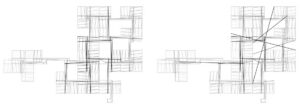
Architecture is usually defined through intent while cities come into being out of multiple human actions over a long period of time. This seems to trap us between a view of architecture as authored object, and a view of the city as authorless, evolutionary process. The debate about the autonomous and the contingent object thus, goes back to the separation of architecture from its skill base in craft and building practice that took place in the Renaissance. This separation also includes the operations through which buildings and cities are produced by designers, clients, users, regulatory codes, markets and infrastructures. The resurgence in the debate on the competing claims of autonomy and contingency testifies that since the Renaissance we have failed to develop theories and techniques that address the relationship between authored architecture and authorless contexts. As a result, coupled with commercial forces, recent advancements in digital technology and complexity theory claim architecture and the city as self-organization, dismantling architecture and depriving it from relevance in shaping social capital. If in the Renaissance, architecture was separated from the city, which was the relationship between the ways in which a city was built and the urban fabric? How can we better understand the relationship between the architectural project and the processes that configure the urban structure in which it is situated? This paper argues that for architecture to reclaim its scope as a social discipline it needs to theorise its relationship with the social, the political and the economic processes of its context.