
Archive
Tag: memory
Essay
Theory
Subscribers
The Contemporary City as Archipelago: From O.M. Ungers’ Berlin to the Global Collage City
by Gregorio Froio, Monica Manicone, Matteo Benedetti
pp. 45–65
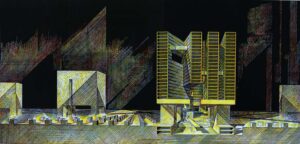
This essay critically examines the continuing relevance of the archipelago city – as theorized by Oswald Mathias Ungers in the 1970s – as a morphological and conceptual framework for understanding contemporary urban conditions. Originally developed in response to the fragmentation and depopulation of post-war Berlin, the archipelago city posits a model of urban organization based on autonomous, differentiated spatial units or ‘islands’ within a continuous green matrix. The essay situates this model within a broader theoretical lineage, drawing connections with Colin Rowe’s “collage city,” Aldo Rossi’s theories of typology and memory, and Rem Koolhaas’s concept of “junkspace.” Through morphological and compositional analysis, it explores how Ungers’ vision has been reinterpreted in projects from the 1990s to the present, including proposals by Franco Purini and Laura Thermes. These case studies highlight the adaptability of the archipelago paradigm in the contexts of accelerated urbanization, formal heterogeneity, and socio-political complexity. Finally, the essay reflects on the limitations and potentials of the model in an age marked by globalized urban development, the rise of the zone and the increasing marginalization of architectural agency.
Buy
Already in your cart -
View cart
Project
Reflective Practice
Subscribers
Berlin Fragments. A Heterography of an Architectural Form
by conrad-bercah
pp. 23–45
Published: 2018-06-25
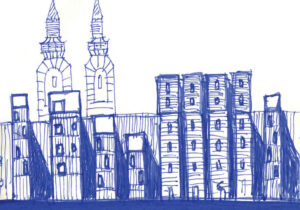
Architectural form lives a number of mysterious lives that are characterized by different yet simultaneous temporalities. It has been said that a “secret date” exists between the modern and the archaic, not so much because the modern is fascinated by the archaic but because “the key to understanding the modern is hidden somewhere beneath the timeless and the pre-historical.” The mystery surrounding the intellectual sources in the architect’s work arguably lies in the multifaceted (aesthetic, sociological, political, spatial) relationships it establishes with a multitude of friends - be they artists, poets, or architects - who are responsible for his development and keep feeding his practice, even if long dead.
Buy
Already in your cart -
View cart
Article
Narration
Open Access
Las Heras: An Imagined Future. Stories of an Emerging World
by Will Alsop
pp. 7–23
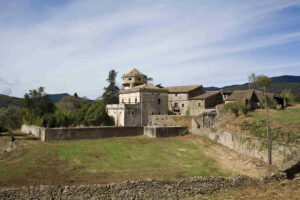
The estate Las Heras lies close to Girona in Spain. I was taken there by my client, in the form of a mystery tour. We arrived at a large house within 350 hectares. I felt instant affinity to this place before leaving the car. I asked my client: “Why did you buy this?” He answered: “…that is YOUR project – to tell ME!” The land exuded a sense of place which appeared irrational. Time and neglect had taken its toll on the main house and work began to repair the building.The estate has a long and tumultuous history; the past informs the present and creates context for the experience of the place. The future required a possible description. A narrative (novella) was an indulgence that allowed exploration of what might happen in the formation of the place. The book exists as a plan, a gazetteer volume of information, and a cookbook, intended to stimulate and encourage. The emerging project’s starting point is as an educational resource for anyone; particularly for architectural and art institutions.