
Archive
Category: Criticism
Opinion
Criticism
Open Access
Interview with Kenneth Frampton
by Kenneth Frampton, Yehuda Safran, Daniel Sherer
pp. 9–33
Book Review
Criticism
Open Access
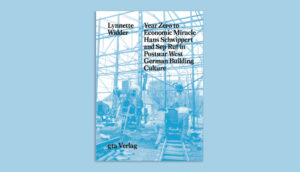
Architecture in Times of Rebuilding
by Ute Poerschke
pp. 179–184
Year Zero to Economic Miracle. Hans Schwippert and Sep Ruf in Postwar West German Building CultureBy Lynnette WidderWith photographs by Thad RussellZurich: gta Verlag 202222 x 28 cm [9 x 11 in.]170 illustrations320 pages€ 52 hardcoverISBN: 9783856764272
Exhibition Review
Criticism
Open Access
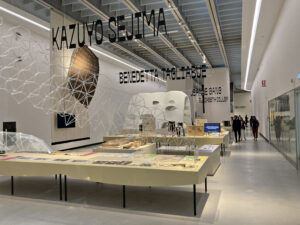
Stories of Women Architects Who Made Their Mark
by Caterina Padoa Schioppa
pp. 219–230
Essay
Criticism
Subscribers
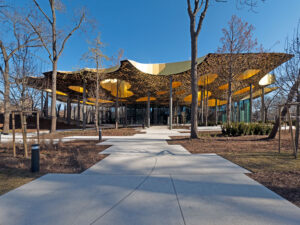
Japanese Architecture Returns to Nature: Sou Fujimoto in Context
by Botond Bognar
pp. 7–36
We received and we gladly publish a contribution by distinguished author Prof. Botond Bognar. [MS]
ABSTRACT - The essay introduces the development of Sou Fujimoto’s architecture as it has been influenced by various sources and experiences leading to his recently completed and highly recognized major project, the House of Hungarian Music in Budapest. Among these influences the contemporary economic and political conditions in Japan and beyond, as well as the nature-inspired work of prominent Japanese designers are discussed. Touching upon the seminal work by Tadao Ando and Toyo Ito, the essay also highlights the contrasts and occasional similarities between the so-called “White School” and “Red School” in contemporary Japanese architecture, in referencing nature as the primary source of their designs. Today, these “schools” are best represented, respectively, by the activities of SANAA and Kengo Kuma. Although Fujimoto’s architecture is clearly derivative and part of the radically minimalist White School, the House of Hungarian Music reveals an intimacy and richness in articulating its relationship to the surrounding natural environment, which quality, if perhaps momentarily, points beyond the minimalism of the “Whites.”
Buy
Already in your cart -
View cart
Exhibition Review
Criticism
Open Access
Carlo Aymonino: The Critical Curiosity of a Visionary Architect
by Maurizio Sabini
pp. 285–293
Article
Criticism
Subscribers
Bauhäusler and the Second Chicago School of Architecture: Enduring Student Exercises
by Kristin Jones, Zaida Garcia-Requejo
pp. 219–241
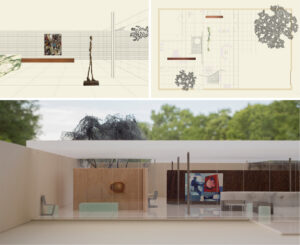
On March 28, 2019, on the occasion of Ludwig Mies van der Rohe’s 133rd birthday, the Illinois Institute of Technology’s Mies van der Rohe Society displayed an exhibition at S. R. Crown Hall entitled “Stories from the Archives” as part of the larger event theme of “Bauhaus Descendants” in the year of its centenary. The exhibition proposed connections between the Bauhaus and IIT’s school of architecture through a display of archival materials related to the work of the former Bauhäusler Ludwig Mies van der Rohe, Ludwig Hilberseimer, and Walter Peterhans who founded the modernist school at IIT. This paper provides a deeper investigation of the exhibit’s proposed connections and the relationship between the Bauhaus and IIT’s architecture school through the lens of three enduring student exercises: the court house problem, the planning sequence, and visual training exercises. Considering these three exercises in relation to the curriculum that was developed at IIT shines light on a philosophy of architectural education which started in Europe, matured in Chicago and continues to evolve into the future.
Buy
Already in your cart -
View cart
Book Review
Criticism
Open Access
Reframing Chicago’s Residential Architecture
by Robert Weddle
pp. 271–276
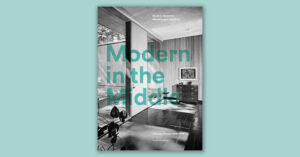
Modern in the Middle: Chicago Houses 1929-1975 By Susan S. Benjamin and Michelangelo SabatinoNew York: The Monacelli Press, 2020279 mm x 203 mm325 illustrations296 pages$ 60 hardcoverSeptember, 2020ISBN: 978-1580935265
Essay
Criticism
Subscribers
We are All Counterinsurgents Now
by Britt Eversole
pp. 53–70
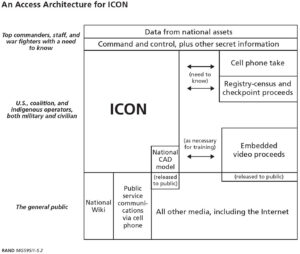
The increasing production of robust, information-laden, parametric architectural and urban models has outpaced a critical evaluation of the ethics of contemporary modeling and visualization practices which, rather than reflecting reality, are transforming it. This essay exposes the logics of the expropriation of architectural and urban models in a decade-old RAND Corporation endeavor to envision a comprehensive digital counterinsurgency strategy. To encourage professional and cultural agents, as well as unwitting civilian agents, to populate databases with urban and environmental data, RAND proposed weaponizing open-source, big-data urban models and participatory platforms to create multicultural, user-friendly interfaces. Conceived to appear like an exercise in open-source digital democracy and participatory knowledge-sharing that would spark emotive responses such as pride and fear, RAND focused on the cognitive and affective side of digital participation and information sharing to wage a counterinsurgency in the minds of civilians and insurgents. When the models that architects build can be weaponized to ends other than realizing buildings and cities, when they become instruments for influencing behavior and facilitating warfare, there is an urgent need for an ethics of visualization.
Buy
Already in your cart -
View cart
Book Review
Criticism
Open Access
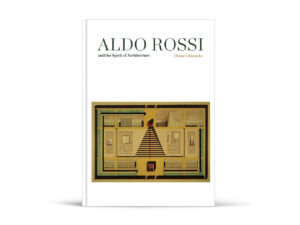
Aldo Rossi: Representing Life
by Raffaella Neri
pp. 253–259
Aldo Rossi and the Spirit of ArchitectureBy Diane Y. F. GhirardoLondon: Yale University Press254 mm x 203 mm135 color + 5 b/w illustrations280 pagesUS$65 / £50.00 GBP (hardback)ISBN: 978-0300234930
Conference Report
Criticism
Open Access
Giancarlo De Carlo. A Symposium
by Sara Marini, Marko Pogacnik
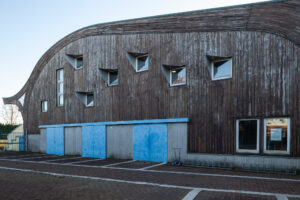
pp. 261–278