
Archive
Category: Theory
Essay
Theory
Subscribers
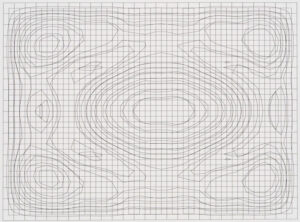
Digital Line: Architecture’s Expanding Thread
by Johan Voordouw
pp. 47–65
This article studies the changing role of line in architecture. The paper argues that digital production has led to a subsequent shift of lines as trace, towards lines as “spatialized” thread. This thread is moving away from orthographic and perspective modes of representation through three embedded modes of conception: the digital model, diagram and notation. These new lines have a long and alternative lineage in architectural ideation. The paper explains each mode in turn, indicating the importance of the model as a line in space embedded since the very inception of western architectural discourse; the edifying role of the diagram as a line of operation clarifying architectural ideas; and the new material ground that links notation to fabrication, and continued actualization in the pursuit of new architectural ideas. By expanding the line in architecture, the digital line better connects emerging representational modes to established architectural thinking and opens new ground to further representational discourse.
Buy
Already in your cart -
View cart
Book Review
Theory
Open Access
“Lake of the Mind. A Conversation with Steven Holl”
by Christopher Platt
pp. 227–231
Conference Report
Theory
Open Access
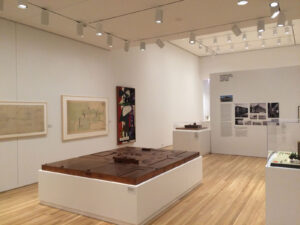
“Ando and Le Corbusier: Masters of Architecture” Symposium
by Eric Mumford
pp. 233–236
In Memoriam
Theory
Open Access
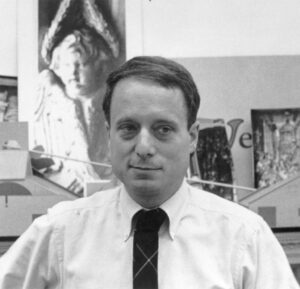
Remembering Robert Venturi, a Modern Mannerist
by Maurizio Sabini
pp. 253–259
Book Review
Theory
Open Access
Exaltation of Apartness? “The Building”
by Christophe Van Gerrewey
pp. 209–217
Conference Report
Theory
Open Access
The Danish Way. The Rising Architecture Week 2017 in Aarhus
by Maurizio Sabini
pp. 241–257
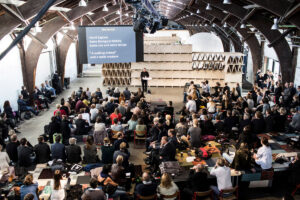
The Rising/Architecture Week 2017 was held in Aarhus as part of the Aarhus European Capital of Culture 2017 initiatives. The array of conversations, debates, and exchange of ideas generated at Rising 2017 proved once more the vitality and the maturity of Danish design culture.
Rooted on a strong Modernist tradition, Danish design culture weaves a savvy mix of promoting and further sharpening its brand, as well as of stimulating thoughtful reflections on relevant disciplinary and societal issues. The conference was intelligently used as vehicle to showcase the good work that is being produced not just in Copenhagen but across Central Denmark and to bring in a diverse pool of international designers, planners, critics, and thinkers. What can be called the Danish Way to design culture offers the opportunity “to rise,” above the conventional and the predictable, for an exciting view over a possible better world.
Book Review
Theory
Open Access
Marco Frascari’s Dream House. A Theory of Imagination
by Franco Pisani
pp. 145–150
Essay
Theory
Open Access
Crafting the Architectural Measured Drawings
by Serra Akboy-İlk
pp. 39–61
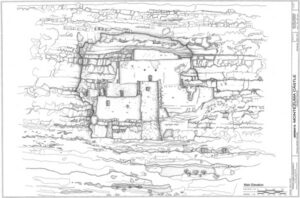
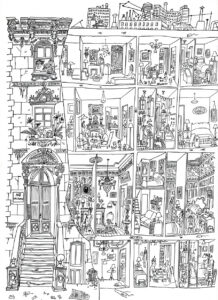
For centuries, measured drawings have been the major communication medium to acquire an understanding of the built environment and to deliver ideas of construction and design. The value of measured drawings as educational tools to learn about the architectural context as well as signifiers of the cultural values have transcended the importance of these two-dimensional illustrations as ephemeral depictions of building forms and materials. In the midst of an architectural culture increasingly utilizing three-dimensional virtual surrogates along with the state-of-the-art surveying and representation methodologies, however, the production of measured drawings have been relegated to a narrower focus in the documentation projects. The methodological path to produce measured drawings carries similar traits with how ethnographers create thick descriptions of cultural signifiers. Reflecting on measured drawings as an account of “thick description,” this essay addresses architectural documentation.
Essay
Theory
Open Access
The Act and Art of Architectural Critique: A Drawing, a House, and a Sign
by Andreea Mihalache
pp. 25–38
The role of criticism is not to split, but rather to bring matters together in an assembly. Philosopher Bruno Latour makes the argument that the responsibility of the critic, (and, implicitly, critique), is not to divide, but instead to “offer the participants arenas in which to gather.” In light of Latour’s proposition, I will examine the generative and creative role of architectural criticism and some of the many guises under which it might take shape. I propose that the critical call of architecture is often hidden in plain sight in works that camouflage themselves under seemingly disengaged positions, and which, upon closer inspection, act as resources of architectural imagination. Specifically, I examine Saul Steinberg’s drawing “Doubling Up” (1946), the Splitnik (the American model-house showcased at the American Exhibition in Moscow, 1959), and Robert Venturi’s sign for the Grand’s Restaurant (Philadelphia, 1961-1962)
Article
Theory
Open Access
Planning Criticism: Operative Contingencies in the Project of the Italian Tendenza
by Pasquale De Paola
pp. 31–44
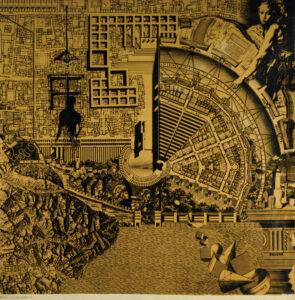
In order to re-assess architecture’s critical role and redefine the disciplinary domain of its production, this essay looks beyond forms of technocratic utopias, while it historically analyzes operative theoretical contingencies relative to the “project” of the Italian Tendenza, which is examined as an historical form of ideological criticism of the discipline of architecture and its contentious relationship between intellectual and capitalistic production. Particularly, this essay explores the ideological and historiographical production of the 1960s and 1970s. This was when the term Rationalism and its theoretical body of work acquired renewed prestige replacing the ephemeral aesthetic of the Modern Movement with a grounded and critical discourse based on Aldo Rossi’s and Massimo Scolari’s position relative to the need for architecture to re-affirm its own statute, in order to free itself from any form of technocratic utopia. While questions of interdisciplinarity remain essential toward an understanding of future architectural contingencies, it is only by questioning the status quo of architecture and re-examining its past that a new sense of criticality can be generated.