

Essay
Open Access
Jarvis, Hal, or AlphaZero? Looking Beyond Conventional Narratives Concerning AI and Architecture
by Cem S. Kayatekin, June Aoun, Yusuf Sühan Bozkurt, Daphné Fournel
pp. 217–236
Since early 2021, the discourse concerning the potential and impacts of artificial intelligence on architecture has radically expanded. Discussions have largely focused on the heightened levels of productivity or efficiency that can be achieved within the existing ecology of architectural production processes, as well as the potential disruptions that may arise through human–AI co-authorship of the built world. What this paper asserts is that these dominant narratives appear to be extensions of quite conventional storylines which either frame artificial intelligence as a hyper-computational prosthetic for the enhancement of the architect or architectural office or as a critically disruptive force that will trigger micro- to macro-scale reconfigurations of the domain of built- environmental authorship. The dilemma is that we appear to be thinking of AI on old models of brute-force computation (i.e., Deep Blue) or dystopian conceptions of AI systems that can readily cross-pollinate with and radically disrupt existing societal configurations and dynamics (i.e., HAL-9000). What we have not quite considered are the real capacities and limits exhibited by artificial neural networks anchored around self-play reinforcement learning models (i.e., AlphaZero).
Article
Urbanism
Open Access
Blue Urban Commons: A Cross-Examination of Water Bodies an Urban Informality
by Taraneh Meshkani
pp. 7–21
This study uses the “urban water commons” lens to examine the intricate interplay between urban informality and bodies of water. Case studies from Jakarta, Beirut, Medellín, and Dhaka are analyzed, each illuminating a unique array of challenges. Themes of environmental degradation, involuntary displacement, and infrastructural deficits are prevalent across these urban contexts. The paper stresses the urgent need for comprehensive urban planning strategies that safeguard equitable access to and shared stewardship of urban water resources. It underscores the necessity of government policies that prioritize community involvement, environmental sustainability, and the integration of informal settlements into the wider urban fabric.
Book Review
Sustainability
Open Access
Wet Architecture
by Elizabeth Farrelly
pp. 185–189
More Water, Less Land, New Architecture Sea Level Rise and the Future of Coastal UrbanismBy Weston Wright With forewords by Kenneth Framptonand Ana Tostoes, and afterwords by Rasmus Waern and Karsten HarriesBaunach, Ger.: AADR - Spurbuch Verlag, 202217.3 x 2 x 24 cm[6.8 x 0.8 x 9.4 inches in.] illustrated176 pages€38 / $36.42 paperbackISBN: 978-3-88778-588-8
Conference Report
Sustainability
Open Access
Baukultur at the 18th Venice Biennale: The Davos Alliance Kick-off Meeting
by Maurizio Sabini
pp. 191–196
Article
Theory
Open Access
The Meta-Project, Eisenman, and Capital: Lessons for Critical Architectural Practice
by Cem S. Kayatekin, Ujal Gorchu, Mikhail Frantsuzov
pp. 133–151
How does Peter Eisenman’s conception of the meta-project relate to capital? Within much of the relevant discourse, the Eisenmanian ideal of achieving autonomy from politico-economic dynamics is underscored, with strict references to the notion of capital remaining absent from the literature. However in studying narratives articulated by Eisenman himself over the course of several lectures spanning several decades, a more integrated connection with capital begins to emerge—wherein Eisenman’s conception of capital not only shapes later stages of the meta-project evolution but even seems to partially shape the anti-phenomenological position, anchoring it in its formative stages. These findings offer a distinct counterpoint to the Eisenmanian meta-project, both in terms of its efficiency at achieving distance from politico-economic dynamics and, more fundamentally, in terms of its presumed apolitical anchoring. However, far from being solely applicable to a scholarly niche, these discursive wrinkles offer contemporary practitioners a proactive theoretical framework for how to structure meta-projects to better resist contemporary capitalistic intricacies, and avoid the paths which led Eisenman’s own meta-project being appropriated by dominant politico-economic dynamics.
Article
Housing
Open Access
Beyond Modernist Housing: Can the Mass Housing Model Accommodate Human Agency?
by Nadia Shah
pp. 23–43
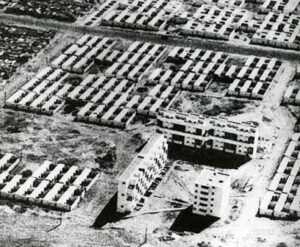
The lack of attention paid to the disempowerment of the residents has been a shortcoming of the modern mass housing model. Even today, no policies promote and support the residents’ efforts to continue improving their quality of life through actions involving changing the physical environment. Following a brief history of the origins of mass housing in the West through the discourse in the modern movement, the paper expands on implementing these modern ideas in the post-War non-Western region and how they were received and appropriated there. The article presents the case study from the author’s work on Korangi Town in Karachi, Pakistan, to show that the residents’ changes reflect their active agency. However, it was an unintentional outcome of modernist design and planning. This paper is more than just a critique of the cultural apathy of modernism. It questions what happens to a modernist project after the expert leaves the arena. How do residents adapt to or cope with their physical environment? Moreover, is there a way to include human agency in mass housing?
Article
Tectonics
Open Access
Moss as a Multifunctional Material for Technological Greenery Systems
by Valeria Marsaglia, Guido Brusa, Ingrid Paoletti
pp. 85–114
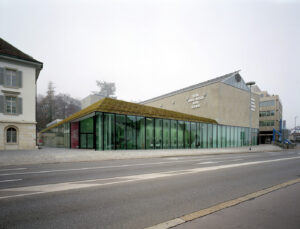
Nature-based solutions can help mitigate the heat island phenomenon in densely populated urban areas. As far as building envelopes are concerned, both green roofs and walls provide multiple benefits to the surrounding areas and to the buildings where they have been installed by using plants that act as building materials with specific attributes and performances. In detail, living wall systems are particularly sensitive to the vegetal choice due to their sophisticated technology and to the artificial vertical layer where plants are forced to live. The purpose of this paper is to investigate the characteristics of mosses in relation to their potential use in technological greenery systems. In this regard, the most recent and innovative application examples in buildings and design are presented and discussed.
Book Review
Criticism
Open Access
Architecture in Times of Rebuilding
by Ute Poerschke
pp. 179–184
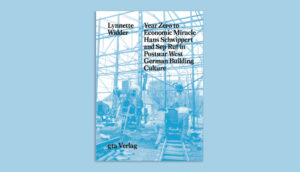
Year Zero to Economic Miracle. Hans Schwippert and Sep Ruf in Postwar West German Building CultureBy Lynnette WidderWith photographs by Thad RussellZurich: gta Verlag 202222 x 28 cm [9 x 11 in.]170 illustrations320 pages€ 52 hardcoverISBN: 9783856764272
Article
Cross-Disciplinary Studies
Open Access
The Urban Forum Dialogue Tool: Reflecting on a Designerly Approach to Transdisciplinary Research
by Sonia Curnier, Per-Johan Dahl, Lisa Diedrich, Andrea Kahn
pp. 45–67
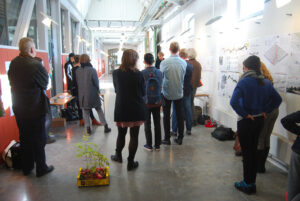
With a view to working toward urban sustainability goals, two Swedish research platforms, SLU Urban Futures at the University of Agricultural Sciences in Alnarp (SLU) and the Urban Arena at Lund University, launched Urban Forum, a transdisciplinary dialogue format, in 2019. Designed to foster exchange between practitioners and scholars in the spatial design fields the Forum convenes actors from practice and academia working on matters of shared concern to increase their interaction and defuse preconceptions against each other. The initiative recognizes that academic and non-academic design actors are equally needed to build transformative capacities and reflects two related convictions: that siloing practice and academia is unproductive and that synthetic encounters can serve to reimagine roles and retool mindsets currently hampering mutually beneficial knowledge exchange. This article analyzes a series of Urban Forum events from 2019-21 to extrapolate procedures for overcoming entrenched notions of the practice/academia dynamic; identify criteria for productive knowledge exchange; suggest ways to design transdisciplinary dialogues; and highlight the benefit of involving designerly knowledge and working methods into the transdisciplinary methodology toolbox.
Article
Open Access
Countering the “Troublesome Unit”: Compensatory Design to Create Equity in Social Housing
by Christina Bollo
pp. 345–361
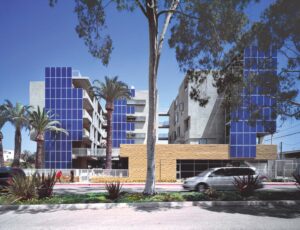
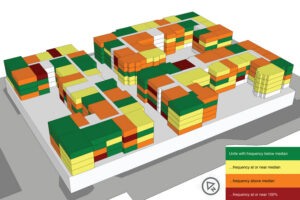
Housing scholars have shown that moving has inherent hazards and can create disruption for social housing residents as well as collective disruption within communities. This paper draws from social housing case study sites in the Pacific Northwest of the United States. Analyzing those apartments with the highest rates of turnover, what property managers call “troublesome units,” revealed architectural attributes that influence frequent moves. These attributes are related to apartment size, layout, and location within the building. To reconcile the resultant inequity in apartment design, this paper proposes a theory of compensatory design, in which the architect offsets unavoidable negative attributes with positive elements to equalize turnovers between apartments. Ultimately, architects who see a troublesome unit, not as a lost cause, but as a challenge to excellent design solutions, will better serve their clients, the residents who live in the buildings, and the communities at large through the reduction of lost housing.
Article
Open Access
Experimenting with Mass-Housing Regeneration: Two Pioneer Actions in Bolzano (Italy) as Part of the SINFONIA Project
by Fabio Lepratto
pp. 529–552
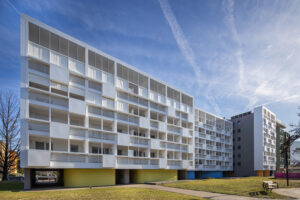
The public housing sector in Italy faces a generalized crisis, which does not spare the issue of architectural and urban quality, both in the (relatively few) new buildings realized over the last three decades, and in increasingly frequent regeneration actions. The latter – the subject of this essay – generally do not go beyond conventional maintenance and are typically limited to applying essential technical solutions for energy efficiency. They miss the opportunity to update the building stock to address current housing needs. Against this backdrop, the case of SINFONIA – a five-year project financed by the European Union – represents a relevant exception. The paper presents two recent housing renovation actions developed within SINFONIA and conceived by AREA Architetti after winning two design competitions. Both actions interpret conversion in the most inventive ways, demonstrating an aptitude for a real aesthetic rethinking that changed the appearance of the buildings experimenting with two profoundly different design approaches: reinterpretation and metamorphosis. In presenting the two actions, this essay reflects on the procedure and design lessons to be learned from this experience for transfer to other situations.
Position Paper
Open Access
A Right to Housing: A Compelling Idea and an Elusive Reality
by Rachel G. Bratt
pp. 287–297
Position Paper
Open Access
The Right to Housing: A Holistic Perspective. From Concept to Advocacy, Policy, and Practice
by Ron Shiffman
pp. 269–267
Book Review
Tectonics
Open Access
Microalgae Building Enclosures: Design and Engineering Principles
by Daekwon Park
pp. 231–235
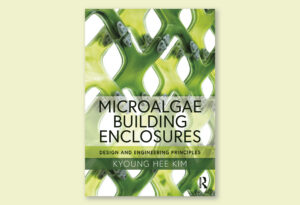
Microalgae Building Enclosures: Design and Engineering PrinciplesBy Kyoung Hee KimNew York: Routledge, 20227 x 0.5 x 10 in.188 color illustrations254 pages$39.95March 29, 2022ISBN: 9780367410452
Exhibition Review
Criticism
Open Access
Stories of Women Architects Who Made Their Mark
by Caterina Padoa Schioppa
pp. 219–230
Essay
Theory
Open Access
The Wall That Articulates: Characteristics and Operability in Space
by Joana Pinheiro
pp. 87–105
This essay stems from a dissertation that studies the “architectural wall” from a conceptual point of view. The wall acts in space in different ways and can present the purpose of emplacement, reference, articulation, enclosure or of an inhabitable wall. Among the wall types studied in the thesis, the wall that performs as an articulation agent is described in this paper. For that matter, a group of architectural works, that translate in a definite manner the operativity of this theory, is presented. Through the analysis of these case-studies, the definition of the type, by its determining properties, is reached. Besides considering this research as a scientific instrument in the field of architecture to understand the comprehensive element “wall,” which further interacts with man and its environment, it is also regarded as a didactical means. Through the acknowledgement of the properties given in the tables and diagrams of the type, it is possible along the process of design to identify this architectural element within its complex play of variables, and thereby use it in a more scrupulous and consequent manner.