
Book Review
Reflective Practice
Open Access
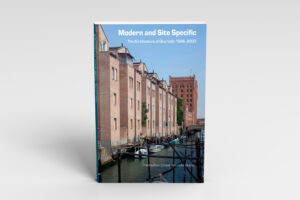
“Modern and Site Specific: The Architecture of Gino Valle 1945-2003”
by Kenneth Frampton
pp. 223–226
Modern and Site Specific: The Architecture of Gino Valle 1945-2003By Pierre-Alain Croset and Luka SkansiLondon: Lund Humphries, 2018250 × 190 mm 100 b/w and 150 color illustrations 352 pages£50.00 GBP (hardcover)ISBN: 978-1848222779
Article
Housing
Open Access
Permitting a Homeless Transition Village: Transactions between the Informal and the Formal
by Stephen Luoni
pp. 137–157
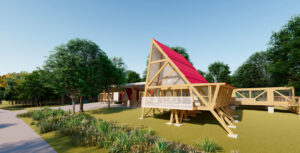
More than three million Americans experience homelessness annually. Emergency shelter capacity is limited while local governments are unable to provide even temporary housing. Informal housing involving interim self-help solutions are now popular adaptive actions for obtaining shelter, despite nonconformance with city codes. Unfortunately, most informal solutions have resulted in objectionable tent cities and squatter campgrounds where the local response has simply been to move the problem around. Our homeless transition village plan prototypes a shelter-first solution using a kit-of-parts that can be replicated in other communities. Village design reconciles key gaps between informal building practices and formal sector regulations, creating a permittable solution under most city codes. While informality is traditionally associated with the “topography” of unplanned hyper-growth in developing nation economies — and not with design disciplines or advanced economies— our project highlights informality as a mode for effecting new urban solutions within obdurate regulatory environments. Indeed, the informal has emerged as an important design epistemology in advanced market economies given the polarization of their economies and the need for distributive justice.
Book Review
Theory
Open Access
“Lake of the Mind. A Conversation with Steven Holl”
by Christopher Platt
pp. 227–231
Conference Report
Theory
Open Access
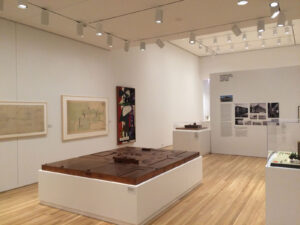
“Ando and Le Corbusier: Masters of Architecture” Symposium
by Eric Mumford
pp. 233–236
Exhibition Review
Criticism
Open Access
“FREESPACE” and the Citizen: Stories of Generosity from the Venice Architecture Biennale 2018
by Carla Brisotto, Cristina Cassandra Murphy, Martha Battaglin Ramos
pp. 237–252
In Memoriam
Theory
Open Access
Remembering Robert Venturi, a Modern Mannerist
by Maurizio Sabini
pp. 253–259
Essay
Cross-Disciplinary Studies
Open Access
An Urban/Landscape Project for the Venice Lagoon
by Claudio Aldegheri
pp. 191–207
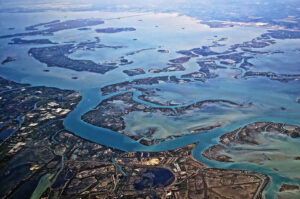
In recent years, in the Venice lagoon we have seen an increasing number of urban planning projects with a low level of flexibility, which have not seized the opportunities offered by such a rich and complex context. This study is therefore about how to approach the project in this area, aiming to give value to its many different landscape aspects and attempting to reconsider in general the attitude to urban planning.
Article
Landscape Urbanism
Open Access
Cities as Hydro-Geologic Terrain: Design Research to Transform Urban Surfaces
by Mary Pat McGuire
pp. 165–190
Imperviousness is a significant design problem for the future of cities: we must reduce it, redesign it, transform it. This paper argues to insert hydro-terrain thinking to the paved surfaces of cities, instantiating the concept of “rain terrain” that links hydrologic performance across scales, from the raindrop to the region. The City of Chicago is the case study where high concentrations of pavement drain stormwater from the city - resulting in flooding, overflowing and polluting - from the Great Lakes to the Gulf of Mexico. I first share research on the glaciated history of the region, to reveal sandy soil types located in the urban area. I then correlate imperviousness, permeable soils and flooding prevalence to identify a pattern of site opportunity areas in the city. I also propose design practices - through disruptions, interventions and reconfigurations of urban surface - to tap paved-over soils as the basis for a landscape-based urban stormwater approach. In doing so, this paper aims to present a vision for urban transformation, based on specific technical design opportunities within landscape-as-infrastructure.
Book Review
Theory
Open Access
Exaltation of Apartness? “The Building”
by Christophe Van Gerrewey
pp. 209–217
Exhibition Review
Criticism
Open Access
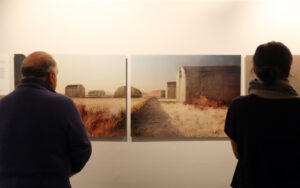
Little Boxes and Big Boxes. On Donald Judd’s “Obdurate Space”
by Kyle May, Julia van den Hout
pp. 233–240
Article
Open Access
Climate Change Adaptations for Coastal Farms: Bridging Science and Mātauranga Māori with Art and Design
by Martin Bryant, Penny Allan, Huhana Smith
pp. 497–518
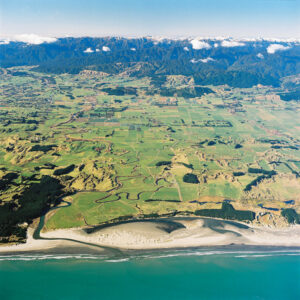
Indigenous coastal farming communities need to address future climate change impacts, yet many communities are slow to respond, due to lack of adequate information, economic pressures, the abstract nature of climate change science and poor communication between what science knows and what indigenous farming communities need to know. Art and design can address these issues by synthesizing broad scientific principles with local place-specific culture and their visual language can effectively communicate short and long-term benefits to local communities. Art and design are thus both generative research methods and media for representation. This research uses art and design to provide a bridge between the Māori culture of a local farming community in coastal New Zealand and climate change science. It provides a framework of strategies for new farm practices. Underpinned by the qualitative awareness of thresholds and an open-ended toolbox of land-based strategies, the role of the framework is to catalyze adaptation. The framework is responsive to both the Māori worldview and scientific knowledge, and has the potential to provide a model for other coastal communities.
Article
Open Access
Challenges of Disaster Relief Housing: Evaluating Coastal Domestic Typologies in Eastern Sri Lanka
by Kira Bre Clingen, Mark Robert Bavoso
pp. 601–628
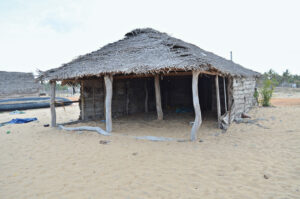
In the aftermath of the December 2004 tsunami, an unprecedented natural disaster that disproportionately affected the impoverished and conflict-ridden eastern coast of Sri Lanka, the outpouring of disaster relief and support for housing reconstruction was primarily led by international aid organizations for the erection of capital-intensive dwellings to allow for immediate habitation. Three case studies representative of significant housing typologies deployed since the tsunami are investigated: two global prototypes sponsored by foreign aid, and one informal, vernacular construction. We argue that in Sri Lanka the aid-housing-as-commodity paradigm - which in its specificity and immutability disregards the robust tradition of integration between natural and built environments and between individual and community - represents an increasingly and unsustainably risky expenditure of capital resources due to the likelihood of more frequent disasters in coastal zones. We argue for a shift toward spatial frameworks, not static prototypes, which take into account that the longer temporal dimension of rebuilding community and housing after a natural disaster is not necessarily synonymous with expensive, structurally robust building practice.
Article
Open Access
Mangroves of Maputo, Mozambique: from Threatened to Thriving?
by Ana Beja da Costa, Luis Paulo Faria Ribeiro
pp. 629–641
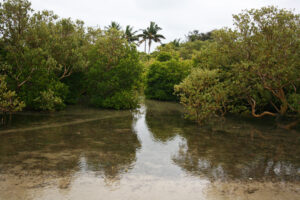
Coastal wetlands worldwide are among the most productive yet highly threatened systems in the world, and are framed and protected by the Convention on Wetlands (Ramsar, Iran, 1971), of which Mozambique is a party since 2004 (IUCN, 1971). Maputo city coastline consists of an ample alluvial plane, where large extensions of mangrove forests occur within the city, namely the Costa do Sol wetlands, offering a wide range of ecological and economical services. Here, urban development pressure is increasing and rapidly changing dynamics are creating new urban settings, pressing in ecological sensitive areas of Maputo’s coastline. The functions of the still existing ecosystems and positive effects that these can have within the urban environment are relevant to be known and investigated in light of the greenway principles. Through the landscape architecture lens, insights on the service capacity of these mangroves in terms of conservation strategies, local perception, usage and management, and design possibilities are added, which can contribute to maintain and expand the high urban quality that is historically attached to Maputo city.
Article
Open Access
An Eco-Leap Forward: Shifting Agriculture
by Xinyu Xiao, Hai Anh Nguyen
pp. 563–583
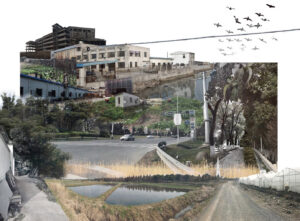
Human activity has been changing the surface of the earth for several thousand years. In recent decades, the rate of change however was accelerated in the Yangtze River Delta, propelled by China’s rapid and continually chaotic process of urbanization and industrialization. How can our cities eventually face haze, water pollution, soil contamination, and natural disasters caused by climate change? The challenge is indeed to explore how to achieve an ecological resilience by enhancing biodiversity and by reviving and revising productive landscape.
Article
Open Access
Fragile Edges and Floating Strategies along the Albanian Coastline
by Loris Rossi, Laura Pedata, Enrico Porfido, Giuseppe Resta
pp. 685–705
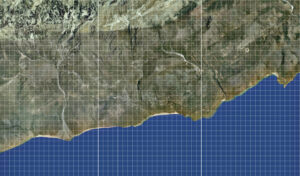
The essay investigates coastline development along the southern area of the Albanian Riviera, introducing the concepts of “landscape fragments” and “landscape within a landscape” as design methodologies. By speculatively reversing the order of landscape perception from land to water, the coastline becomes a flexible device capable of responding to unpredictable future events - natural disasters related to climate change (rising sea levels), or globally challenging socio-political phenomena (such as mass migration growing in scope, complexity and impact). The experimental design approach involves the design and representation of an incremental waterscape. By reversing the morphological perception of the coastal landscape and making a set of tactical selections in natural and artificial landscapes, the students highlighted the territory’s potential. With new awareness, they proposed site-specific interventions along the coast and inland, re-territorializing the “apparent tabula rasa” and demonstrating the coastline’s potential dynamic reaction to environmental challenges.
Article
Open Access
Salinas: Interstices of the Urban, Cultural and Political Processes in Mediterranean Ecologies
by Ana Morcillo Pallares
pp. 707–719
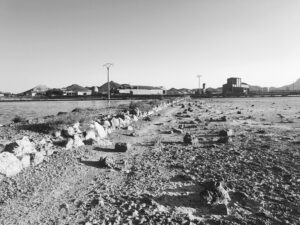
Salinas, or Mediterranean coastal salt marshes, are priceless ecological wetlands, resilient spaces along the coast that have survived over time and hold incalculable cultural, historical, and ethnographic values associated with them. Today, artisanal sea salt production is no longer a profitable business, and in many cases, these spaces become a no-man’s-land in-between nature and city, falling victims to pressures of changing land uses and the unsustainable urban growth of the Mediterranean coastal tourism. However, the process of change and abandonment of these former production landscapes presents an opportunity to promote new formulas for spatial tactics, public use and new sustainable futures. A liminal condition full of spatial and formal assets that opens the rising potential of the local economy and the right of the salina’s active exploitation, interaction and identification.