
Archive
Tipo contenuto: Article
Article
Landscape Urbanism
Subscribers
Beyond Eco-City: Re-Envisioning the Impossible Dream of Dorr Street, Toledo, Ohio
by Yong Huang
pp. 206–222
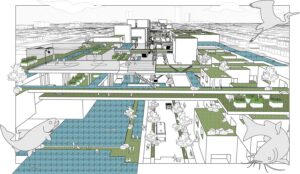
Throughout history, cities have always been extended towards the countryside without contemplating the other direction. While current urban farming practice tends to play a remedial role in our urban design processes and strategies, it is time for a paradigm shift between cities and the organic worlds that sustain them. Meanwhile, emerging eco-cities, such as the Masdar City project, were devised with ecological mechanisms almost exclusively driven by economic imperatives of the dominating political power. As posited by Federico Cugurullo, this kind of ecological modernization “does not change the traditional capitalistic patterns of production and consumption, and thus replicates the same environmental issues intrinsic to capitalism” (2016). This design research experiments ethnographic method in Toledo, Ohio, to generate urban farming prototypes as localized cultural practice. In response to the “Impossible Dream,” a new urban design initiative of the African American Legacy Project of Northwest Ohio, visual narratives of urban farming urbanism are created to address ecological urbanism and social-economic impacts, as well as building programming and cultural events initiatives, with a focus on public and interactive communal spaces.
Buy
Already in your cart -
View cart
Article
Open Access
Exploring the Role of AI in Urban Design Research: A Comparative Analysis of Analogical and Machine Learning Approaches
by Carla Brisotto, Jeff Carney, Forough Foroutan, Karla Saldana Ochoa, Whittaker Schroder
pp. 237–264
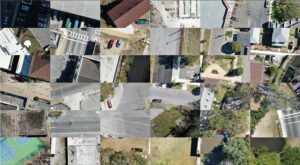
We conducted an experiment to explore how Machine Learning (ML) can be utilized as a tool in urban studies research. The current study aims to compare two methodologies to identify urban indicators of the residents’ well-being focusing on three transects across two local watersheds in Jacksonville. The study is framed within the theory of transect analysis. The goal of this experiment was to compare an analogical transect analysis method (AT) to Machine Learning one (MLT) to understand (1) what kind of contribution the latter approach can provide to the development of transect analysis methodologies, and (2) if and how it can connect digitally generated site analysis to local knowledge.The experiment’s findings highlight the ability of the ML algorithms to find noticeable patterns of built environment from aerial imagery. However, local knowledge is indispensable to interpret results in a meaningful way. The combination of the two approaches emphasizes the complementary nature of them and shows how ML methods can be a tool at the service of communities.
Article
Subscribers
AI as a Facility for Sustainability: Digital Design Studio Education’s Prospects and Challenges
by Anas Lila, Sigita Zigure
pp. 349–368
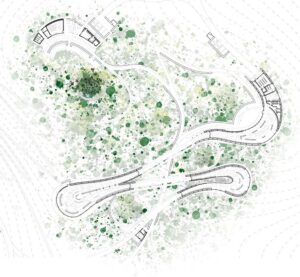
This research presents the implementation of AI-driven design approaches for final-year architectural design students, aiming to enhance environmental decision-making in their projects. It explores motivations, challenges, and outcomes of integrating AI tools into architectural practice. The use of AI facilitated evidence-based design and increased design exploration. Students showed a strong interest in quantitative environmental design. The research highlights the need for adapting architectural education to incorporate AI and sustainability, aligning with recent reforms in the field. It offers valuable insights for educational bodies, practitioners, and program administrators, emphasizing the importance of AI in training future architectural professionals.
Buy
Already in your cart -
View cart
Article
Subscribers
Architecture’s “Recording Deluge”: The Nexus Between Architectural Design, AI, and Data Harvesting
by Giuseppe Canestrino
pp. 283–301
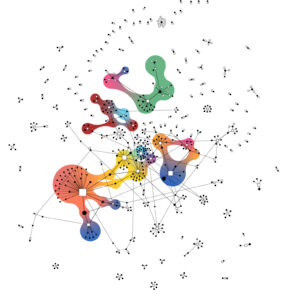
As contemporary artificial intelligence (AI) tools are showing the ability to decipher intricate systems through the identification of correlations within vast datasets, the capacity to record, store, and utilize this data nowadays takes a central position in the cultural debate of an increasing number of disciplines. Architectural scholars, however, seem more interested in the explicit expression of AI, such as the development of new tools, rather than in how AI can challenge the ontology and epistemology of architectural design. Discussion of the research of scholars like Maurizio Ferraris, or Shoshanna Zuboff who investigates the societal consequences of data-harvesting practices, may reveal an ongoing change in the accumulation, preservation, and exploitation processes of architectural knowledge. This research intends to explore how one of the raw materials on which AI is nurtured, namely the abundance of data, has the potential to shape and guide forthcoming developments in architectural design.
Buy
Already in your cart -
View cart
Article
Urbanism
Open Access
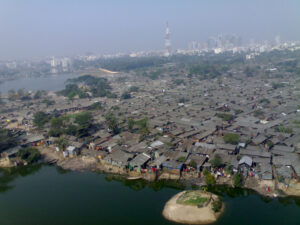
Blue Urban Commons: A Cross-Examination of Water Bodies an Urban Informality
by Taraneh Meshkani
pp. 7–21
This study uses the “urban water commons” lens to examine the intricate interplay between urban informality and bodies of water. Case studies from Jakarta, Beirut, Medellín, and Dhaka are analyzed, each illuminating a unique array of challenges. Themes of environmental degradation, involuntary displacement, and infrastructural deficits are prevalent across these urban contexts. The paper stresses the urgent need for comprehensive urban planning strategies that safeguard equitable access to and shared stewardship of urban water resources. It underscores the necessity of government policies that prioritize community involvement, environmental sustainability, and the integration of informal settlements into the wider urban fabric.
Article
Theory
Subscribers
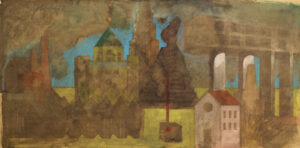
Three Aspects of Nostalgia: Thoughts on the Work of Aldo Rossi
by Edna Langenthal, Hagit Leshem
pp. 153–175
This essay discusses various aspects of the term “nostalgia.” Rather than an individual plight, it will be considered here as a symptom of contemporary society, which does not stand in contrast to modernity but is derived from it. Nostalgia characterizes humans’ connections to the past, to their sense of self, home and community. We reflect on how this affects our longing for home, how we envision our collective home, and how we place ourselves in the world. We distinguish three types of nostalgia: Restorative, longing for the restoration of a lost home; Utopian, transforming our longing into a utopian ideal; and Reflective, which differs by shifting the focus from recovering what is perceived as a loss of absolute truth to pondering questions of history and the passing of time. The essay focuses on nostalgia’s bearing on architecture, as demonstrated in the work of Architect Aldo Rossi. His oeuvre, in which the contemplation of time and memory are inherent, reveals all three forms of nostalgia, highlighting and questioning their centrality to architectural thought and practice.
Buy
Already in your cart -
View cart
Article
Theory
Open Access
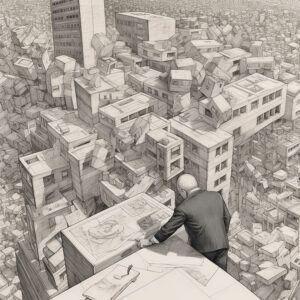
The Meta-Project, Eisenman, and Capital: Lessons for Critical Architectural Practice
by Cem S. Kayatekin, Ujal Gorchu, Mikhail Frantsuzov
pp. 133–151
How does Peter Eisenman’s conception of the meta-project relate to capital? Within much of the relevant discourse, the Eisenmanian ideal of achieving autonomy from politico-economic dynamics is underscored, with strict references to the notion of capital remaining absent from the literature. However in studying narratives articulated by Eisenman himself over the course of several lectures spanning several decades, a more integrated connection with capital begins to emerge—wherein Eisenman’s conception of capital not only shapes later stages of the meta-project evolution but even seems to partially shape the anti-phenomenological position, anchoring it in its formative stages. These findings offer a distinct counterpoint to the Eisenmanian meta-project, both in terms of its efficiency at achieving distance from politico-economic dynamics and, more fundamentally, in terms of its presumed apolitical anchoring. However, far from being solely applicable to a scholarly niche, these discursive wrinkles offer contemporary practitioners a proactive theoretical framework for how to structure meta-projects to better resist contemporary capitalistic intricacies, and avoid the paths which led Eisenman’s own meta-project being appropriated by dominant politico-economic dynamics.
Article
Housing
Open Access
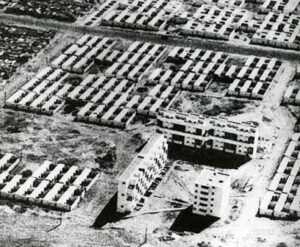
Beyond Modernist Housing: Can the Mass Housing Model Accommodate Human Agency?
by Nadia Shah
pp. 23–43
The lack of attention paid to the disempowerment of the residents has been a shortcoming of the modern mass housing model. Even today, no policies promote and support the residents’ efforts to continue improving their quality of life through actions involving changing the physical environment. Following a brief history of the origins of mass housing in the West through the discourse in the modern movement, the paper expands on implementing these modern ideas in the post-War non-Western region and how they were received and appropriated there. The article presents the case study from the author’s work on Korangi Town in Karachi, Pakistan, to show that the residents’ changes reflect their active agency. However, it was an unintentional outcome of modernist design and planning. This paper is more than just a critique of the cultural apathy of modernism. It questions what happens to a modernist project after the expert leaves the arena. How do residents adapt to or cope with their physical environment? Moreover, is there a way to include human agency in mass housing?
Article
Tectonics
Open Access
Moss as a Multifunctional Material for Technological Greenery Systems
by Valeria Marsaglia, Guido Brusa, Ingrid Paoletti
pp. 85–114
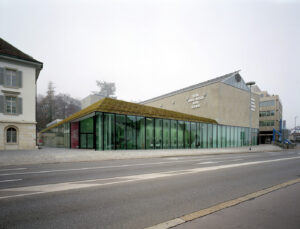
Nature-based solutions can help mitigate the heat island phenomenon in densely populated urban areas. As far as building envelopes are concerned, both green roofs and walls provide multiple benefits to the surrounding areas and to the buildings where they have been installed by using plants that act as building materials with specific attributes and performances. In detail, living wall systems are particularly sensitive to the vegetal choice due to their sophisticated technology and to the artificial vertical layer where plants are forced to live. The purpose of this paper is to investigate the characteristics of mosses in relation to their potential use in technological greenery systems. In this regard, the most recent and innovative application examples in buildings and design are presented and discussed.
Article
Cross-Disciplinary Studies
Open Access
The Urban Forum Dialogue Tool: Reflecting on a Designerly Approach to Transdisciplinary Research
by Sonia Curnier, Per-Johan Dahl, Lisa Diedrich, Andrea Kahn
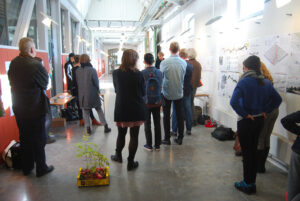
pp. 45–67
With a view to working toward urban sustainability goals, two Swedish research platforms, SLU Urban Futures at the University of Agricultural Sciences in Alnarp (SLU) and the Urban Arena at Lund University, launched Urban Forum, a transdisciplinary dialogue format, in 2019. Designed to foster exchange between practitioners and scholars in the spatial design fields the Forum convenes actors from practice and academia working on matters of shared concern to increase their interaction and defuse preconceptions against each other. The initiative recognizes that academic and non-academic design actors are equally needed to build transformative capacities and reflects two related convictions: that siloing practice and academia is unproductive and that synthetic encounters can serve to reimagine roles and retool mindsets currently hampering mutually beneficial knowledge exchange. This article analyzes a series of Urban Forum events from 2019-21 to extrapolate procedures for overcoming entrenched notions of the practice/academia dynamic; identify criteria for productive knowledge exchange; suggest ways to design transdisciplinary dialogues; and highlight the benefit of involving designerly knowledge and working methods into the transdisciplinary methodology toolbox.