
Archive
Tipo contenuto: Article
Article
Sustainability
Subscribers
Landscape Lifecycles as a Speculative Design Research Practice for Transforming Waste Conditions
by Catherine De Almeida
pp. 185–220
Published: 2020-06-23
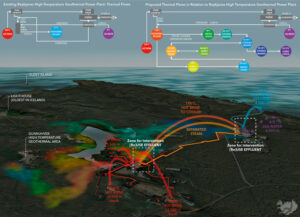
Research-based design has been foundational for landscape architecture. Analytical layering in geographically-based mappings has become a universally applied, formulaic approach. For waste landscapes, this has generated similar redevelopment strategies for drastically differing waste landscape conditions. This site typology, however, requires more nuanced approaches. As a design-research framework, “landscape lifecycles” aims to tackle waste landscapes with integrative strategies and techniques that reactivate waste as a legible and dynamic contributor to local and regional contexts; a method for integrating multiple diverse programs rooted in economic, environmental, and social performance to form hybrid assemblages in the transformation of perceived material and spatial waste. This article highlights design-research and generative representational methods developed through projects and coursework that embrace speculation as a means of engaging with waste conditions at multiple scales — from the material to the region. These methods range from speculative geographic, process, and abstract mapping to scenario testing to time-based, projective design that document, explore, and test an argumentative hypothesis and the multi-scalar design implications of research on the imaginative potentials of waste transformation.
Buy
Already in your cart -
View cart
Article
Sustainability
Open Access
Disaster Planning Across Scales: Lessons from Post-Earthquake Rubble Management in Oaxaca, Mexico
by Dení López, Michael Hooper
pp. 221–250
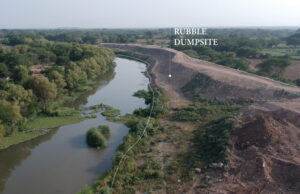
This paper examines rubble management as an important but often neglected component of disaster response and a powerful example of the frequent disconnect between national plans and local action. It focuses on five marginalized municipalities in Oaxaca, Mexico: Ciudad Ixtepec, Asuncion Ixtaltepec, El Espinal, Juchitan de Zaragoza, and Santa Maria Xadani. These constitute the region most affected by the Mexican earthquakes of September 2017, with roughly 58% of inhabitants suffering either partial or total loss of their houses. The paper builds on the results of fifty-one interviews, a cross-sectional survey with 384 residents, and a mapping analysis to reveal the challenges of post-disaster planning across scales. The results show that local perspectives were given little consideration in nationally-led rubble management plans, and that these documents were likely shaped by concerns over what constituted institutional legitimacy, rather than attention to local context. The paper concludes with a discussion of the findings through the lens of institutional isomorphism and offers recommendations for more effective post-disaster rubble management, particularly centered on increasing the involvement and capacity of residents, municipal governments, and other key institutions.
Article
Sustainability
Open Access
Waving the Magic Wand: An Argument for Reorganizing the Aridlands around Watersheds
by Danika Cooper
pp. 163–184
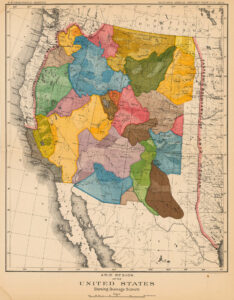
Irrigation remains the primary means of sustaining urbanization and stabilizing agricultural productivity in arid America. In the contest for the West, water is both wealth and power. Today’s struggle to overturn water scarcity is traceable through a long history of legislation overseeing land regulation, property speculation, societal development, and cultural attitudes, real and perceived, inscribed within the America’s aridlands. In reality, there is no magic wand - no miraculous technology - that alone will fulfill the needs of all who have been promised abundance in the aridlands. This paper proposes that revisiting John Wesley Powell’s 1893 proposal for aridland development in the context of today’s ecological conditions catalyzes an alternative response to today’s predictions of changing climates, and can provide the basis of an approach to the aridlands which builds from the enmeshed relationship between social and environmental systems.
Article
Cross-Disciplinary Studies
Subscribers
Architectural Portraits: ῾The MIES Project’
by Arina Dähnick
pp. 9–30
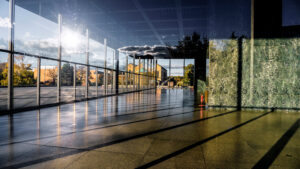
This article wants to offer a brief overview of my experience as an architectural photographer and of “The Mies Project” in particular, on which I have been working on for the past few years. My approach to photography, based on the latest digital technology but also on the Leica M-System, is briefly outlined. In the past, the question was how to obtain information. Nowadays, the proper structuring of information is what really matters. Architectural Portraits, a small selection of which from “The Mies Project” are here presented, are “intimate gazes,” prioritizing the relationship of the detail of a building with its surrounding, the interaction between construction details, lighting and weather conditions. In this sense, Mies’ works not only have sparked my interest in architectural photography, but have been also the perfect poetic partner for my research.
Buy
Already in your cart -
View cart
Article
Subscribers
Women Leaders, the Sustainable Society Cannot Afford to Miss: A Qualitative Study on the Paths to Women Leadership in Sustainable Architecture Education
by Liqun Bi, Barbara LaCost, Hengle Jiang
pp. 345–369
Candice Stevens has pointed out that the lack of progress on gender equality may be at the heart of the failure to advance on sustainable development. Several researchers such as Sandra Manley and Ann de Graft‐Johnson, and Rosa Sheng and Annelise Pitts have studied why women leave architecture, but no study focused on the women’s leadership in architecture education yet. This qualitative study aimed to discover insight into the leadership development journey of women focusing on sustainable architecture education. The sample was selected among 1,705 faculties of forty-one collegiate architecture programs. After email invitations, five successful women executives in sustainable architecture areas participated in the interviews. After coding analysis, three conclusions illuminated. Firstly, strong mothers influence daughters to become leaders. Secondly, the inner motivation of “working super hard” is the foundational factor that all the women leader participants claimed to sustain their leadership advancement. Thirdly, participants unveiled that there was an on-going-pattern while finishing the tasks and establishing reputations, especially in early career development. The awareness of the pattern helped to reduce the panic of the new tasks.
Buy
Already in your cart -
View cart
Article
Subscribers
Women Who Design “Master” Bedrooms: A Study of Kerala Women in Architectural Practice
by Soumini Raja, Sumitra Nair
pp. 429–447
While the practice of architecture has traditionally been a male-dominated field in India, gender discourse in architecture has been slowly shifting the gender balance towards an increased participation of women in architectural practice and academics, as both leaders and team members. This paper explores the nuances of feminist spatial practices locating itself in the state of Kerala, India, that has historically unique gender politics. The paper draws on an ethnographically informed study of twelve women architects, using “Master Bedrooms” as a discursive tool to capture their engagement in professional practice. The study revealed that the critical feminist spatial practice is not watertight nor a conscious way of practice. It does not even require conformity to any one idea of feminism. These women practitioners deploy multiple modes of engaging with and challenging the dominant norms of professional practice. These range from conscious acts of individual subversion to organizational structuring, from overt challenges to quiet resistance. This paper offers to problematise contemporary discourse on critical feminist spatial practices in the context of India and thereby, contribute to critical spatial pedagogies.
Buy
Already in your cart -
View cart
Article
Subscribers
The Diversity of Women’s Engagement with Modern Architecture and Design: Three Case Studies
by Kathleen James-Chakraborty
pp. 465–480
A range of often overlooked ways of engaging with architecture and design have historically offered women from around the world with the means of making a living and of advancing the careers of other women, as well as of encouraging the acceptance of artistic experimentation. These include journalism, retailing, and philanthropy. For instance, Ethel Power edited the influential American shelter magazine House Beautiful from 1923-34. Estrid Ericson founded and ran the Stockholm design shop Svensk Tenn for over half a century; she also designed many of its characteristic products. Gira Sarabhai was instrumental in the establishment of the Calico Museum and then the National Academy of Design, both located in her native Ahmedabad, India, and contributed to the design of the building in which the latter is housed. Writing such achievements back into the history of architecture and design helps provide the foundation for a more inclusive approach to those professions today.
Buy
Already in your cart -
View cart
Article
Subscribers
On the Work of Lisbeth Sachs: From the Aesthetic to the Environmental Impact of Architecture
by Stamatina Kousidi
pp. 481–501
Characterized by continuity, inventiveness, and a fervent exploration of the relationship between architecture and the environment at large, the work of Lisbeth Sachs was included in the 1979 issue of the Aktuelles Bauen magazine on women and architecture. This contribution proposes an in-depth review of Sachs’ underexplored work, suggesting a better understanding of her role as a practicing woman architect at a time when this task was not a matter of course. It places an emphasis on the dialogue Sachs established with her contemporaries, on the dense network of experiences that shaped her design approach, and on the ways it intersected with the late twentieth-century discourse on the relationship between architecture, ecology, and nature. It is not coincidental that the work of Frei Otto would have a long-lasting influence on Sachs’ design experimentation, informing her theoretical and applied design projects. Her design exploration, too, was influenced by the technological advances, the societal changes and the shifts in the cultural agency of architecture, proposing each time a solution that addressed, rather than excluded, its surrounding context, cultural, physical, or environmental.
Buy
Already in your cart -
View cart
Article
Subscribers
No Architect Is an Island: The Agency-Communality Spectrum and the Construction of Professional Identity in Architecture
by Annelise Pitts, Julia Mandell
pp. 281–306
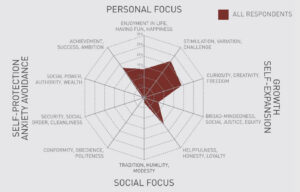
Findings from the 2018 Equity in Architecture Survey demonstrate that architectural professionals tend to describe their work in terms of personal agency rather than communality. This pattern in architectural practitioners’ work orientations is associated with two major obstacles to achieving equity within the architectural profession. First, the practitioners who are most satisfied with their work are typically more communally oriented, suggesting that architecture’s overemphasis on the professional self may limit potential pathways to positive experiences of one’s work. Secondly, women in the profession face significant bias as they embody the stereotypically agentic professional archetypes of the Creative or the Rainmaker, but are also undervalued when they adopt communally-oriented, but lower status, professional personas. We conclude by proposing two parallel strategies intended to improve professional outcomes by addressing the adverse effects of agency-orientation in architectural practice.
Buy
Already in your cart -
View cart
Article
Subscribers
The W@ARCH.PT as an Ongoing Feminist Research Project in Architecture: Contextualizing Initial Reflections
by Patrícia Santos Pedrosa
pp. 391–402
In Portugal, the participation of female architects in the development of the profession – in the broad sense of the word: project, research, education, criticism, and policy – is far from having been identified, problematized, and disseminated. The research project W@ARCH.PT (Women Architects in Portugal: Building Visibility, 1942-1986) strives to give visibility to female architects – revealing “who?”, “when?”, and “how?” – and contribute to expanding the history of Portuguese architecture, as well as developing feminist studies and ideas within the discipline. The strategies chosen to carry out this ongoing research intersect with feminist theories and epistemologies, outside and inside architecture. The issues raised require a critical understanding of the processes that sustain the silencing of female architects’ voices, imposing limitations on how we understand the profession in its many facets. The feminist historical reflection that we propose is based on the idea that combining the production of knowledge and professional practices is crucial to change gender biases and women’s oppression in both fields.
Buy
Already in your cart -
View cart